
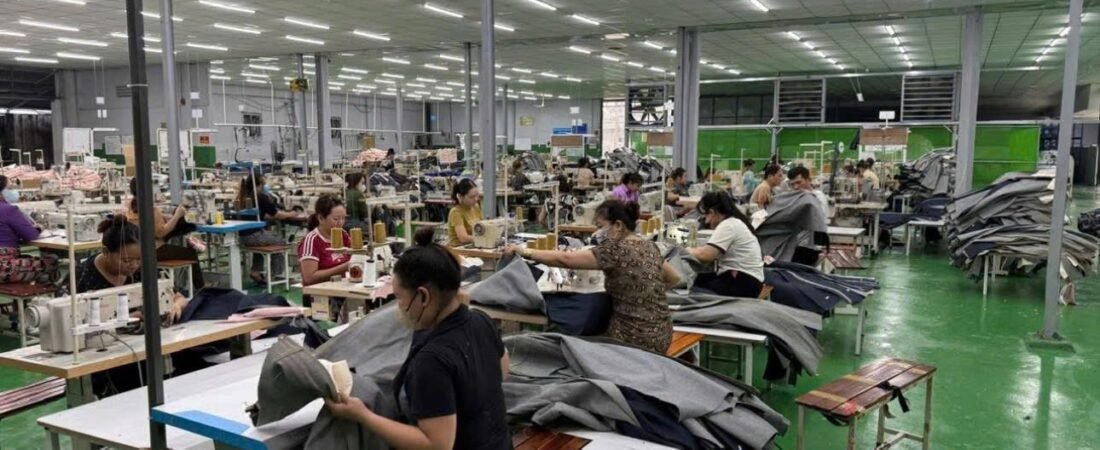
If you are choosing between Vietnam and Indonesia for your next clothing order, the honest answer is that neither country is “better” in every case. They are two mature Southeast Asian apparel hubs with different strengths. This guide compares them the way a sourcing manager would: fabric access, minimum order quantities, cost, tariffs, lead time, compliance and product fit, so you can decide with real criteria instead of marketing claims.
Table of contents
- Quick answer: which country wins?
- Two very different garment industries
- Fabric supply and vertical integration
- MOQ and order flexibility
- Labor, price and total landed cost
- Tariffs and trade agreements
- Lead time, logistics and compliance
- Which products fit which country
- Sampling, development and communication
- Risks and common mistakes when choosing a country
- A decision framework for buyers
- How AT Garment Factory approaches this
- FAQ
- Conclusion
Quick answer: which country wins?
Short version for busy buyers: Vietnam usually wins for mid-to-high volume knit and woven programs (polos, T-shirts, hoodies, sportswear, uniforms, denim) where you want stable quality, strong compliance and good access to European and CPTPP markets. Indonesia can win when you want a broader base of factories, lower per-style minimums, or you are able to qualify for any US-content-linked tariff programs. Always verify current tariff rules before committing, because they have changed repeatedly in the last two years.
- Choose Vietnam if: you order roughly 1,000+ pieces per style, need reliable QC and social compliance, sell into the EU, UK, Japan, Korea or Canada, or want a single partner for cut-and-sew plus printing and embroidery.
- Choose Indonesia if: you need lower per-style quantities from certain factories, want to use a very large pool of mid-size plants, or your product and fabric strategy can benefit from US-cotton-linked tariff treatment.
- Run both if: you are a larger brand diversifying away from a single country for risk reasons.
Two very different garment industries
Vietnam is one of the world’s largest apparel exporters, with an industry concentrated around Ho Chi Minh City, Binh Duong, Dong Nai and Long An in the south and Hanoi and Hai Phong in the north. Industry sources commonly cite roughly 2,500 garment factories and about 2.5 million workers. Indonesia’s industry is larger by headcount and factory count: sources commonly cite 5,000+ factories and 3 million+ workers, mostly on Java (West Java, Central Java and around Jakarta).
The structural difference matters. Indonesia has a deeper domestic textile chain (spinning, weaving, knitting) and a very large domestic market that absorbs a lot of its own output. Vietnam is more export-oriented, with many foreign-invested plants built for international brands, which tends to show up in factory systems, English-speaking merchandisers and audit readiness.
Fabric supply and vertical integration
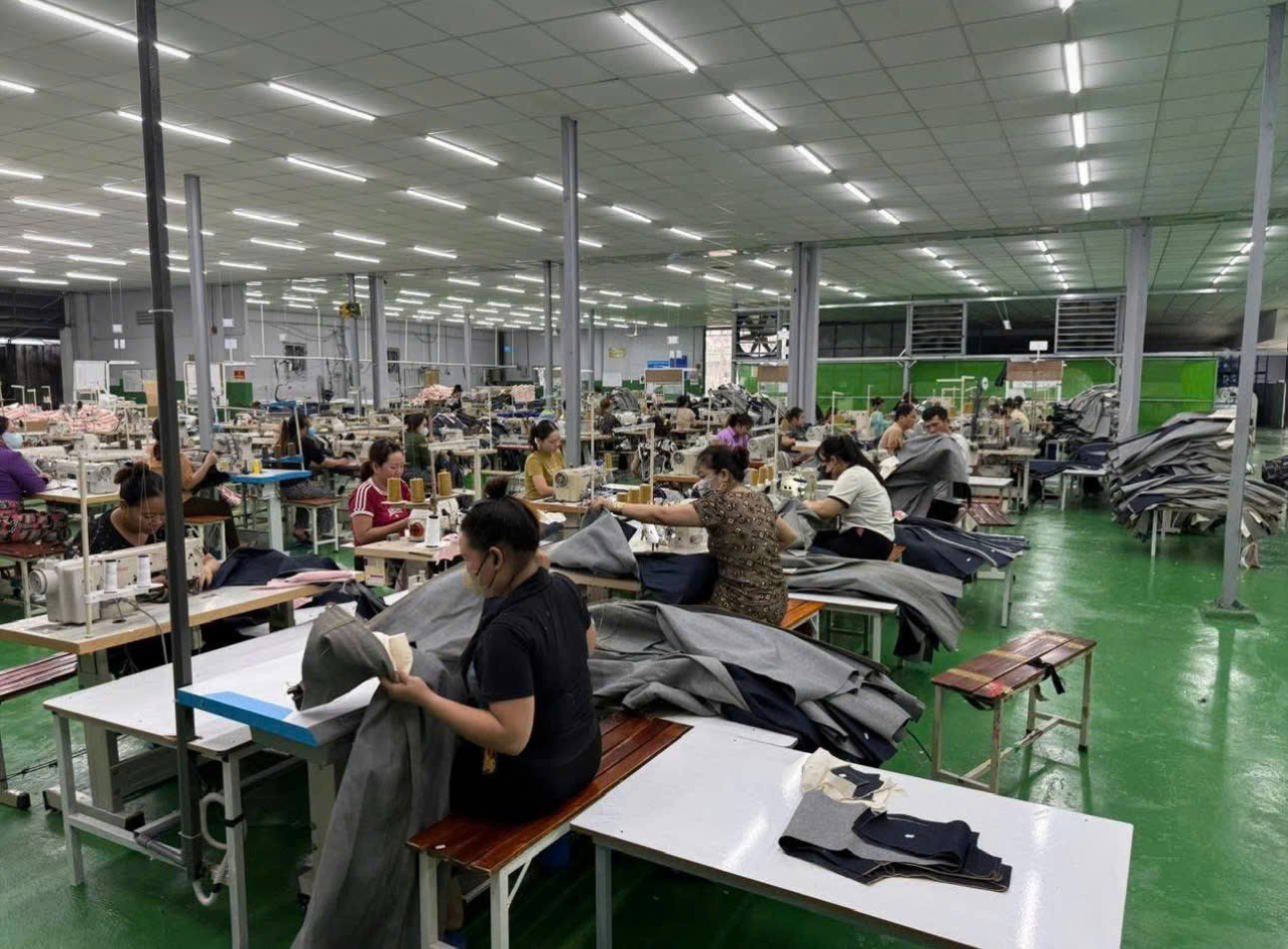
This is the single most important technical difference. Industry figures suggest that Vietnam imports a large share of its fabric (a commonly cited estimate is around 80%), mainly from China, Korea and Taiwan. That is workable, and most experienced Vietnamese factories manage it well, but it means fabric lead time and fabric cost are tied to imports. It also affects origin rules: for some trade agreements, the “yarn-forward” requirement must be understood before you promise a tariff rate to your customer.
Indonesia is generally seen as having a more complete upstream chain, particularly in synthetic and blended fabrics and in knitting. That can shorten fabric sourcing for polyester and blend programs. Cotton, however, is still largely imported in both countries.
What this means in practice
- For basic cotton jersey, fleece or French terry, both countries can deliver. See our French terry vs fleece hoodie fabric guide for what to specify.
- For specialty technical fabrics (performance polyester, moisture-wicking), compare mills, not countries. A good factory in either market will source the right mill.
- For organic or recycled programs, ask for certificates (GOTS, GRS, OEKO-TEX) at the fabric level. Our organic cotton guide explains what to request.
MOQ and order flexibility
Published ranges for Southeast Asia commonly place Vietnamese factories at about 300 to 1,000 pieces per style and Indonesian factories at about 200 to 800 pieces per style. Treat these as directional only: MOQ depends on the factory, the fabric, the number of colors and whether the fabric is in stock. Plenty of Vietnamese factories, including ours, run lower minimums for simple items.
At AT Garment Factory, blank apparel starts from 50 pieces, printed items from 100 pieces, branded OEM styles from 200 pieces, and more complex items such as hoodies, polos and uniforms from 2,000 pieces. If your volume is small, read our low MOQ clothing manufacturer guide before assuming Vietnam is out of reach.
Labor, price and total landed cost
Do not compare factory-gate price alone. A realistic comparison uses landed cost: FOB price plus freight, duty, insurance, sampling, QC and the cost of delays. Industry commentary in Indonesia has noted that its garments were already around 6 to 8 percent more expensive than competitors such as Vietnam, Malaysia and Thailand before the 2025 tariff changes, attributed by the Indonesian Textile Association to interest rates, energy, labor and logistics costs. That is one association’s view, but it matches what many buyers report: Indonesia is not automatically the cheaper option.
Minimum wages differ by province and are adjusted annually in both countries, so check the current regional figures rather than relying on old comparisons. In Vietnam, Region I (including Ho Chi Minh City) has the highest legal minimum, but productivity, efficiency systems and overtime control often matter more to unit cost than the headline wage.
A simple landed-cost checklist
- FOB price per unit at your target quantity
- Fabric price, wastage allowance and any import-related surcharges
- Sampling and pre-production costs, including revisions
- Sea or air freight to your destination, plus local delivery
- Import duty under the tariff program that actually applies to your origin
- Inspection, testing and any rework allowance
Tariffs and trade agreements
Tariffs are the most volatile part of this comparison, so verify before you quote. In 2025, the United States announced reciprocal tariffs, and press reports at the time put Indonesia at 19% and Vietnam at 20%, with both countries negotiating framework deals. Reports in 2026 describe tariff-rate quota concepts for Indonesian apparel linked to US cotton or fibers. Rules, rates and exemptions may have changed again by the time you read this, so confirm with your customs broker.
Outside the US the picture is more stable. Vietnam benefits from the EU-Vietnam Free Trade Agreement (EVFTA), CPTPP (covering Japan, Canada, Australia and others), and the UK-Vietnam FTA. Indonesia has agreements within ASEAN and some bilateral deals, but an ASEAN-EU agreement was still being negotiated at the time of the sources we reviewed, and its EU-Indonesia comprehensive agreement should be checked for current status.
- EU, UK, Japan, Canada, Australia: Vietnam generally has the stronger preferential access.
- United States: competitive but fluid. Model both scenarios and keep a tariff clause in your purchase terms.
- Rest of ASEAN and Middle East: both are viable; compare freight and agreement coverage lane by lane.
Lead time, logistics and compliance
Typical bulk production lead time for both countries is commonly reported at about 45 to 90 days after sample approval and fabric arrival, depending on complexity and season. Sampling usually takes one to three weeks per round. The bigger swing factor is fabric: a factory that has to import fabric adds weeks, while a factory with stock or nearby mills saves them.
For logistics, Vietnam’s deep-water ports at Cai Mep-Thi Vai and Hai Phong have direct services to the US, Europe and Asia. Indonesia’s main hubs are Tanjung Priok in Jakarta and Tanjung Perak in Surabaya, with Semarang serving Central Java; transit times to the US West Coast and Europe are broadly comparable but depend on the carrier.
On compliance, major Vietnamese export factories commonly hold BSCI, WRAP, SEDEX/SMETA, SA8000 or similar audits. Indonesian factories also hold these, but quality of compliance varies widely between plants, so audit the specific factory, not the country. Our quality control process shows what a good inspection system looks like.
Which products fit which country
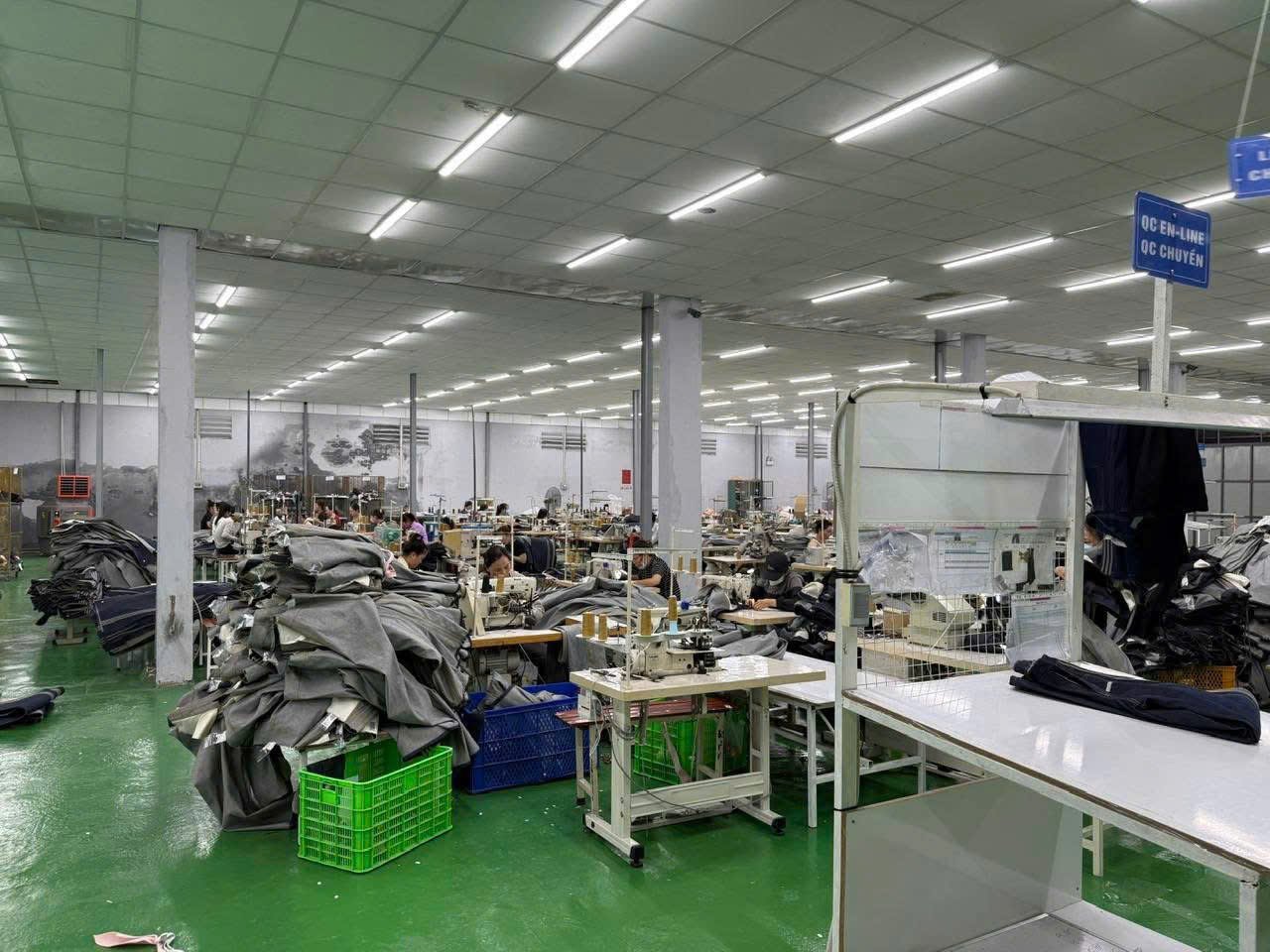
Both countries make nearly everything, but specialization shows up in practice. Based on typical factory capabilities rather than hard statistics:
- Polos, T-shirts, hoodies: strong in both. Vietnam is well proven for branded OEM programs; see our hoodie and polo manufacturing guide.
- Sportswear and activewear: Vietnam is a major hub for global sports brands; read our sportswear OEM/ODM guide.
- Denim: Vietnam has strong washing and finishing capacity; see denim and jeans manufacturing in Vietnam.
- Kids’ clothing: both work; safety testing is the key. See kids clothing manufacturing.
- Uniforms: see uniform manufacturing in Vietnam.
Sampling, development and communication
Sampling is where you learn how a factory really works. A strong development team will turn a tech pack into a fit sample in one to three weeks, flag construction problems before you do, and keep a clear record of every comment. In both Vietnam and Indonesia, the best factories employ merchandisers who speak fluent English, use standard size-set and measurement forms, and send photo and video updates without being asked. The weaker ones wait for you to find the mistakes.
Ask every candidate factory the same four questions: who will be my single point of contact, how many revisions are included in the sample price, how are approved samples sealed and stored for bulk comparison, and what is the escalation path if bulk deviates from the sample? The answers tell you more than any brochure. Request a measurement sheet with tolerances and insist that the bulk order is judged against the sealed, approved sample.
Sample cost and timing
- Most factories charge for samples, often credited back against the bulk order once it is placed.
- Fit samples, pre-production samples and top-of-production samples are three distinct checkpoints; do not skip the second.
- Courier time to Europe or the US usually adds three to seven days to each round, so build it into your calendar.
Risks and common mistakes when choosing a country
After years of working with importers and buying offices, the same errors appear again and again. Avoiding them is worth more than shaving a few cents off the unit price.
- Choosing by country headline instead of by factory. A well-run plant in either country beats a poorly run plant in the “cheaper” one. Audit before you commit.
- Ignoring fabric lead time. Quoting a delivery date without confirming when the fabric will physically arrive at the factory is the most common cause of late shipments.
- Assuming tariffs will stay fixed. Build a clause that defines who bears duty changes between order and shipment, and revisit it each season.
- Skipping the pilot order. A first order of a few thousand pieces proves quality, communication and on-time performance at modest risk.
- Underestimating compliance. Retail and marketplace customers increasingly demand social audits, chemical testing and traceability. Confirm what your customer needs, then confirm the factory holds it. Our guide to the top 5 mistakes with overseas factories covers more of these.
Another risk is concentration. Brands that moved fully out of one country in a hurry in recent years often discovered that capacity in the new country was tight in peak season. If you are changing origin, start the move two seasons ahead, split volume while you validate the new supplier, and keep your old supplier warm until the new one has delivered cleanly twice.
Finally, think about the type of customer you serve. Marketplace sellers on Amazon and TikTok Shop usually need fast replenishment and low MOQs, which favors flexible factories regardless of country; see our guides for Amazon FBA sellers and TikTok Shop brands. Buying offices and large retailers usually care more about audit status and capacity, which favors established export plants; our buying office guide explains what they look for.
A decision framework for buyers
Score each criterion from 1 to 5 for your own project, weight the ones that matter most, and compare. A typical weighting for a mid-size private label brand might be: quality and compliance 30%, landed cost 25%, lead time 15%, MOQ flexibility 15%, tariff exposure 15%.
- Step 1: Define product, fabric and target quantity per style.
- Step 2: Get quotes from 3 factories per country on the same tech pack.
- Step 3: Convert all quotes to landed cost for your destination market.
- Step 4: Order samples and compare workmanship, not just price.
- Step 5: Audit the shortlisted factories and run a small pilot order before scaling.
Not sure how to run this process? Our complete buyer’s guide walks through it, and if you are weighing other countries, see our comparisons of Vietnam against China, India, Pakistan, Turkey and Bangladesh.
How AT Garment Factory approaches this
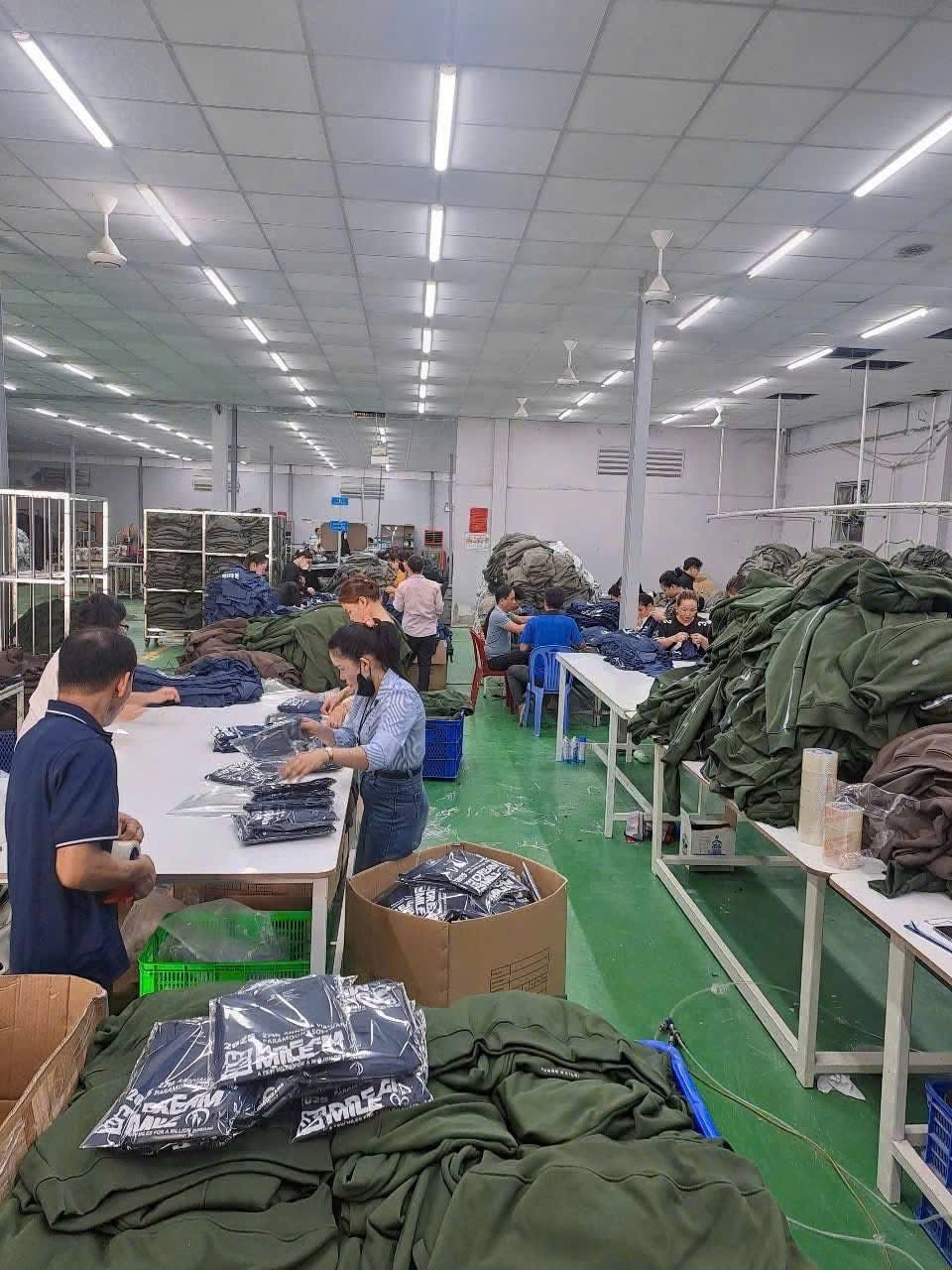
AT Garment Factory is a Vietnamese OEM/ODM manufacturer based in Binh Tan District, Ho Chi Minh City, with more than 10 years of experience and capacity above 100,000 pieces per month. We work with importers, buying offices, private label brands, Amazon and TikTok Shop sellers and uniform buyers. We are naturally biased toward Vietnam, so our advice is simple: send us your tech pack, get a quote, and compare it against any Indonesian quote on a landed-cost basis. If we are not the right fit, we will say so.
FAQ
Is Vietnam cheaper than Indonesia for garment manufacturing?
Not always. Industry commentary suggests Indonesian garments were around 6 to 8 percent more expensive than Vietnamese ones before the 2025 tariff changes, but the gap varies by product, fabric and factory. Always compare landed cost.
Which country has lower MOQs?
Published ranges commonly show Indonesia slightly lower per style (about 200 to 800 pieces) than Vietnam (about 300 to 1,000), but individual factories vary. AT Garment Factory starts from 50 pieces for blanks and 200 for branded OEM.
Which country is better for selling into the EU?
Vietnam generally, because of the EVFTA preferential access. Check origin rules and current duty rates for your product code.
Is Indonesia better for US-bound orders?
It depends on current US tariff treatment, which has changed several times. Both countries have faced reciprocal tariffs in the 19 to 20 percent range in reports, with deals and quotas under negotiation. Confirm with a customs broker before pricing.
How long does production take?
Commonly 45 to 90 days after sample approval and fabric arrival in both countries, plus one to three weeks per sampling round.
Can I source from both countries?
Yes. Many larger brands split production to reduce risk, but it doubles QC and development effort, so most smaller brands start with one.
Conclusion
Vietnam and Indonesia are both credible garment sourcing bases. Vietnam tends to lead on export-market access, compliance maturity and consistent branded OEM execution, while Indonesia offers scale, upstream textile depth and, at some factories, lower per-style minimums. The right decision comes from landed-cost quotes, factory audits and current tariff rules for your destination, not from generic rankings.
Ready to compare? Send your tech pack or reference photos to thanhtung113123@gmail.com, message us on WhatsApp or Zalo, or visit our products, services and contact pages.