Two countries dominate almost every conversation about apparel sourcing outside China: Vietnam and India. Both offer serious manufacturing scale, both compete hard on price, and both are actively courting brands that want to diversify away from a single-country supply chain. But “which one is better” is the wrong question. The right one is which country fits your product, your order volume, and your delivery timeline. This guide compares labor cost, lead time, MOQ, fabric access, quality control, and export logistics side by side, using industry-reported figures rather than a sales pitch, so you can make a sourcing decision based on real data.
Table of Contents
- Vietnam vs India at a Glance: Quick Comparison
- Labor Cost and Manufacturing Cost Compared
- Lead Time and Production Speed
- Minimum Order Quantity (MOQ) Requirements
- Fabric Sourcing and Raw Material Access
- OEM, ODM, and Private Label Capabilities
- Quality Control and Consistency at Scale
- Export Infrastructure, Tariffs, and Trade Agreements
- Which Country Fits Your Brand? A Decision Framework
- Why International Buyers Are Choosing AT Garment Factory in Vietnam
- Frequently Asked Questions
- Conclusion: Making the Right Sourcing Decision
Vietnam vs India at a Glance: Quick Comparison
Before getting into the detail behind each factor, here is the high-level picture international buyers are working with heading into 2026. These figures are drawn from industry wage trackers, trade reports, and sourcing publications, and should be treated as directional rather than exact quotes for your specific order.
- Garment worker wages: commonly reported at roughly $250-$350/month in Vietnam versus $150-$250/month in India, depending on state and skill level.
- Typical lead time: Vietnamese factories often quote 30-45 days for bulk production runs, while India’s more fragmented supply chain is frequently reported running 60-90 days for comparable orders.
- Export scale: Vietnam shipped close to $39.6 billion in garments and textiles in 2025 and ranks as the world’s third-largest apparel exporter; India’s most recent full-year apparel exports are reported at around $36 billion.
- Raw material self-sufficiency: India is reported to cover more than 80% of its own raw material needs (cotton, silk, man-made fiber) domestically, while Vietnam imports more than 60% of the fabric and cotton it uses.
- Manufacturing structure: Vietnam’s industry is frequently described as CMT-dominant (cut-make-trim) with strength in consistent bulk basics, while India is commonly positioned as offering fuller OEM/ODM service, including in-house design support and fabric sourcing.
- Workforce size: Vietnam’s garment sector is estimated to employ roughly 2.7 million workers across around 6,000 registered factories.
- MOQ tendency: many large Vietnamese mills are structured for scale and may resist orders under 1,000 units per style, while India’s more decentralized factory base is commonly reported as more willing to flex toward smaller, mixed orders.
None of these figures should be treated as a quote for your specific program — wages, lead times, and MOQs vary factory to factory. What matters is the pattern: Vietnam tends to win on consistency and scale, India tends to win on raw material access and small-batch flexibility. The rest of this guide breaks down why, and where the exceptions matter.
Labor Cost and Manufacturing Cost Compared
Labor cost is usually the first number buyers ask for, and it is also the most misleading number to compare in isolation. Vietnam’s garment worker wages have been climbing at roughly 10% per year according to industry trackers, which is gradually narrowing the cost gap that made Vietnam attractive a decade ago. India’s wage picture is wider and messier: because labor law and minimum wage are set at the state level, a factory in Tamil Nadu can quote very differently from one in Gujarat or Delhi NCR, which is part of why India’s reported wage range ($150-$250/month) is broader than Vietnam’s.
But landed cost is never just the hourly wage. It is wages plus efficiency, rework rate, compliance overhead, freight, and duty. A factory with lower wages but a higher defect rate or slower throughput can end up costing more per finished, shippable unit than a factory with higher wages and a leaner line. This is exactly why buyers who source purely on quoted unit price are frequently the ones who end up writing about their worst sourcing mistakes — a pattern covered in more detail in our guide to the top mistakes brands make when working with overseas factories.
In practice, Vietnam’s cost advantage today is less about being “the cheapest” and more about predictability: fewer surprise cost additions once you factor in rework, compliance documentation, and on-time performance. India can still undercut Vietnam on quoted unit price for cotton-heavy, embellishment-light programs, particularly where the factory is close to its own raw material source and doesn’t need to import fabric.
Lead Time and Production Speed
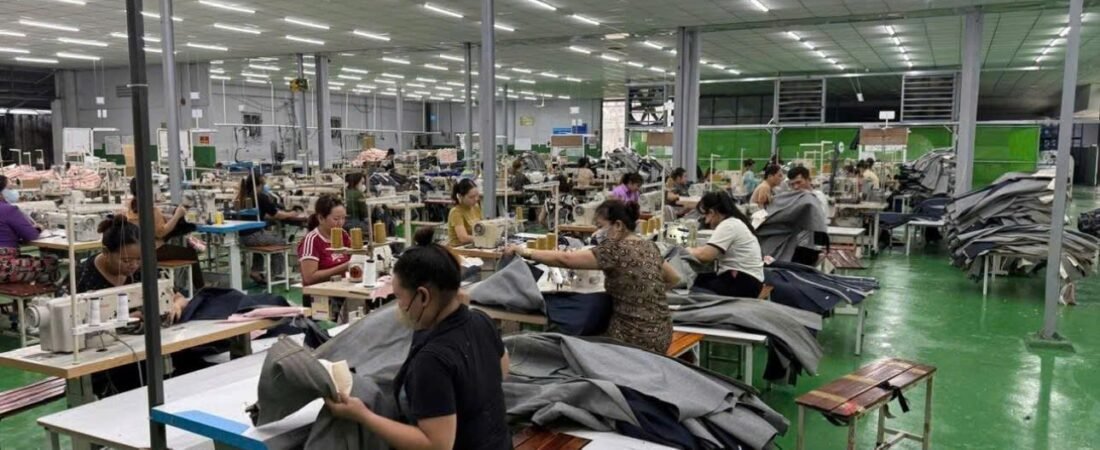
Lead time is where the two countries separate most clearly for buyers running seasonal drops, TikTok Shop or Amazon FBA replenishment cycles, or any program where being three weeks late has a real revenue cost. Vietnam’s industrial clusters around Ho Chi Minh City, Hanoi, and the surrounding provinces are relatively consolidated, which shortens the chain between fabric arrival, cutting, sewing, and export documentation. Reported lead times of 30-45 days for bulk orders are common for factories with dedicated capacity.
India’s supply chain is more geographically spread out, and port congestion plus a less consolidated logistics network are frequently cited as reasons lead times commonly run 60-90 days for comparable order sizes. That said, this same fragmentation can work in a buyer’s favor for small, urgent, or highly customized runs — a smaller regional workshop may be able to slot in a rush order that a large, fully booked Vietnamese mill would decline outright.
If your business model depends on fast repeat orders — Amazon FBA replenishment, TikTok Shop trend-chasing, or a retail chain restocking a bestseller — the lead time gap alone is often reason enough to default to Vietnam. If you are placing a single, highly detailed capsule collection with a longer runway, India’s timeline is less of a constraint.
Minimum Order Quantity (MOQ) Requirements
This is where a lot of new-to-export brands eliminate Vietnam without realizing it is factory-specific, not country-specific. It’s true that many large Vietnamese mills are built for scale and will not entertain an order under 1,000-2,000 units per style — their equipment, labor planning, and margins are all structured around long, uninterrupted runs. India’s more fragmented factory base, with a wider mix of small workshops and mid-size units, is more commonly associated with flexible, mixed-quantity orders.
But this is exactly the gap that mid-size, export-focused Vietnamese factories are built to close. AT Garment Factory, for example, structures MOQ in tiers rather than a single flat number: as low as 50 pieces for blank/undecorated garments, 100 pieces once printing is involved, 200 pieces for OEM branded product, and 2,000 pieces for hoodie, polo, and uniform programs that need dedicated line time. That tiered structure means an emerging Amazon or TikTok Shop brand can test a style in Vietnam without committing to India-style fragmentation or a 5,000-unit Vietnam mega-mill order. For a closer look at how MOQ, branding, and packaging fit together, see our guide to private label clothing manufacturing in Vietnam.
Fabric Sourcing and Raw Material Access
India’s single biggest structural advantage is raw material access. It is one of the world’s largest cotton producers and has a domestic textile ecosystem that covers a large majority of its own fiber needs, from cotton and silk to man-made fibers. That vertical integration can translate into shorter fabric lead times and, for cotton-forward programs, a real cost edge.
Vietnam, by contrast, imports a majority of the fabric and cotton it uses, mostly from China and, increasingly, from domestic mills being built out to reduce that dependency. What Vietnam trades for in raw material self-sufficiency, it makes up for in trade-agreement access: preferential access under agreements like the EU-Vietnam Free Trade Agreement and the CPTPP gives finished goods made in Vietnam duty advantages into markets that matter to fashion, sportswear, and streetwear brands. For denim, hoodie, and polo programs specifically, Vietnam’s fabric mills have scaled considerably over the past five years, narrowing what used to be a clear India advantage. See our breakdown of hoodie and polo shirt manufacturing in Vietnam for fabric-specific detail.
OEM, ODM, and Private Label Capabilities
India is frequently positioned as offering “fuller” OEM/ODM service — design support, fabric sourcing, sampling, and production bundled under one roof, particularly at factories oriented toward Western fashion brands with embellishment-heavy or embroidery-heavy product. Vietnam’s industry has historically leaned more CMT (cut-make-trim), where the buyer supplies more of the fabric and design spec and the factory executes production.
That gap has narrowed significantly. Export-oriented Vietnamese factories serving Amazon brands, TikTok Shop sellers, and private label buyers now routinely offer in-house pattern-making, sample development, and fabric sourcing as part of a full OEM or ODM package, not just cut-and-sew execution. The practical difference between OEM and ODM — and which one is right for a given brand stage — is covered in detail in our guide to OEM vs ODM manufacturing models. For most Amazon FBA and TikTok Shop brands scaling a private label line, a Vietnam-based ODM partner with tiered MOQ now offers comparable service depth to an India-based one, with the added benefit of Vietnam’s shorter lead times.
Quality Control and Consistency at Scale
This is arguably the most underrated factor in the Vietnam-vs-India decision. Vietnam’s garment clusters benefit from more consolidated infrastructure and a more standardized factory environment, which tends to produce more consistent quality across large, repeat orders — important for uniform programs, wholesale replenishment, and any brand that can’t afford piece-to-piece variation. India’s fragmented factory base spans a much wider range of compliance maturity and equipment age across its many states, which is commonly cited as a reason buyers sourcing from India budget for more hands-on, in-person QC oversight, especially on first orders.
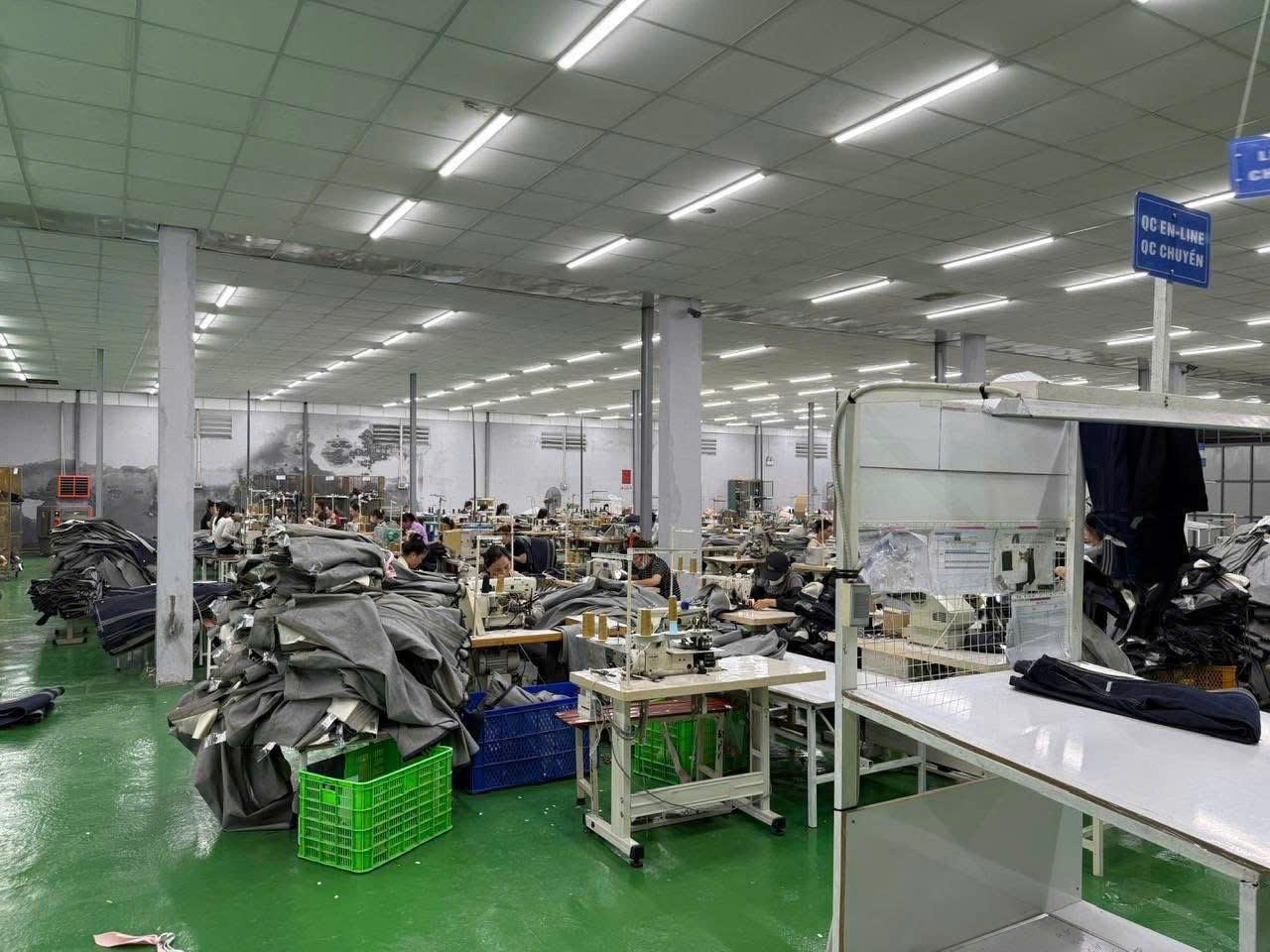
Neither country is immune to quality issues, and no factory in either country should be trusted blindly on a first order. What differs is the baseline: buyers new to sourcing from India are more often advised to budget for a third-party inspection agency and multiple pre-production checkpoints, while established Vietnamese exporters with in-house QC teams and documented inspection processes can reduce (though never eliminate) that need. Our detailed look at how Vietnam garment factories manage quality control covers what inline and final inspection should look like in practice.
Export Infrastructure, Tariffs, and Trade Agreements
Vietnam’s port infrastructure around Ho Chi Minh City and Hai Phong is generally regarded as more consolidated and predictable than India’s, where congestion at major ports has been a recurring complaint among freight forwarders. Vietnam also holds duty-preferential access to a wide set of markets through the EU-Vietnam Free Trade Agreement, CPTPP, and RCEP, which matters for brands selling into the EU, UK, Australia, Japan, and other CPTPP markets.
US tariff treatment for both countries has been unusually volatile through 2026, with multiple rate changes tied to Section 122 surcharges, reciprocal tariff actions, and ongoing legal challenges working through US courts. Because these rates have moved more than once this year and remain subject to further change, we are deliberately not quoting a specific percentage here — any number published today could be outdated by the time you read this. The practical takeaway: buyers sourcing from either country should confirm current landed-cost tariff rates directly with a licensed customs broker before finalizing pricing, rather than relying on a blog post’s snapshot.
Which Country Fits Your Brand? A Decision Framework
Rather than a single winner, here is how the decision tends to break down by buyer type:
Amazon FBA and TikTok Shop brands that need to restock a winning SKU fast and can’t afford a 90-day lead time generally do better with Vietnam. Speed to shelf matters more than marginal unit cost when a trend has a 6-12 week shelf life. See our guide on sourcing an Amazon FBA clothing supplier in Vietnam for FBA-specific considerations.
Boutique and heritage fashion brands that rely on hand embroidery, embellishment, or cotton-specific fabrics, and that can tolerate a longer production runway, are often better matched to India’s design-forward OEM/ODM factories.
Uniform buyers — schools, hospitals, hotels, restaurant chains, and corporate accounts — usually prioritize consistency across a large repeat order over marginal cost savings, which tends to favor Vietnam’s more standardized production environment. Our guide to uniform manufacturing in Vietnam covers this in more detail.
Buying offices and sourcing agents managing a multi-brand, multi-category portfolio frequently end up dual-sourcing: Vietnam for volume basics and speed-sensitive categories, India for embellishment-heavy or cotton-intensive lines. If you’re evaluating factories on behalf of multiple brands, our guide for buying offices and procurement teams sourcing from Vietnam walks through factory vetting criteria.
If you’re comparing Vietnam against other alternatives too, not just India, our side-by-side breakdowns of Vietnam vs China and Vietnam vs Bangladesh use the same comparison framework.
Why International Buyers Are Choosing AT Garment Factory in Vietnam
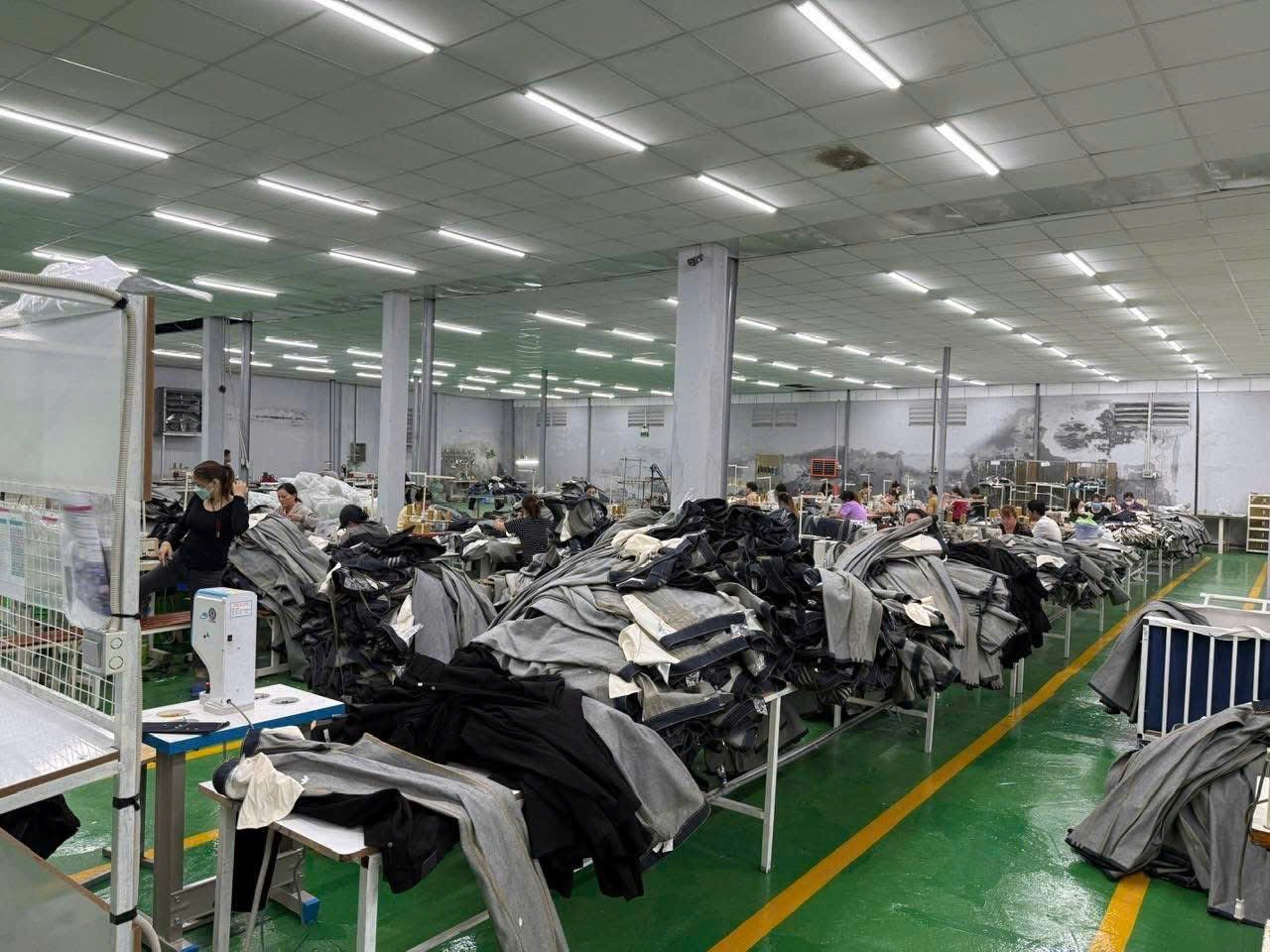
AT Garment Factory is based in Binh Tan, Ho Chi Minh City, with more than 10 years of export manufacturing experience and monthly capacity of over 100,000 pieces. We work across OEM, ODM, private label, and white label production for polo shirts, cotton t-shirts, sportswear, kids’ clothing, men’s and women’s fashion, denim, jean and kaki jackets, hoodies, sweatshirts, and uniform programs.
What differentiates us from the “1,000-unit-minimum” version of a Vietnamese mill is the tiered MOQ structure built specifically for growing brands: 50 pieces for blank goods, 100 pieces once printing is added, 200 pieces for OEM branded orders, and 2,000 pieces for hoodie, polo, and uniform programs. That means an Amazon or TikTok Shop brand can test and scale a style in Vietnam without the fragmentation risk that comes with juggling multiple small India workshops, while still getting Vietnam’s shorter lead times and more consolidated QC process.
You can see the categories we produce on our products page, and the full scope of OEM/ODM/private label services on our services page.
Frequently Asked Questions
Is Vietnam cheaper than India for garment manufacturing?
Not always on quoted unit price. India’s reported wage range ($150-$250/month) is generally lower than Vietnam’s ($250-$350/month), and India’s domestic cotton supply can lower fabric cost for cotton-heavy programs. Vietnam’s advantage is usually in total landed cost predictability — fewer rework surprises, faster turnaround, and more standardized compliance — rather than the lowest quoted price.
Which country has faster lead times, Vietnam or India?
Vietnam is generally faster for bulk, repeat orders, with reported lead times of 30-45 days versus India’s commonly cited 60-90 days, largely due to Vietnam’s more consolidated industrial clusters and logistics network. India can sometimes be faster for small, highly customized runs where a smaller regional workshop has open capacity.
Can I order small quantities from a Vietnam factory?
It depends on the factory. Large mills built for scale often require 1,000+ units per style, but mid-size export factories increasingly offer tiered MOQ — for example, AT Garment Factory starts at 50 pieces for blank garments and 200 pieces for OEM branded orders, which is closer to what many buyers expect from India’s smaller workshops.
Does India or Vietnam have better OEM/ODM services?
India has traditionally been positioned as offering fuller-service OEM/ODM, including in-house design and fabric sourcing. That gap has narrowed: many export-focused Vietnamese factories now offer comparable pattern-making, sampling, and sourcing support as part of a full ODM package, combined with Vietnam’s faster production timelines.
Which country is better for private label denim or hoodies?
Vietnam has scaled its denim and heavyweight cotton fabric mills considerably in recent years and is a common choice for hoodie, sweatshirt, and jean jacket programs that need consistent fabric weight and wash quality across a large run, backed by faster lead times than India typically offers for comparable orders.
Should I split sourcing between Vietnam and India?
Many buying offices and multi-category brands do exactly this: Vietnam for volume basics, sportswear, and speed-sensitive replenishment, India for embellishment-heavy or cotton-intensive product with a longer runway. Dual-sourcing adds coordination overhead but reduces single-country risk.
Conclusion: Making the Right Sourcing Decision
Vietnam and India are not interchangeable options with different price tags — they are structurally different sourcing environments. Vietnam wins on lead time, consistency, MOQ flexibility at the right factory, and trade-agreement access. India wins on raw material self-sufficiency and design-forward OEM/ODM depth for embellishment-heavy product. The right choice depends on your product category, order cadence, and how much variance your brand can tolerate between shipments.
If your brand needs fast, consistent, scalable production — whether that’s an Amazon FBA restock, a TikTok Shop drop, a uniform program, or a private label launch — AT Garment Factory can walk you through real MOQ, lead time, and landed cost numbers for your specific product before you commit. Reach out via email at thanhtung113123@gmail.com, WhatsApp at this link, or Zalo at zalo.me/84334061502. You can also browse our full product range or get in touch through our contact page.