Denim is one of the few garment categories where a sourcing mistake is expensive and highly visible. A shade mismatch between two production lots, a stiff hand-feel after the first home wash, or a six-week delay because the wash house couldn’t hit a fade pattern — these are the failures that show up on a retail floor or an Amazon return page, not just in a factory audit report. That is why more fashion brands, private label sellers, and buying offices are shifting denim and jean-jacket programs to Vietnam instead of treating denim as a China-only or Bangladesh-only category.
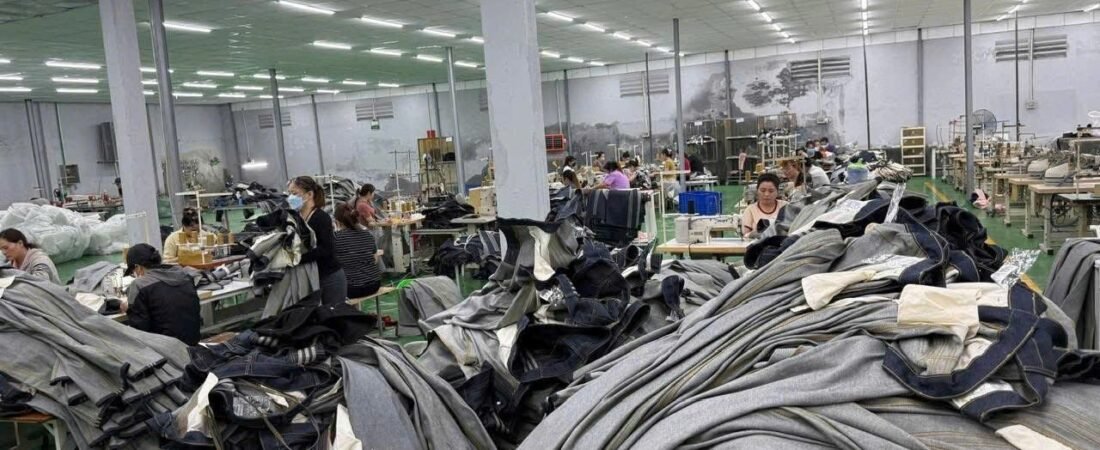
This guide is written from the factory floor rather than a general sourcing blog. It walks through what a denim and jean manufacturer in Vietnam actually does with your tech pack — fabric sourcing, wash development, cutting and sewing, quality control, and shipping — along with the numbers buyers ask about most: MOQ, cost per pair, and lead time. AT Garment Factory runs a dedicated denim production line in Ho Chi Minh City alongside jean-jacket and kaki-jacket capacity, and this article reflects how that line is actually organized rather than a generic industry overview.
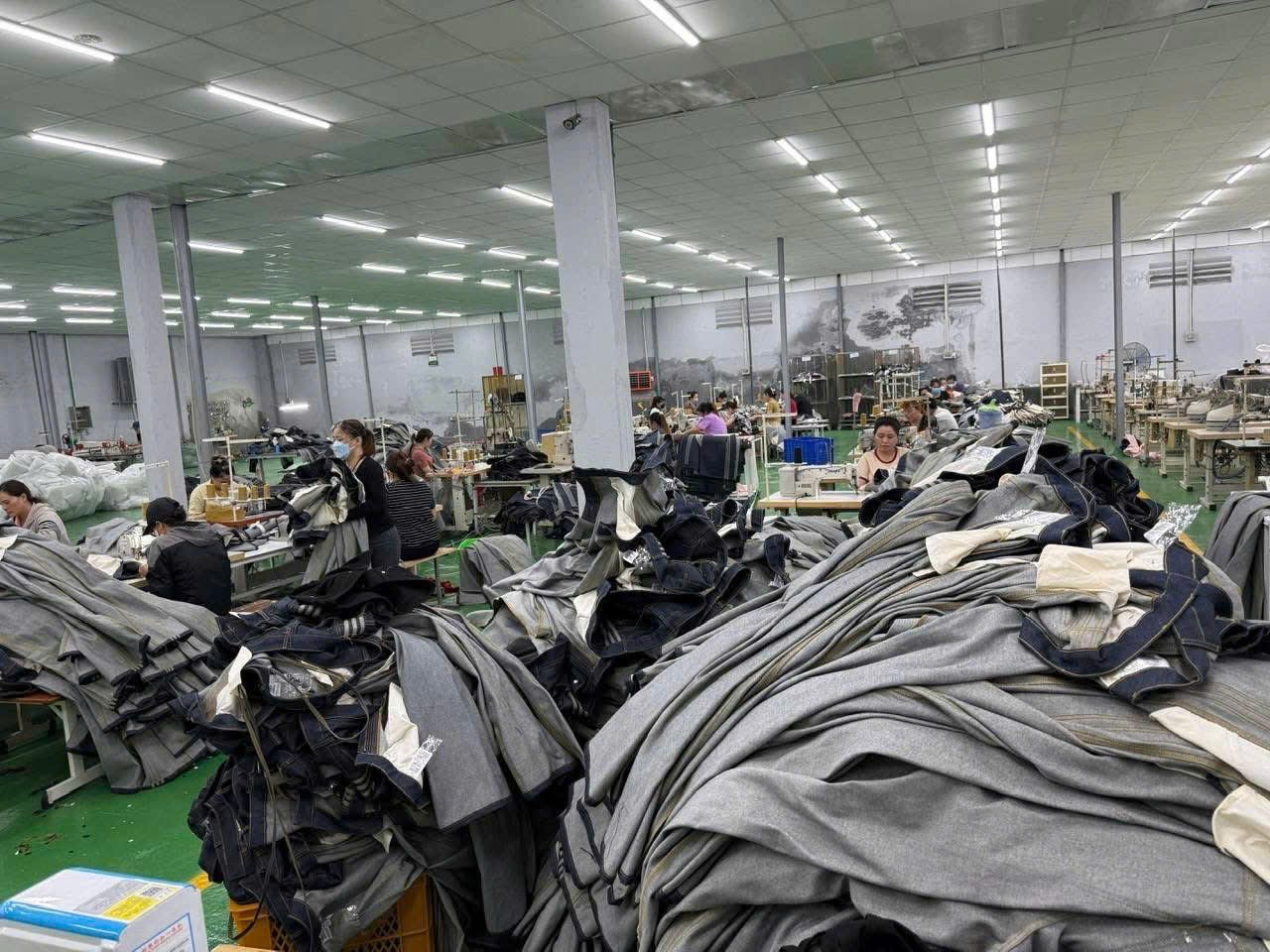
Table of Contents
- Why Buyers Are Moving Denim Production to Vietnam
- Denim and Jean Products We Manufacture
- Fabric Options for Custom Denim
- Denim Washing and Finishing Techniques
- The OEM Denim Production Process, Step by Step
- MOQ and Pricing for Custom Jeans and Jean Jackets
- Lead Times From Sample to Delivery
- Quality Control for Denim Garments
- Sustainability in Denim Manufacturing
- Vietnam vs China, Turkey, and Bangladesh for Denim Sourcing
- Who Should Source Denim From Vietnam
- How to Start Your Denim Order
- Frequently Asked Questions
Why Buyers Are Moving Denim Production to Vietnam
Vietnam’s overall apparel and textile sector has grown from under 1% of global export share in the early 2000s to roughly 5.6% today, according to industry trade estimates, and denim has followed a similar trajectory as wash houses and indigo-dyeing capacity have matured around Ho Chi Minh City and the surrounding provinces. Buyers who historically split orders between China for speed and Bangladesh for price are increasingly adding Vietnam as a middle option: a country with trade agreements that reduce landed cost into the EU and UK, and a workforce that industry reports describe as producing several times more output per worker than a decade ago thanks to automation on cutting and sewing lines.
None of this means Vietnam is the cheapest place to wash a pair of jeans. Production costs in Vietnam are commonly reported as 40–45% higher than in Bangladesh or Indonesia, largely due to higher wages and stronger compliance standards. What buyers are actually paying for is consistency — fewer wash-shade rejects, tighter delivery windows, and factories that can hold a repeatable QC process across reorders, which matters more for a $60 retail pair of jeans than saving a dollar a unit on FOB price.
- Vietnam’s garment and textile sector accounts for an estimated 5.6% of global apparel exports today, up from under 1% in 2003, per industry trade estimates.
- The country is home to an estimated 3,000+ textile mills and 5,000+ garment factories, giving buyers real choice among fabric and wash partners rather than a single-supplier bottleneck.
- Trade agreements including the EU–Vietnam FTA (EVFTA) and the CPTPP can reduce or eliminate import duties on qualifying denim shipments into the EU, UK, Canada, and other member markets — a meaningful landed-cost advantage over China for many Western buyers.
- Reported FOB pricing for standard five-pocket jeans out of Vietnam commonly falls in the $4–$8 per pair range before wash complexity, trims, and packaging are added; actual figures vary widely by fabric weight, wash treatment, and order volume.
Denim and Jean Products We Manufacture
AT Garment Factory’s denim line covers the categories that make up most B2B denim programs, from core five-pocket jeans through outerwear and kids’ lines. Below is how the capability breaks down by product family.
Men’s and Women’s Jeans
Straight, slim, skinny, relaxed, bootcut, mom-fit, and cargo-denim hybrid styles are all in scope, along with distressed and ripped detailing, whisker and fade patterns, and embroidery or leather-patch branding on the waistband. Pattern grading for both men’s and women’s fits is handled in-house, so a brand can submit one base block and request multiple silhouettes from the same fabric lot.
Denim and Kaki Jackets
Trucker-style jackets, oversized streetwear cuts, and kaki (twill) field jackets run on the same cutting and sewing infrastructure as the jeans line, which is useful for brands that want a matched jean-and-jacket set from a single factory instead of coordinating two suppliers. This is one of the more requested combinations from streetwear and fashion brands building a seasonal denim capsule alongside hoodies and polos.
Kids’ Denim and Workwear
Kids’ jeans and denim jackets are produced for family apparel brands that extend an adult denim line downward, and heavier-weight denim and twill pieces are also produced as durable workwear for corporate and institutional buyers — a category that overlaps with the uniform programs AT Garment already runs for schools, hospitality groups, and companies.
Fabric Options for Custom Denim
Denim fabric choice drives most of the final cost, hand-feel, and durability of the finished garment, so buyers typically choose from a short list of proven constructions rather than starting from scratch:
- 100% cotton rigid/raw denim (12–14oz): a structured, heritage-style hand-feel that ages and fades individually — common for premium and selvedge-style programs.
- Cotton-spandex stretch denim (8–10oz, 1–3% spandex): the standard base for skinny and slim-fit fashion jeans that need recovery and comfort stretch.
- Cotton-poly blends: a cost-efficient construction common in mid-market and value-tier programs where price per unit matters more than raw-denim character.
- Cotton-Tencel-spandex blends: a softer hand-feel that has been trending in premium fashion denim over the past few seasons.
- Recycled-cotton and GRS-eligible blends: sourced through partner mills for brands with a recycled-content claim or take-back program.
- Organic cotton (GOTS-eligible sourcing on request): available for EU and US brands where organic or certified-content claims are part of the product story.
Fabric weight and stretch percentage should be locked before sampling begins, since a change in fabric after the first sample round is one of the most common causes of lead-time slippage on a denim program.
Denim Washing and Finishing Techniques
Washing is what turns a raw-cut denim garment into the color, softness, and worn-in look a brand actually sold. Traditional stone washing, enzyme washing, acid washing, and bleach washing are all still used and remain the most economical route for standard mid-fade programs. Over the past several years, though, more premium and EU-bound denim orders have shifted toward two more resource-efficient techniques:
- Ozone washing: research comparing denim finishing methods has found that ozone gas can meaningfully cut water and energy use versus conventional stone washing, because it replaces part of the rinse cycle while still fading indigo effectively.
- Laser fading: creates precise whiskering, fading, and distressed effects without water or chemical abrasion at all, which is why more premium and sustainability-conscious brands are specifying laser over hand-sanding or acid spray for detail work.
- Enzyme (bio) washing: uses cellulase enzymes instead of stone pumice to soften and lightly fade fabric, reducing damage to fiber strength compared to heavy stone washing.
- Garment dye and overdye: used for colored denim (black, olive, burgundy, and other fashion shades) rather than classic indigo fading.
Buyers should request a physical wash-standard swatch and lock it as the approved reference before bulk production starts — photos alone are not reliable enough to match shade and hand-feel across a full production run.
The OEM Denim Production Process, Step by Step
Most buyers approach a denim factory under an OEM model, supplying their own tech pack and pattern rather than choosing from a catalog. Here is how that process runs on AT Garment’s denim line:
- Tech pack and fabric sourcing: the buyer submits measurements, construction details, and a reference sample or photo; the factory sources matching fabric options and wash standards.
- Pattern and first sample: a first physical sample is cut and sewn against the approved pattern, typically within two to three weeks.
- Sample approval and fit revisions: buyers commonly request one to three revision rounds to lock fit, wash shade, and hardware before bulk approval.
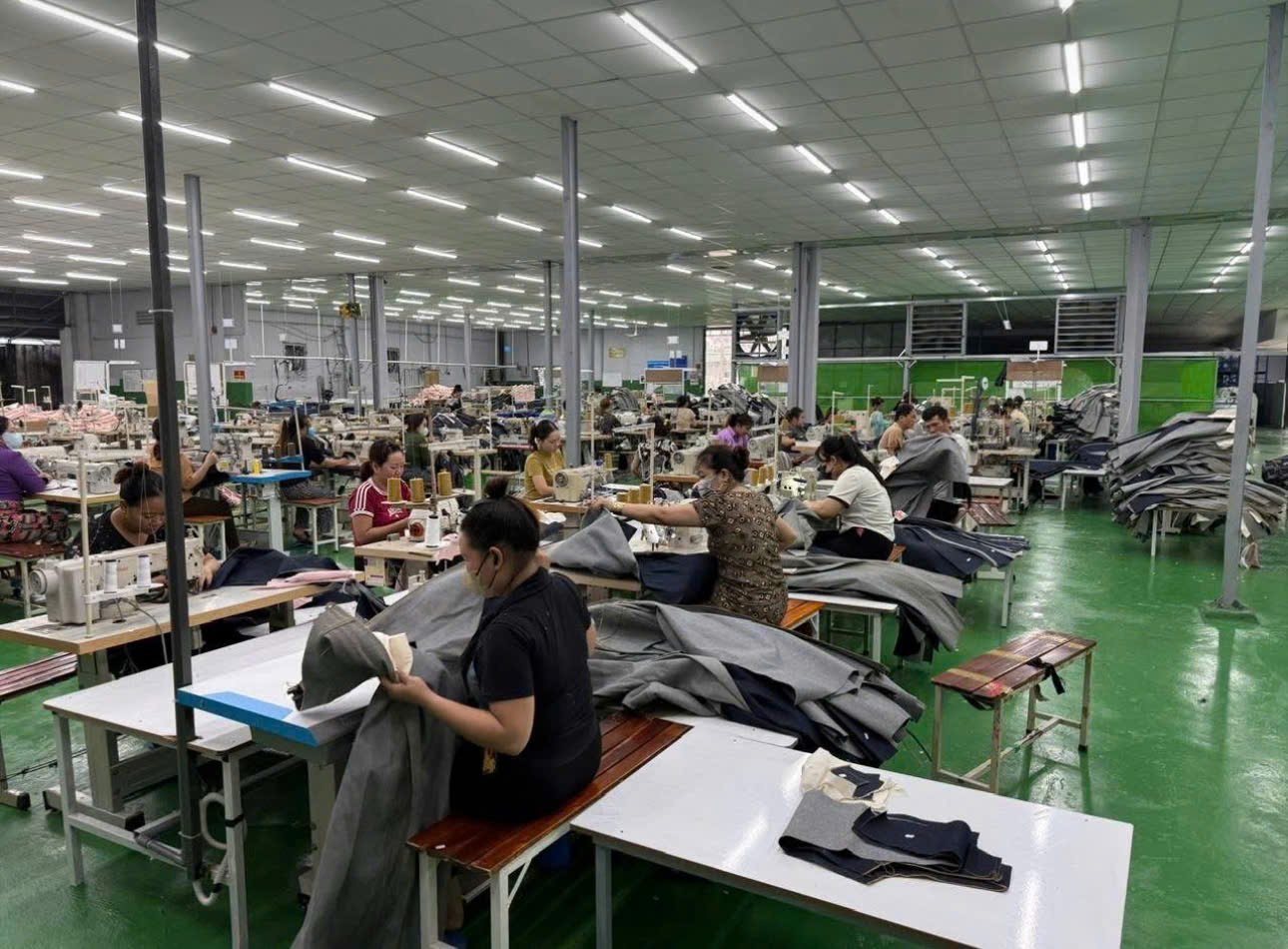
- Bulk cutting and sewing: fabric is cut in bulk lots and sewn on dedicated lines once the approved sample, or “gold seal” sample, is signed off.
- Washing and finishing: garments move to the wash house for the approved treatment — stone, enzyme, ozone, or laser — then are dried, pressed, and hardware-finished (rivets, buttons, patches).
- Quality control inspection: AQL-based inspection checks shade consistency, measurements, stitching, and hardware security before packing.
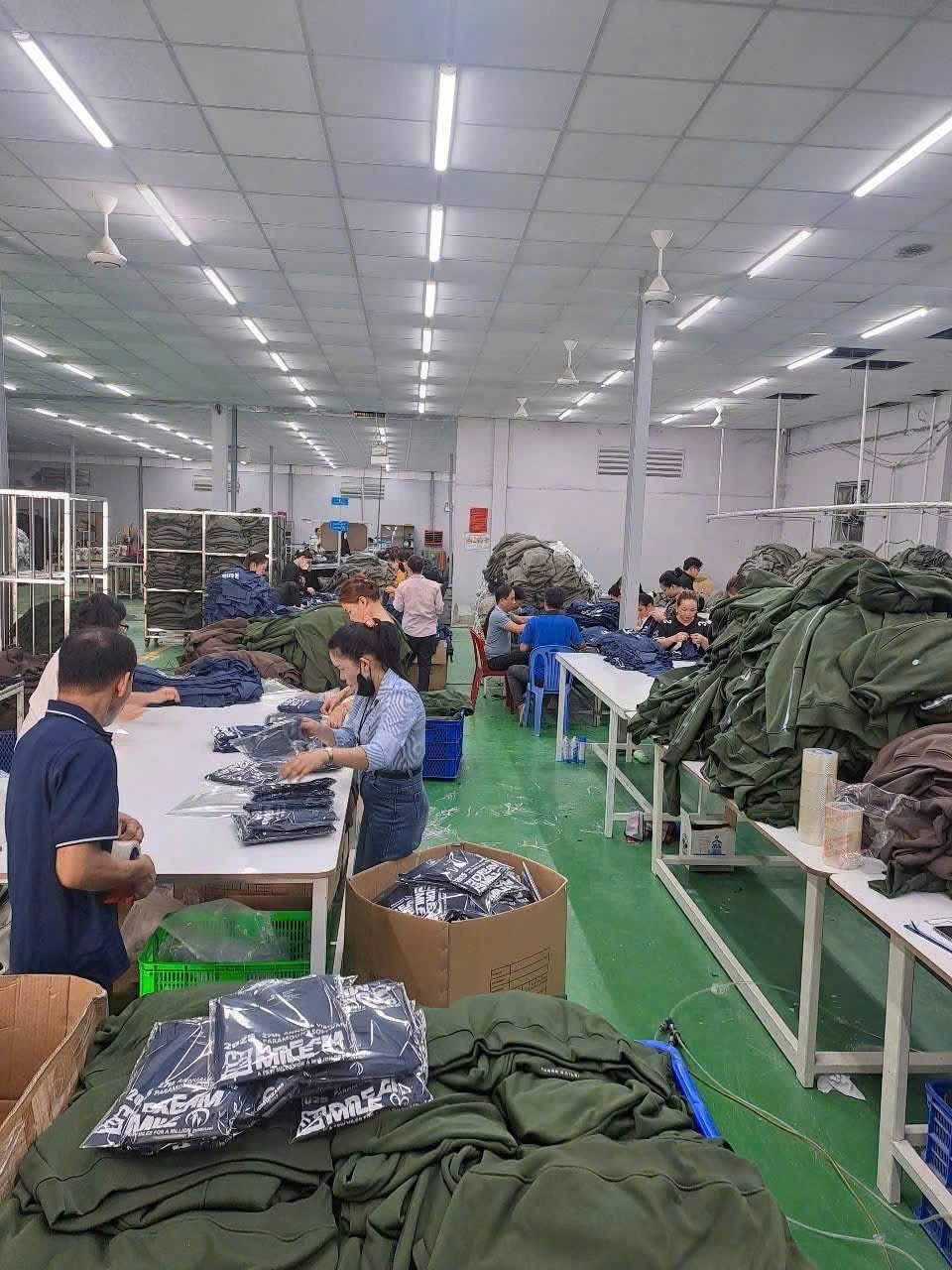
- Packing and shipping: garments are folded or hung per buyer specification, polybagged, cartoned, and handed to the buyer’s freight forwarder or the factory’s logistics partner.
MOQ and Pricing for Custom Jeans and Jean Jackets
AT Garment Factory works on a tiered minimum-order structure across its product lines: roughly 50 pieces for blank/unbranded goods, 100 pieces once printing is added, 200 pieces for OEM branded goods, and around 2,000 pieces per style for bulk categories such as hoodies, polos, and uniform programs. Denim and jean-jacket OEM programs sit at the upper end of this range — full branded jean or jacket runs typically start around 2,000 pieces per style, in line with the factory’s mid-to-large production scale and the fixed setup cost of cutting, sewing, and wash-house minimums for a single fabric and wash combination.
For context, some boutique specialist denim washers in the region advertise MOQs as low as 300 pieces per style, and it’s worth knowing that option exists if a brand is testing a new style before committing to volume. The trade-off is usually per-unit price and delivery reliability at scale: a factory built around 2,000+ piece programs, like AT Garment, is generally positioned to hold tighter per-unit pricing and more consistent wash-lot matching once a brand moves to reorder volume. Reported FOB pricing industry-wide for standard five-pocket jeans commonly ranges from $4 to $8 per pair before wash complexity, trims, and packaging, with premium fabric, heavy distressing, or laser detailing pushing costs toward the higher end of that range.
Lead Times From Sample to Delivery
Denim is slower to produce than most garment categories because of the wash step, and buyers should plan around that rather than be surprised by it. Industry benchmarks commonly cited for custom jeans production put the full cycle — from tech pack submission to shipped goods — at roughly 10 to 16 weeks: 2 to 3 weeks for initial sampling, time for up to three revision rounds, 5 to 7 weeks for bulk production depending on wash complexity, and 1 to 2 weeks for shipping preparation. A simple garment-dyed style with no distressing can land toward the shorter end of that window; a heavily distressed, multi-step wash with hand-sanding detail will land toward the longer end.
Buyers new to denim sourcing, or new to working with a Vietnam factory generally, should read the factory’s step-by-step ordering guide before submitting a tech pack, since most lead-time slippage on a first order comes from incomplete specs rather than production delays.
Quality Control for Denim Garments
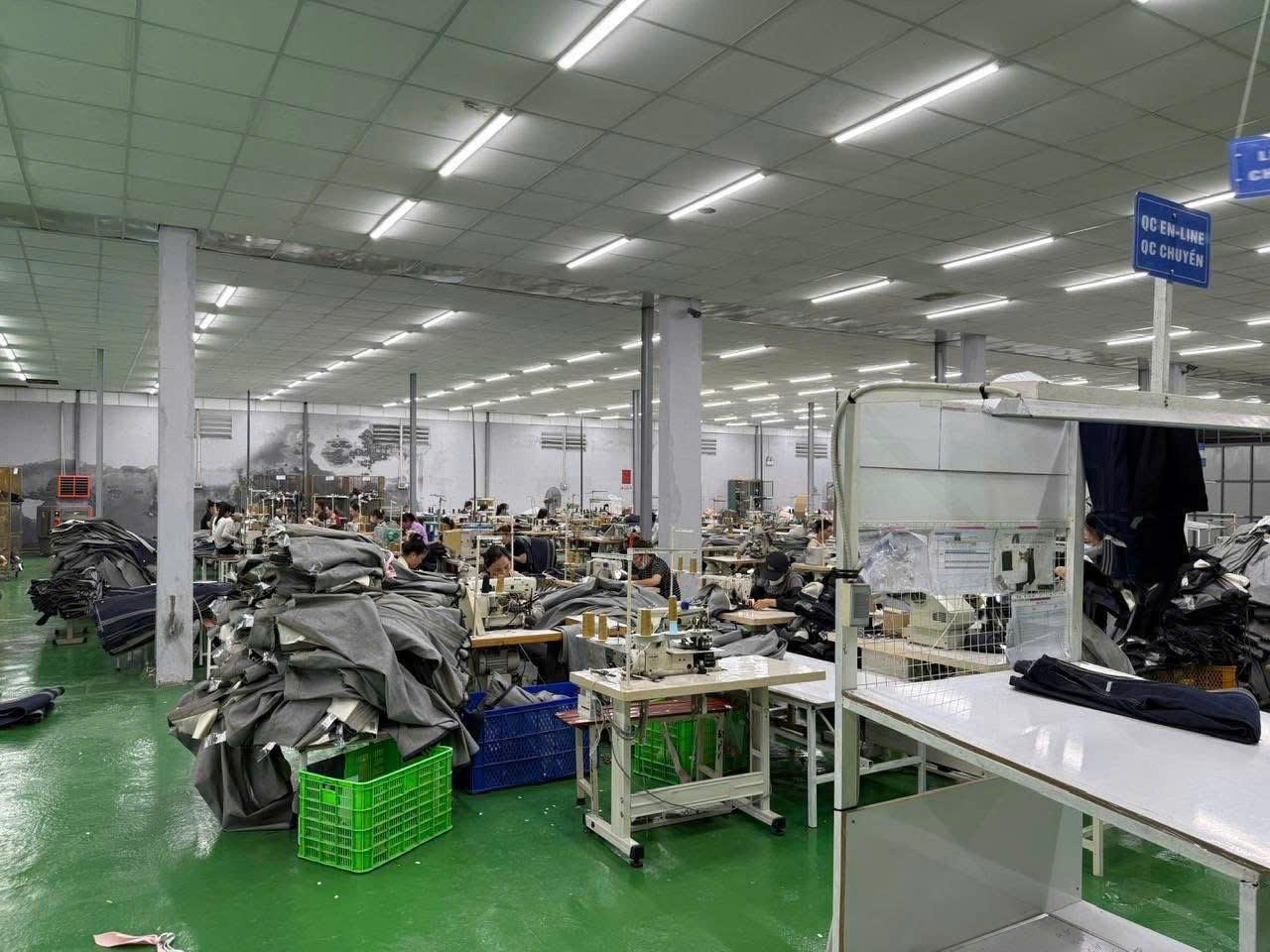
Denim has failure modes that don’t show up in most other garment categories, so QC on a jean or jacket order checks for more than stitching and measurements. On top of the standard AQL inspection process described in AT Garment’s quality control overview, denim-specific checkpoints include:
- Shade and lot matching: comparing garments against the approved wash-standard swatch across different production batches, since indigo fading is never perfectly identical batch to batch.
- Shrinkage testing: washing a sample after cutting to confirm the pattern accounts for post-wash shrinkage, which can run 3–7% on untreated cotton denim.
- Colorfastness and crocking: checking that indigo dye doesn’t transfer excessively onto light-colored fabric through rubbing (dry and wet crocking tests).
- Hardware pull-strength: rivets, buttons, and zippers are tested for attachment strength to meet retail and children’s-wear safety standards where relevant.
- Stitch density on stress points: inseams, crotch seams, and belt loops are checked against a minimum stitches-per-inch spec, since these are the points most likely to fail in wear.
Sustainability in Denim Manufacturing
Denim washing has historically been one of the more resource-intensive steps in apparel production, and buyers — particularly those selling into the EU and UK — are increasingly asked by their own customers or retail partners to document how a garment was finished. Shifting a wash program toward ozone and laser finishing, as outlined earlier in this guide, is the most direct lever available: both methods are commonly reported to cut water and chemical use compared to conventional stone or acid washing, without changing the visual fade the customer expects. Recycled-cotton and organic-cotton fabric options, sourced through partner mills, address the fiber side of the sustainability question for brands making a specific material claim on their packaging or product page.
Buyers with specific certification requirements (GOTS, GRS, or a retailer-specific chemical restricted-substances list) should raise them at the tech-pack stage, since fabric and wash-chemical sourcing needs to be confirmed before sampling, not after.
Vietnam vs China, Turkey, and Bangladesh for Denim Sourcing
Denim sourcing decisions usually come down to the same four countries. A quick comparison, building on AT Garment’s broader country guides for Vietnam vs China, Vietnam vs Bangladesh, and Vietnam vs India:
- Vietnam: a balance of cost, quality consistency, and FTA-driven duty savings into the EU, UK, and CPTPP markets — well suited to mid-to-premium denim programs that need repeatable wash quality.
- China: the fastest sampling and the broadest range of specialty trims and hardware, but exposed to higher tariffs into the US and increasing buyer pressure to diversify sourcing away from a single country.
- Turkey: geographically close to the EU with some of the fastest bulk denim turnarounds reported in the industry, but generally at a higher FOB cost than Vietnam or Bangladesh.
- Bangladesh: typically the lowest FOB cost for basic denim, though wash-house sophistication for premium finishes and lead-time reliability are commonly reported as less consistent than Vietnam or Turkey.
Who Should Source Denim From Vietnam
In practice, four types of buyers make up most of AT Garment’s denim inquiries:
- Streetwear and fashion brands building a denim capsule — jeans plus a matched jacket — alongside an existing hoodie or T-shirt line.
- Amazon and TikTok Shop sellers launching a private label denim SKU, where consistent sizing and packaging matter as much as the fabric itself; see the factory’s TikTok Shop sourcing guide for platform-specific packaging and turnaround considerations.
- Workwear and uniform buyers who need heavier-weight denim or twill for durability rather than fashion fading.
- Buying offices and sourcing agents adding a denim category to an existing multi-product Vietnam program; see the guide for buying offices and procurement teams for how multi-factory sourcing programs are typically structured.
How to Start Your Denim Order With AT Garment Factory
AT Garment Factory operates from Binh Tan, Ho Chi Minh City, with over 10 years of export manufacturing experience and monthly capacity above 100,000 pieces across product lines, giving denim programs room to scale from an initial sample order into repeat bulk production without switching factories. The process for a new denim buyer follows the same sequence outlined earlier in this guide: submit a tech pack or reference sample, confirm fabric and wash options, approve a physical sample, move to bulk production, pass QC, and ship. Full detail on documentation and communication at each stage is covered in the buyer’s ordering guide, and general capabilities are listed on the products page and services page.
Frequently Asked Questions
What is the minimum order quantity for custom jeans or denim jackets in Vietnam?
At AT Garment Factory, full OEM branded denim programs typically start around 2,000 pieces per style, matching the factory’s standard bulk-production tier. Smaller pilot or blank-goods runs can sometimes be arranged case by case; some smaller specialist wash houses in the region advertise MOQs as low as 300 pieces.
How long does it take to get a jeans sample from a Vietnam factory?
Initial sampling commonly takes 2 to 3 weeks, though complex washes or multiple fit-revision rounds can extend that timeline. Full production, from tech pack to shipped bulk goods, typically runs 10 to 16 weeks depending on wash complexity and order volume.
What’s the difference between a stone wash and an ozone wash?
Stone washing uses pumice stones (or enzyme substitutes) tumbled with the garment to create fading and softness. Ozone washing uses ozone gas to fade indigo dye with reduced water and energy use compared to conventional stone washing, and is increasingly requested by sustainability-focused and EU-bound buyers.
Can AT Garment Factory produce organic or recycled-cotton denim?
Yes — recycled-cotton, GRS-eligible, and organic (GOTS-eligible) fabric sourcing can be arranged through partner mills. These options should be specified at the tech-pack stage since sourcing lead time differs from standard cotton-blend denim.
What’s the average FOB cost per pair for custom jeans made in Vietnam?
Reported industry FOB pricing for standard five-pocket jeans commonly ranges from $4 to $8 per pair before wash complexity, trims, and packaging are added. Premium fabric, heavy distressing, and laser detailing push costs toward the higher end of that range.
Do you handle private label branding — woven patches, rivets, custom hardware — for denim?
Yes, custom woven back-patches, embossed leather patches, branded rivets and buttons, and custom hangtag and packaging setups are part of AT Garment’s standard OEM and private label denim service.
Conclusion
Denim rewards buyers who plan for its slower, wash-dependent production cycle rather than treating it like a standard T-shirt order. Vietnam sits in a useful middle position for this category — not the cheapest FOB price on the table, but a country with the fabric variety, wash-house sophistication, and trade-agreement access to support a repeatable, mid-to-premium denim program at 2,000+ pieces per style. For buyers who need lower volume or the absolute lowest unit cost, Bangladesh or a boutique wash specialist may be a better fit; for buyers who want consistency across reorders and duty savings into the EU and UK, Vietnam is worth a serious look.
To start a denim or jean-jacket program with AT Garment Factory, send a tech pack or reference sample to thanhtung113123@gmail.com, message on WhatsApp, or reach out on Zalo. You can also browse full capabilities on the products page or get in touch through the contact page.