If you’ve spent any time requesting quotes from Vietnam garment factories, you’ve probably hit the same wall: quote after quote comes back demanding 1,000, 3,000, even 5,000 pieces per style before a factory will even schedule a sample. For a new brand testing a design, an Amazon or TikTok Shop seller validating a SKU, or a small business ordering a first uniform run, that MOQ (minimum order quantity) is often the single biggest barrier to working with a Vietnam manufacturer at all.
The good news: “low MOQ” in Vietnam is real, but it isn’t one number — it’s a tier system tied to what you’re actually asking the factory to produce. A blank cotton t-shirt in a stock color is a completely different manufacturing decision than a five-color embroidered hoodie in a custom fabric. This guide breaks down exactly how MOQ works at a real Vietnam OEM factory, what minimum order quantity you can expect at each production tier, why those numbers exist the way they do, and how to structure your first order so you don’t overpay for volume you don’t need — or get quoted a number that kills the project before it starts.
Table of Contents
- What “Low MOQ” Actually Means in Vietnam
- The Four Real MOQ Tiers: 50 to 2,000 Pieces
- Why MOQ Varies So Much Between Factories
- Tier 1 — Blank / Private Label: MOQ From 50 Pieces
- Tier 2 — Printed or Decorated: MOQ From 100 Pieces
- Tier 3 — Branded OEM: MOQ From 200 Pieces
- Tier 4 — Hoodies, Polos & Uniform Programs: MOQ From 2,000 Pieces
- How to Qualify for the Lowest MOQ Tier
- Vietnam Low MOQ vs. China, India, Turkey & Bangladesh
- Red Flags: When a “Low MOQ” Claim Isn’t Real
- How to Scale From a Low MOQ Test Order to Full Volume
- FAQ: Low MOQ Clothing Manufacturing in Vietnam
- Conclusion
What “Low MOQ” Actually Means in Vietnam
Most sourcing guides quote a single, vague MOQ range for “Vietnam clothing manufacturing” — usually somewhere between 300 and 1,000 pieces per style. That number isn’t wrong, but it’s incomplete. It describes the MOQ for one specific scenario: a fully custom garment, in a custom fabric, with your own label sewn in. It says nothing about what happens when you start smaller — with a blank sample run, a private-label piece in stock fabric, or a test batch before you commit to a full production order.
In practice, a factory’s real MOQ is not a single figure — it moves with four variables: fabric (stock vs. custom-dyed or custom-knitted), construction complexity (a basic tee vs. a lined jacket with zippers), decoration (blank vs. printed vs. embroidered), and branding (unbranded vs. custom neck labels, hang tags, and packaging). Vietnam factories that are honest about MOQ will quote you a tier, not a flat number, once they know which of these four variables apply to your order.
The Four Real MOQ Tiers: 50 to 2,000 Pieces
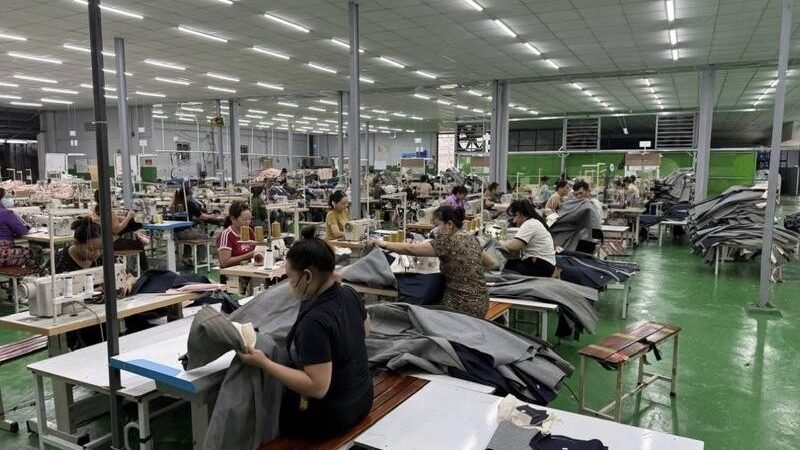
At AT Garment Factory, we quote MOQ across four tiers, based on more than a decade of running production for startups, Amazon and TikTok Shop brands, buying offices, and corporate/uniform buyers out of our facility in Bình Tân, Ho Chi Minh City. These are the real minimums we work with, not marketing numbers:
- Tier 1 — Blank / private label, stock fabric and stock color: MOQ starts at 50 pieces per style/color.
- Tier 2 — Printed or decorated (screen print, DTF, simple embroidery) on stock blanks: MOQ starts at 100 pieces per style/color.
- Tier 3 — Fully branded OEM (custom neck label, hang tag, poly bag, care label): MOQ starts at 200 pieces per style/color.
- Tier 4 — Complex constructions: hoodies, sweatshirts, polos, and corporate/school/hospitality uniform programs with multiple components: MOQ starts at 2,000 pieces total across the program.
Notice the pattern: MOQ climbs as complexity climbs, not as an arbitrary gate to push you toward bigger orders. Each tier corresponds to a real cost driver in the factory — and understanding those drivers is what lets you negotiate intelligently instead of just accepting whatever number lands in your inbox.
Why MOQ Varies So Much Between Factories
Buyers are often told MOQ is arbitrary or negotiable “if you just ask nicely.” It isn’t arbitrary — it’s a direct pass-through of fixed costs the factory has to absorb regardless of order size. Industry-wide sourcing analysis commonly points to the same four cost drivers:
- Fabric mill minimums. Stock fabric already sitting in a factory’s or trader’s warehouse can be cut in almost any quantity. A custom color, custom-dyed lot, or custom knit/weave usually requires the mill to run a minimum yardage — commonly reported in industry guides as several hundred meters per color — regardless of how many finished garments you actually need.
- Cutting and line-setup efficiency. Every style requires pattern grading, marker-making, and cutting-table setup. These are fixed costs whether you cut 50 pieces or 5,000, which is why a factory’s cut-and-sew MOQ is typically higher than its blank-goods MOQ.
- Decoration setup costs. Screen printing requires burning a new screen per color per design; embroidery requires digitizing a stitch file. These setup costs are amortized across the order — a smaller order simply means a higher setup cost per piece, which is why decorated MOQs sit above blank MOQs.
- Branding and packaging minimums. Custom woven neck labels, printed hang tags, and custom poly bags are typically ordered from trim suppliers in batches of 500–1,000+ units at a time, which is the main reason fully branded OEM MOQ is higher than an unbranded private-label run.
Once you see MOQ this way, it stops being a wall and starts being a menu. You can choose which variables to keep simple (stock fabric, stock color, no custom trims) in order to unlock a lower minimum for your first order, then add complexity once volume justifies it.
Tier 1 — Blank / Private Label: MOQ From 50 Pieces
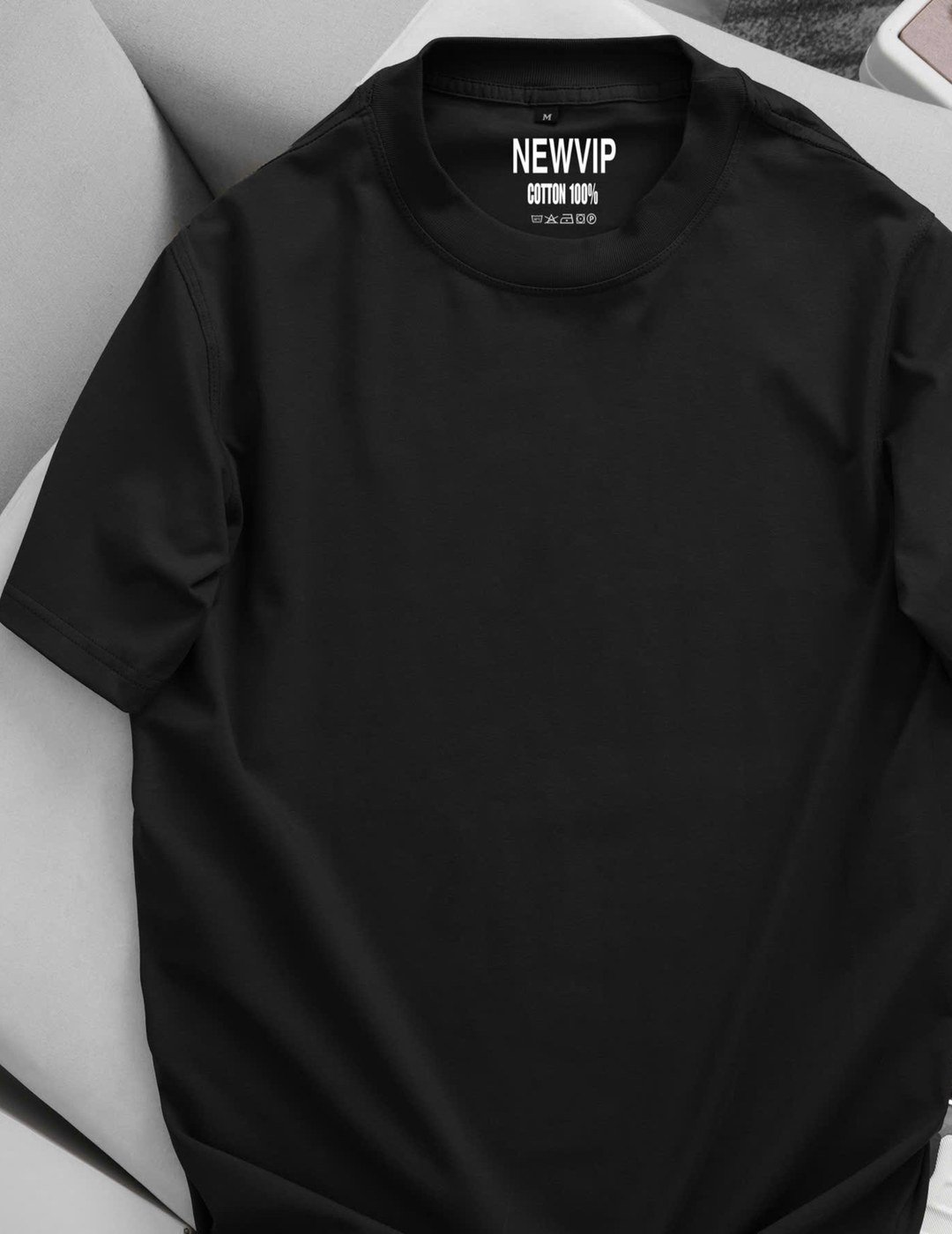
This is the entry point for testing a new product line without full brand development. A basic t-shirt, tank top, or crewneck sweatshirt in a stock fabric and a stock color, with no printing, no embroidery, and no custom label, can go into production at as few as 50 pieces per style/color combination.
This tier is used most often by founders who are still validating fit, fabric hand-feel, and sizing before they commit budget to branding — and by buyers who plan to apply their own decoration domestically after import. If you’re at the earliest stage of building a clothing brand, our T-Shirt Manufacturer in Vietnam guide walks through fabric and construction options at this tier in more detail.
The trade-off: at 50 pieces, per-unit pricing is at its highest point, since fixed costs (sampling, line setup) are spread across the smallest possible batch. Most buyers treat this tier as a paid sample/validation run, not a commercially scaled order.
Tier 2 — Printed or Decorated: MOQ From 100 Pieces
Once you add decoration — screen printing, DTF (direct-to-film) transfer, or a simple single-position embroidery — on top of a stock blank, the MOQ rises to roughly 100 pieces per style/color. This covers the fixed cost of screen-burning or file-digitizing without requiring the volume needed for a fully branded program.
This tier is the sweet spot for most Amazon FBA private-label sellers and TikTok Shop apparel brands launching a first design: enough volume to justify a real production run, low enough to test multiple designs or colorways in parallel without overcommitting capital. If your decoration method isn’t decided yet, our Screen Printing vs. Embroidery vs. DTG vs. DTF comparison breaks down which method fits which MOQ and budget.
Sellers running early product-market-fit tests on marketplaces should also see our dedicated guides for Amazon FBA clothing sourcing and TikTok Shop apparel manufacturing, both of which are built around this exact MOQ tier.
Tier 3 — Branded OEM: MOQ From 200 Pieces
This is the tier most people actually mean when they say “start my clothing brand”: a garment with your own woven or printed neck label, a custom hang tag, care label, and branded polybag or mailer packaging. Because trim and packaging suppliers have their own order minimums, this tier typically starts at 200 pieces per style/color.
At this volume, you’re also choosing between an OEM approach (you supply the design, factory executes) and an ODM approach (factory contributes design and pattern development from its existing library). If you haven’t settled that question yet, our OEM vs. ODM comparison lays out which model suits a first branded run versus a repeat program. Buyers building a private-label collection specifically should also read our Private Label Clothing Manufacturer guide.
This is also the tier where our full quality control process — AQL-based inline and final inspection — is applied as standard, since a branded product carries your company’s name into the customer’s hands.
Tier 4 — Hoodies, Polos & Uniform Programs: MOQ From 2,000 Pieces
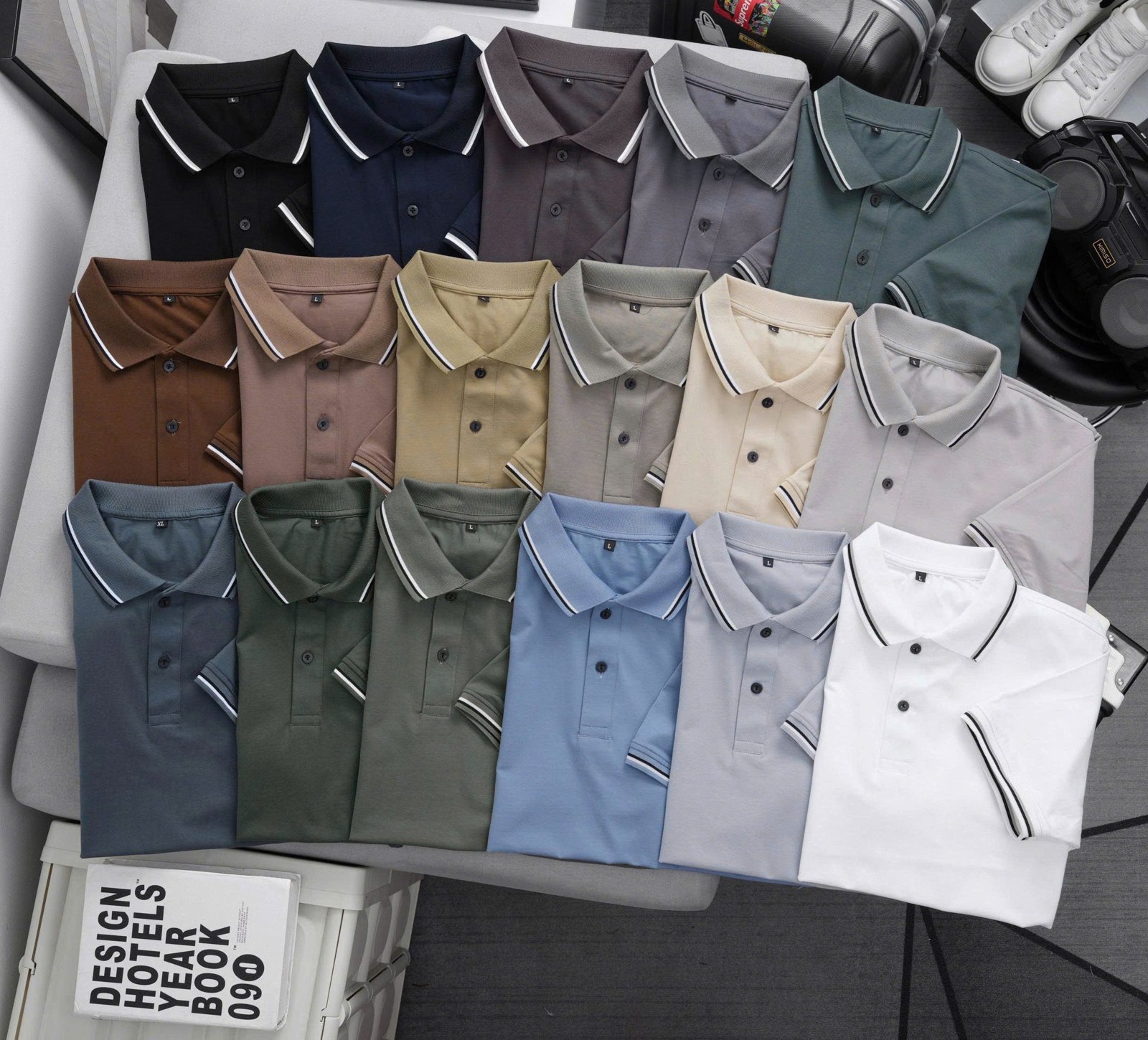
Garments with more components — multi-panel hoodies, rib-knit polos with contrast collars, or a full corporate/school/hospitality uniform program spanning several garment types and sizes — carry a materially higher fixed cost per style. Fleece and interlock fabrics often require larger dye-lot minimums than lightweight jersey, and multi-piece constructions (set-in sleeves, ribbed cuffs, contrast plackets) take longer to set up on the line. For this tier, our realistic MOQ starts at 2,000 pieces across the program (not necessarily per single SKU, if the program spans multiple sizes and a couple of colorways).
This tier covers two very different buyer types who land at a similar minimum: streetwear and fashion brands ordering hoodies and polos at commercial scale, and institutional buyers — schools, hospitals, hotels, restaurant groups, and corporates — standardizing a uniform program. Both groups can review deeper detail in our Hoodie & Polo Shirt Manufacturer guide and our dedicated resources for buying offices and procurement teams working with Vietnam suppliers.
A practical note for uniform buyers specifically: because a uniform program usually spans several garment types (polos, jackets, aprons) across a wide size run, the 2,000-piece minimum is almost always reached naturally once you add up sizes S through 3XL across the full staff roster — it’s rarely a real barrier for an organization of any meaningful size.
How to Qualify for the Lowest MOQ Tier
Buyers who get quoted lower MOQ aren’t just lucky or better negotiators — they structure their request to reduce the cost drivers described above. In our experience quoting hundreds of first-time orders, these five choices consistently unlock the lowest available tier:
- Pick from the factory’s existing fabric stock rather than specifying a custom color, GSM, or blend — this alone removes the mill dye-lot minimum entirely.
- Start with one decoration method and one print position instead of multiple placements, colors, or techniques combined on a single garment.
- Order fewer colorways at higher quantity per colorway rather than spreading a small total order across many colors — MOQ is almost always quoted per style/color, not per style overall.
- Use standard packaging first (plain polybag) and add custom mailers or boxes once you’ve validated demand and are placing a repeat order.
- Ask for a documented MOQ tier sheet up front — a factory that can hand you a clear, written tier breakdown (like the one in this article) is one that prices transparently rather than padding quotes.
For a full walkthrough of what happens after MOQ and pricing are agreed — sampling, deposits, lead time, and shipping — see our complete buyer’s guide to ordering from a Vietnam factory.
Vietnam Low MOQ vs. China, India, Turkey & Bangladesh
MOQ is one of the few sourcing variables that genuinely differs by country, not just by factory. Buyers comparing Vietnam against other sourcing hubs commonly find the following pattern, based on how each country’s factory base is structured:
- China generally offers the lowest MOQs for blank and lightly customized goods, thanks to an extremely dense supplier ecosystem around cities like Guangzhou — but rising labor costs and tariff exposure for US-bound goods have pushed many brands to diversify.
- India often matches or beats Vietnam’s low-MOQ tiers for cotton-based knitwear given its vertically integrated cotton and yarn supply, but lead times and compliance documentation can be less consistent outside established export hubs.
- Turkey offers very fast turnaround and strong quality for the EU market but typically carries higher per-unit costs, which factories offset by requiring higher MOQ to make small runs worthwhile.
- Bangladesh is highly cost-competitive at true bulk volume but most factories there are structured around large-order efficiency, so MOQ for a first small program is often higher than in Vietnam.
Vietnam’s position tends to land in the middle: MOQ isn’t the absolute lowest in the world, but the combination of moderate MOQ, strong compliance standards (BSCI, ISO 9001, OEKO-TEX), and preferential trade access under agreements like the EVFTA and CPTPP makes it a practical choice for brands that want to scale past a one-time test order into a repeatable supply chain. We’ve compared this in more depth in our Vietnam vs. China and Vietnam vs. India sourcing comparisons.
Red Flags: When a “Low MOQ” Claim Isn’t Real
Because MOQ is a genuine pain point for small buyers, it’s also a common place for unreliable suppliers to over-promise. Watch for these signals before you commit a deposit:
- A single flat MOQ regardless of what you ask for — a factory quoting “50 pieces” for a fully branded, custom-fabric, multi-color-print hoodie almost certainly cannot deliver that at the promised price or quality, or is quoting a trading company that will subcontract the order without oversight.
- No willingness to explain why the number is what it is — a factory that can’t walk you through the fabric, decoration, or trim minimums behind its quote is either not manufacturing directly or is hiding markup.
- MOQ that drops sharply after you push back once — a legitimate MOQ is tied to real cost structure and doesn’t move 70% just because a buyer asked twice.
- No sample policy tied to the MOQ tier — reliable factories will let you order a pre-production sample at or near cost before committing to the full minimum; refusal to sample is a sign the factory isn’t confident in its own process.
Our own guide on the top mistakes to avoid when working with overseas factories covers several of these same warning signs in more detail, most of which surface first during MOQ and pricing negotiation.
How to Scale From a Low MOQ Test Order to Full Volume
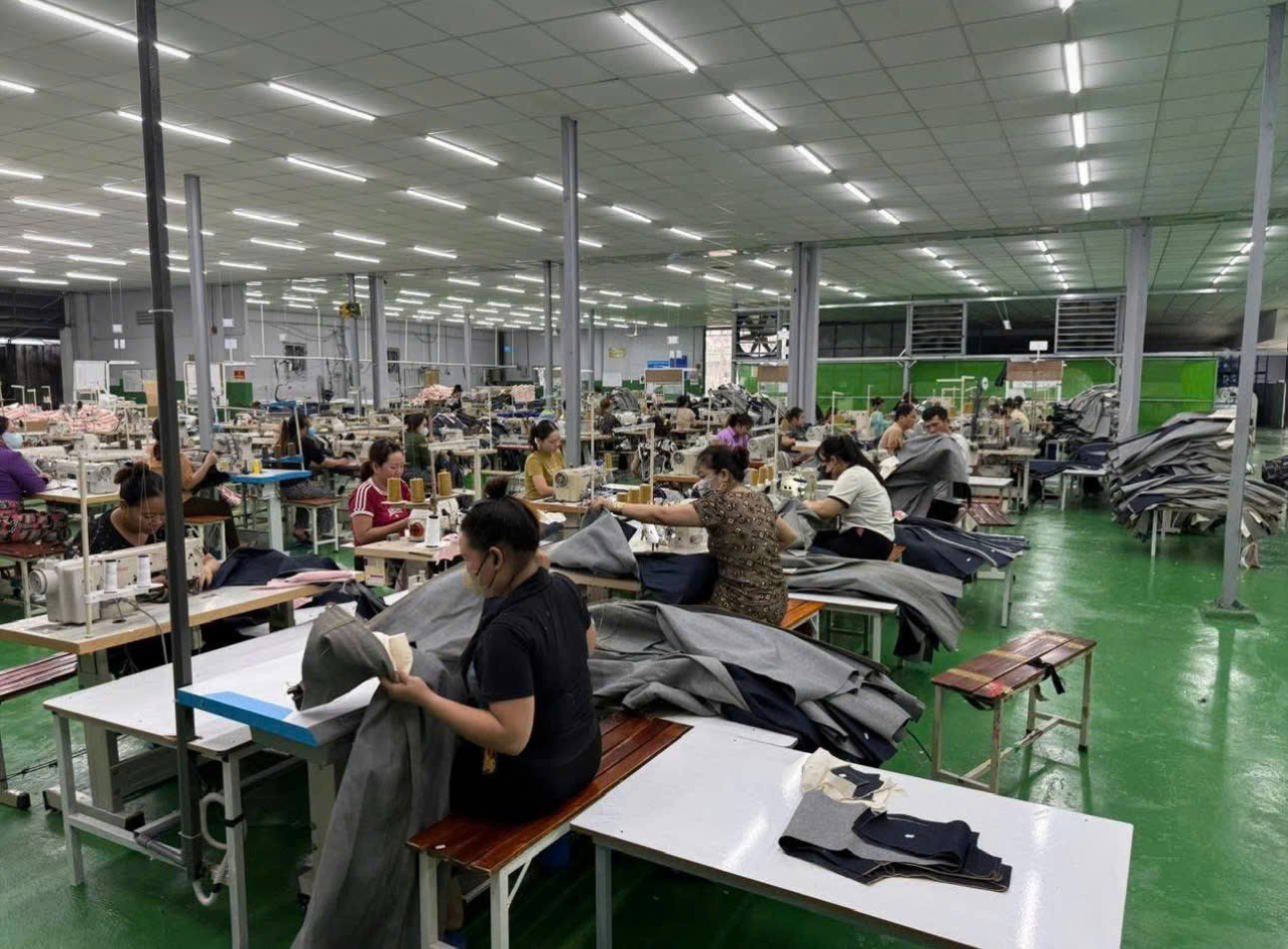
Most brands don’t stay at the lowest MOQ tier forever — the goal of a small first order is to validate fit, fabric, and market demand before committing to production at scale. When you’re ready to move up, three things typically change: unit pricing improves as fixed costs spread across more pieces, lead time stabilizes since the factory can plan the run further in advance, and you gain access to better fabric and trim negotiating power as a repeat, larger-volume account.
With production capacity above 100,000 units per month, AT Garment Factory is set up to support this exact path — a founder can start at a 50 to 200-piece validation order and scale the same style into a 10,000+ piece program on the same production line, with the same quality control standard, once demand is proven. If you’re planning that trajectory from the outset, it’s worth discussing your 12-month volume plan with the factory at the first quote stage rather than after the test order — it often unlocks better tooling and fabric-sourcing decisions upfront.
FAQ: Low MOQ Clothing Manufacturing in Vietnam
What is the lowest MOQ a Vietnam clothing factory will accept?
For a blank, stock-fabric, stock-color garment with no printing or custom label, MOQ can start as low as 50 pieces per style/color at factories set up for private-label and startup orders, such as AT Garment Factory.
Why is MOQ higher for branded products than for blank products?
Custom neck labels, hang tags, care labels, and branded packaging are sourced from trim suppliers with their own order minimums, typically in the hundreds of units. A factory has to meet those minimums before it can start a fully branded run, which pushes MOQ for branded OEM orders up to roughly 200 pieces per style/color.
Can I mix multiple colors or sizes within one MOQ?
Usually yes for sizes (a size run across S–XL typically counts toward one style/color MOQ), but usually no for colors — each colorway is generally treated as a separate MOQ requirement since it may involve a different fabric dye lot.
Is low MOQ more expensive per piece?
Yes. Per-unit cost is highest at the smallest MOQ tier because fixed costs (sampling, line setup, screen or digitizing fees) are spread across fewer pieces. Buyers typically see per-unit pricing improve meaningfully once an order moves from a 100–200-piece test into a 1,000+ piece production run.
Do uniform and institutional orders (schools, hospitals, hotels) get a lower MOQ?
Not typically at the per-style level, since uniform garments usually involve more components and trims than a basic tee. In practice, the 2,000-piece program minimum is rarely a barrier for institutional buyers because it’s reached naturally once a full staff size run is totaled across garment types.
How do I get an accurate MOQ quote for my specific design?
Share your fabric preference, decoration method, branding requirements, and target quantity per colorway with the factory up front. A factory that can quickly place your order into one of the tiers described in this article — rather than giving one generic number — is quoting you accurately.
Conclusion
“Low MOQ” isn’t a single number you either qualify for or don’t — it’s a structure you can work within once you understand which variables (fabric, decoration, branding, construction) drive the minimum up or down. Starting at 50 pieces for a blank validation run, 100 for a first printed design, 200 for a fully branded OEM launch, or 2,000 for a complex garment or uniform program gives most buyers — from first-time founders to procurement teams — a realistic entry point into Vietnam manufacturing without demanding bulk-volume commitment on day one.
AT Garment Factory has run this exact tiered process for more than a decade for brands, buying offices, and institutional buyers sourcing from our facility in Bình Tân, Ho Chi Minh City, with production capacity to scale a validated style well past 100,000 units a month. If you have a design, a fabric idea, or even just a rough sketch, tell us your target quantity and we’ll tell you exactly which MOQ tier it falls into — and what it would take to qualify for a lower one. See our full product range and manufacturing services, or reach out directly:
- Email: thanhtung113123@gmail.com
- WhatsApp: Chat with us on WhatsApp
- Zalo: Chat with us on Zalo
- Or visit our Contact page to request a quote