
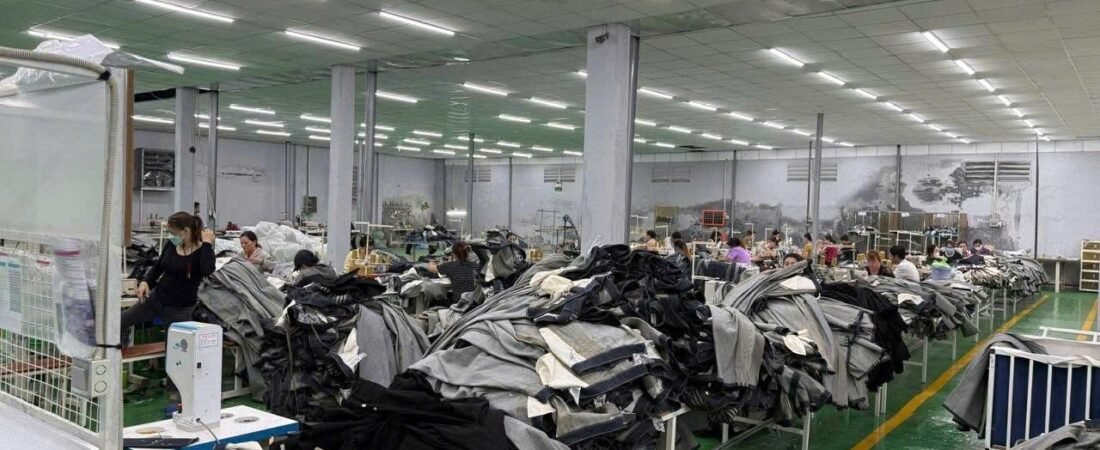
For European buying offices and fashion brands weighing where to place their next production order, Vietnam and Turkey sit at opposite ends of a familiar trade-off: unit cost versus speed to shelf. Turkey’s proximity to the EU and its 1995 Customs Union membership make it the default nearshore choice for brands chasing fast replenishment and small-batch testing. Vietnam, backed by the EU-Vietnam Free Trade Agreement (EVFTA) and a mature, large-scale cut-and-sew infrastructure, remains the stronger option once order volumes climb and per-unit cost becomes the deciding factor.
This guide breaks down what buyers actually report across cost, minimum order quantity (MOQ), lead time, EU duty treatment, and quality specialization — and where a hybrid sourcing strategy (Turkey for fast-reacting core styles, Vietnam for volume programs) tends to outperform betting on a single country. If you are also weighing other sourcing countries, see our related comparisons of Vietnam vs India, Vietnam vs China, and Vietnam vs Bangladesh.
Table of Contents
- Quick Answer: Vietnam or Turkey?
- Cost Comparison: FOB Pricing, Vietnam vs Turkey
- MOQ: Minimum Order Quantities
- Lead Time & Speed to Market
- EU Duty & Tariff Treatment: EVFTA vs Customs Union
- Quality & Specialization
- Which Product Categories Favor Which Country
- Risk & Compliance Considerations
- The Hybrid Strategy: Pairing Turkey and Vietnam
- Where AT Garment Factory Fits This Picture
- FAQ
- Conclusion & Next Steps
Quick Answer: Vietnam or Turkey?
For brands prioritizing landed cost at 1,000+ unit MOQs — basics like polos, tees, hoodies, and fleece — Vietnam is typically the stronger economics. For brands prioritizing 6-to-8-week EU delivery windows, in-season reorders, or MOQs under 500 units, Turkey usually wins on speed even at a cost premium. Many mid-size and large European brands split the two: Turkey for reactive, trend-driven core lines; Vietnam for planned, high-volume seasonal programs. The rest of this guide walks through why, with the specific numbers sourcing teams use to make that call.
How this plays out differs by buyer type. A buying office running RFQs across multiple factories typically weighs cost and compliance documentation most heavily, since they are accountable for landed cost accuracy across dozens of SKUs. A direct-to-consumer fashion brand launching a new capsule collection often weighs MOQ and lead time first, since cash tied up in inventory matters more than a few points of unit cost. An Amazon or TikTok Shop brand scaling a proven bestseller usually shifts toward Vietnam once volume is predictable, because at that stage the compounding effect of an 8-15% cost gap on thousands of units outweighs the value of Turkey’s faster turnaround. Knowing which of these three profiles describes your business is a faster way to reach a decision than comparing every variable equally.
Cost Comparison: FOB Pricing, Vietnam vs Turkey
Cost is usually the first question a buying office asks, and it is also where the Vietnam-Turkey gap is most consistent across sourcing reports. Industry figures commonly cited by sourcing agencies put the difference at roughly 8-15% in Vietnam’s favor for comparable specs and volumes.
- Cotton t-shirt FOB pricing: Vietnam commonly runs in the $3.40-$4.30 per unit range, while Turkey runs $4.80-$6.20 for comparable specs, according to multiple sourcing agency reports — roughly an 8-15% premium for Turkish production at equivalent order sizes.
- Labor cost gap: Vietnamese garment labor is typically quoted around $2-3 per hour, while Turkish factory labor sits meaningfully higher, reflecting Turkey’s EU-adjacent wage structure and its Customs Union economy.
- The premium narrows for complex, finishing-heavy garments — tailored outerwear, structured jackets — where Turkey’s stronger finishing culture can offset part of the hourly cost gap.
- At higher volumes (5,000+ units per style), Vietnam’s cost advantage tends to widen further, since large-scale Vietnamese factories achieve efficiencies that smaller-batch Turkish workshops are not built to chase.
The practical takeaway for a buying office building a cost model: request FOB quotes from both regions at your actual target volume, not a generic benchmark. The Vietnam discount is real but it is a volume-dependent discount — it is smallest at low MOQs and largest at bulk seasonal quantities.
MOQ: Minimum Order Quantities
MOQ is where Turkey’s structural advantage is clearest, and it is the single biggest reason smaller and early-stage brands lean toward Turkish factories before they have the volume to justify Vietnam sourcing.
- Vietnam factory MOQs commonly start at 500-1,500 units per style/colorway for cut-and-sew programs, with larger factories preferring 2,000+ units per style to run at full efficiency.
- Turkish factories, especially around Istanbul and Izmir, frequently accept 150-500 unit MOQs, making Turkey the more forgiving option for a brand testing a new SKU or running a limited capsule drop.
- A brand validating a new product with a 300-unit test run will generally struggle to find a competitively priced Vietnamese factory willing to take that order — Turkey, or a Vietnam factory’s smaller blank-goods tier, fits better at that stage.
One nuance buyers often miss: not every Vietnam factory enforces the same MOQ floor across every product type. Some factories, including AT Garment Factory, structure MOQ in tiers by product complexity — unbranded blanks, printed goods, and OEM branded programs each carry a different threshold — which can make Vietnam viable earlier in a brand’s growth than the “500-1,500 unit” industry average suggests. More on that in the AT Garment Factory section below.
Lead Time & Speed to Market
Turkey’s geographic proximity to Europe is its clearest structural advantage, and it shows up most in shipping time rather than production time itself.
- Turkey to Rotterdam typically ships in 5-8 days by truck or ferry, versus roughly 30-35 days by sea freight from Ho Chi Minh City to Northern Europe.
- Full production lead time, from sample approval to shipped goods, commonly runs 6-8 weeks from Turkey versus a broader 10-16 week window from Vietnam, once sampling, bulk fabric sourcing, and factory queue position are factored in.
- Vietnam’s Tet (Lunar New Year) holiday closes factories for roughly 1-3 weeks each year, with 4-6 weeks of surrounding compressed capacity as workers travel home and return — a scheduling factor that shifts annually and should be checked against the current year’s calendar with your factory before booking a production slot.
Net effect: Turkey wins decisively on speed-to-shelf for in-season reorders and reactive drops. Vietnam requires longer-range production planning — typically booking capacity 3-4 months ahead of a delivery date — but rewards that planning with meaningfully lower unit cost at volume.
EU Duty & Tariff Treatment: EVFTA vs Customs Union
Both countries currently offer a path to 0% duty on apparel entering the EU, but the mechanism — and the paperwork behind it — is different, and this is where inexperienced sourcing teams lose money without realizing it.
- Turkey has held a Customs Union with the EU since 1995, giving most finished Turkish apparel automatic duty-free entry with comparatively simple documentation.
- Vietnam’s EVFTA, in force since 2020, phases in 0% duty on most apparel tariff lines, but qualifying for that rate requires proof of compliance with EVFTA Rules of Origin — commonly the “double transformation” (fabric-forward) rule for apparel.
- Before EVFTA took effect, the standard EU duty rate on Vietnamese apparel imports ran around 12% — a cost still faced today by importers who source non-compliant fabric or skip the certificate-of-origin paperwork.
- In practice, both routes can land at 0% EU duty, but Vietnam’s preferential rate is conditional, not automatic — which is exactly where an experienced factory or sourcing partner protects the discount on a buyer’s behalf.
Buyers new to Vietnam sourcing should ask any prospective factory directly how they document EVFTA origin compliance and request to see a sample certificate of origin before placing a first order — this single question separates factories that understand EU import requirements from those that don’t.
Quality & Specialization: Where Each Country Is Strongest
Cost and speed are only half the decision — product category fit matters just as much, and this is where the two countries have genuinely different strengths rather than one being categorically “better.”
Turkish manufacturing culture is frequently cited by sourcing agencies for clean construction and finishing on structured, tailored, and premium-positioned garments — a reputation built over decades of supplying European fashion houses directly across the Mediterranean. Vietnam, by contrast, has built deep specialization in technical sportswear, activewear, and bonded or seam-sealed performance categories, alongside high-volume basics: polos, t-shirts, hoodies, sweatshirts, and denim. For categories that combine moderate technical requirements with large repeat volumes — corporate and school uniform programs, athleisure, golf apparel — Vietnam’s combination of capability and manufacturing scale is typically the more cost-efficient long-term fit once a brand moves past the testing phase.
It is worth noting that “quality” in this context is less about which country can sew a straight seam – both can – and more about which country’s factories have built repeatable, documented QC systems around a specific product type. A Turkish workshop that excels at tailored blazers is not automatically the right partner for technical running shorts, and a Vietnam factory built around bulk polo production is not the right first call for a 50-unit couture sample run. Matching factory specialization to product category, not just comparing countries in the abstract, is what actually drives quality outcomes.
Which Product Categories Favor Which Country
- Basics at volume (tees, polos, hoodies, fleece, uniforms): Vietnam — lower FOB pricing, factories built for repeat bulk runs. See our guides to hoodie and polo manufacturing and uniform programs in Vietnam.
- Denim and structured jackets: Both countries are capable; Vietnam offers lower cost at volume, Turkey offers faster reorder cycles for reactive denim drops. Compare with our Vietnam denim manufacturing guide.
- Technical and performance sportswear: Vietnam — established bonding and seam-sealing infrastructure built for activewear brands.
- Capsule drops and trend-reactive small runs (under 500 units): Turkey — lower MOQ threshold and faster EU delivery for testing new styles.
- Premium tailoring and structured outerwear: Turkey — stronger finishing reputation historically, though Vietnam factories with organized QC systems are closing the gap; see our breakdown of quality control practices at a Vietnam factory.
Risk & Compliance Considerations Buyers Should Weigh
Cost and lead time get the most attention in sourcing decisions, but the risk factors below are what separate a smooth multi-year supplier relationship from a costly mid-season scramble.
- Single-country dependency risk: brands sourcing 100% of production from one country carry full exposure to that country’s labor cost inflation, freight disruption, or shifts in trade policy.
- Documentation burden: EVFTA compliance requires organized certificate-of-origin paperwork per shipment; a factory unfamiliar with the process can jeopardize a buyer’s duty-free rate without the buyer realizing it until customs clearance.
- Capacity planning: Vietnam’s Tet closure and Turkey’s own seasonal demand peaks both compress available lead time if a purchase order lands at the wrong point in the calendar — build this into your PO calendar at least one season ahead.
- Sustainability documentation: EU buyers increasingly require GOTS, OCS, BSCI, or WRAP certification from suppliers in either country. Always verify current, in-date certification directly with the factory rather than relying on marketing claims — see our guide to sustainable and organic cotton sourcing in Vietnam for what to check.
- Payment terms and currency exposure: Vietnamese factories commonly work in USD with deposit-plus-balance terms (for example 30% deposit, 70% before shipment), while Turkish suppliers may quote in EUR given their EU trade relationship – factor currency exposure into landed cost comparisons, not just the headline FOB number.
For a broader checklist of what tends to go wrong when buyers evaluate overseas factories generally — not specific to Vietnam or Turkey — see our related guide on common mistakes when working with overseas factories.
The Hybrid Strategy: Pairing Turkey and Vietnam
A growing number of mid-size and large European brands do not choose between Vietnam and Turkey at all — they run split sourcing deliberately. Turkey covers fast-reacting core and replenishment styles at smaller MOQs, where being able to restock a bestseller within six to eight weeks protects sell-through. Vietnam covers planned seasonal bulk programs, where per-unit cost matters most and the longer lead time can be scheduled well in advance.
This hybrid model trades a small amount of added sourcing complexity — two supplier relationships, two quality control processes, two sets of compliance paperwork — for a meaningfully lower blended landed cost without sacrificing in-season responsiveness. For buyers new to Vietnam sourcing, the lower-risk entry point is usually starting with one core, high-volume category — polos or hoodies are common first orders — through a single Vietnam factory, then expanding SKU count once that relationship is proven. This mirrors how many buying offices already structure vendor evaluation; our guide for sourcing agents and procurement teams covers that evaluation process in more depth, and our OEM vs ODM comparison is worth reviewing before you decide which production model fits your team’s design capacity.
Where AT Garment Factory Fits This Picture
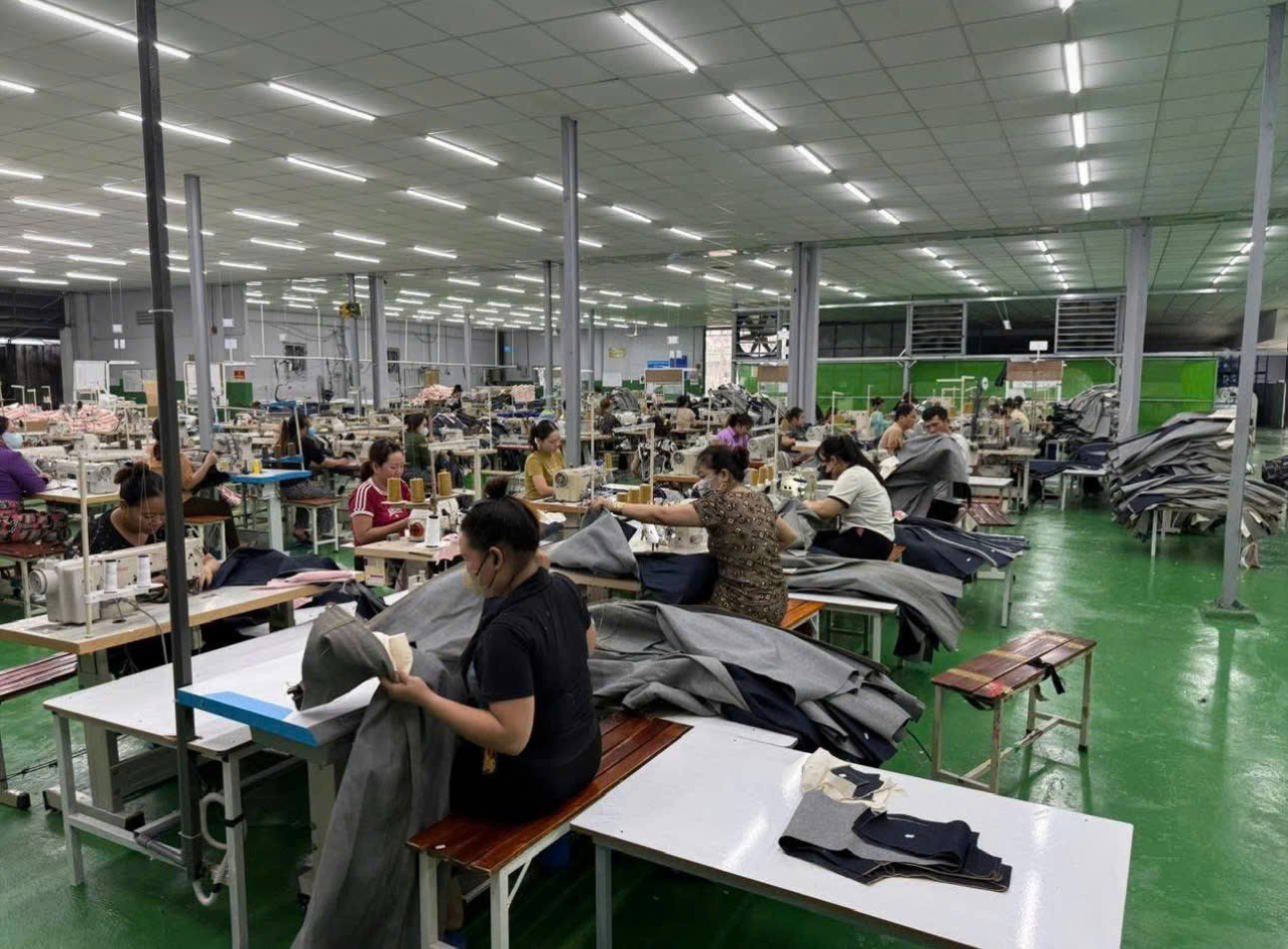
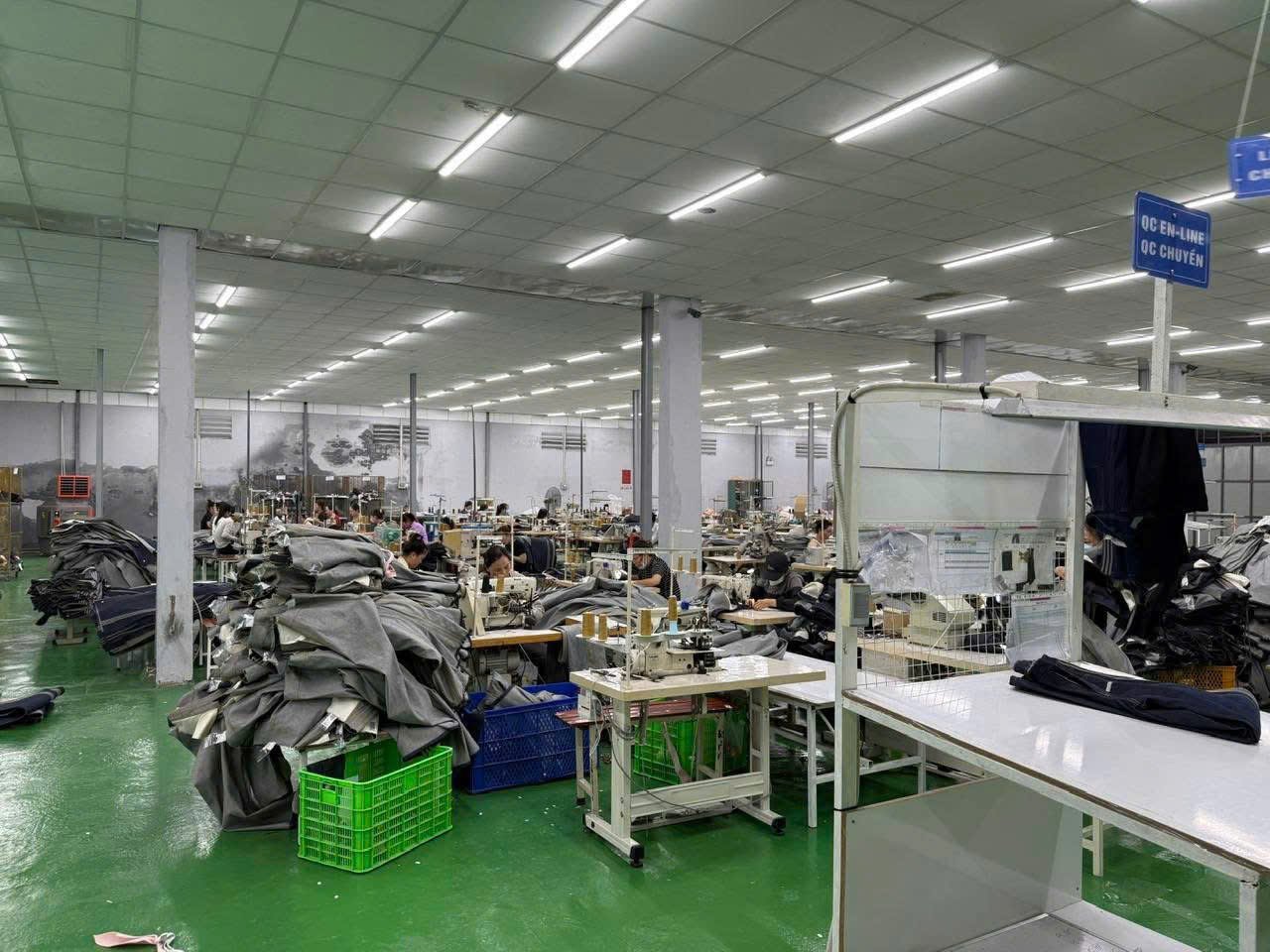
AT Garment Factory operates from Binh Tan, Ho Chi Minh City, with production capacity of 100,000+ units per month across polos, t-shirts, hoodies, sweatshirts, sportswear, denim, jackets, kidswear, and uniform programs. For buyers building the Vietnam leg of a hybrid Turkey-plus-Vietnam strategy — or evaluating Vietnam as a standalone source once volumes justify it — MOQ is structured in tiers rather than a single high threshold: 50 units for unbranded blank goods, 100 units for printed goods, 200 units for OEM branded programs, and 2,000 units for hoodie, polo, and uniform bulk programs. With over 10 years of export experience serving international buyers, AT Garment Factory positions well either as a standalone partner for brands ready to commit to volume production, or as the cost-efficient half of a split sourcing model alongside a Turkish supplier. Full product and program details are on our products page and services page.
FAQ
Is Turkey or Vietnam cheaper for garment manufacturing in 2026?
At equivalent specs and volume, Vietnam FOB pricing commonly runs 8-15% below Turkey, according to multiple sourcing agency reports — though the gap narrows for complex, finishing-heavy garments and at low MOQs, where Turkey’s smaller-batch flexibility offsets its higher per-unit cost.
Which country has a lower MOQ, Turkey or Vietnam?
Turkey, generally. Turkish factories commonly accept 150-500 unit MOQs, while most Vietnamese cut-and-sew factories prefer 500-1,500+ units per style. Some Vietnam factories offer tiered MOQ structures starting much lower for blank or printed goods, which can narrow this gap for buyers who ask.
Do Vietnam and Turkey both offer duty-free access to the EU?
Yes, through different mechanisms. Turkey’s 1995 EU Customs Union gives largely automatic duty-free entry for most finished apparel. Vietnam’s EVFTA, in force since 2020, phases in 0% duty on most apparel lines but requires Rules of Origin compliance documentation to qualify for the preferential rate.
How much longer does Vietnam take to ship to Europe than Turkey?
Turkey typically reaches Rotterdam in 5-8 days by land and ferry; Vietnam sea freight to Northern Europe commonly takes 30-35 days. Full production-to-delivery lead time runs roughly 6-8 weeks from Turkey versus 10-16 weeks from Vietnam, depending on order complexity and the time of year.
Can I split production between Turkey and Vietnam?
Yes — this hybrid approach is increasingly common among European brands, using Turkey for fast-reacting, low-MOQ core styles and Vietnam for higher-volume, cost-sensitive seasonal programs. Many brands start with one Vietnam category and expand once the relationship is proven.
What product categories does Vietnam manufacture most cost-effectively?
High-volume basics and technical categories — polos, t-shirts, hoodies, sweatshirts, sportswear, denim, and uniform programs — where Vietnam’s scale infrastructure and lower labor cost combine to beat Turkish FOB pricing at 1,000+ unit orders.
Conclusion & Next Steps
Neither country is universally “better” — the right choice depends on where a brand’s priorities sit on the cost-versus-speed spectrum, and at what order volume. Turkey remains the go-to for fast, small-batch, EU-proximate production; Vietnam remains the stronger economic choice once volumes justify a longer lead time. For many European buyers, the highest-performing sourcing strategy is not choosing one country over the other — it is using both, deliberately, for the categories each does best.
Ready to evaluate Vietnam as the volume leg of your sourcing strategy? AT Garment Factory works directly with European importers, buying offices, and fashion brands on OEM/ODM and private label programs, from 50-unit blank goods to 100,000+ unit seasonal runs. Email thanhtung113123@gmail.com, message us on WhatsApp, or reach out via Zalo to request a quote, or visit our contact page.