
If you are a brand owner, importer or buying-office merchandiser, the single biggest lever on your sampling time and your unit price is not the factory you choose. It is the quality of the document you send them. A clear tech pack for a clothing manufacturer shortens quotation time, reduces sample rounds and protects you from the arguments that start when a bulk order does not match what you imagined.
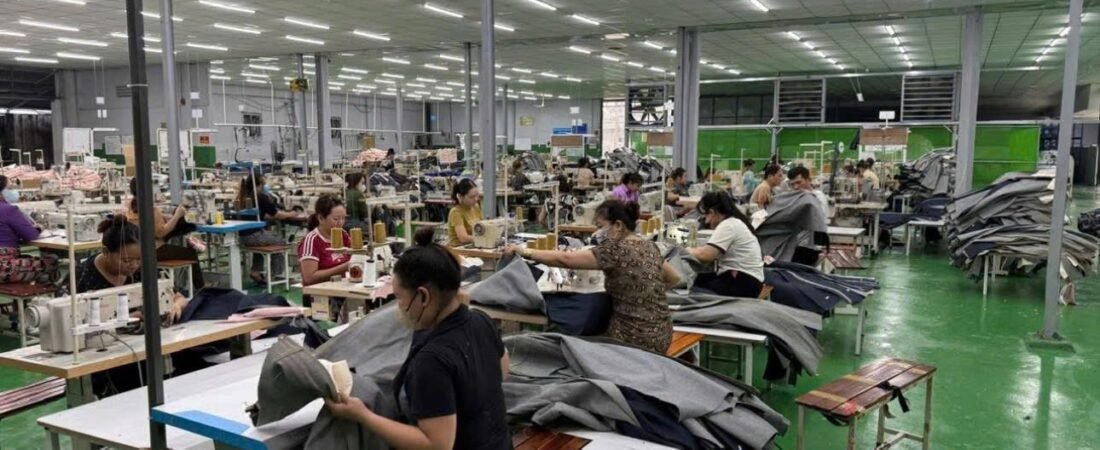
This guide is written from the factory side of the table. It explains what a tech pack must contain, how the sample development sequence works in a Vietnamese OEM factory, what realistic timelines look like, and which mistakes we see most often. It is aimed at buyers who are placing orders of 2,000 pieces and up, as well as smaller private label brands starting with low quantities.
Table of contents
- What a tech pack is and why every factory asks for one
- What a complete tech pack contains
- No tech pack yet? Three realistic starting points
- The sample development sequence, step by step
- Realistic timelines and what drives them
- Tech pack mistakes that cost you a sample round
- Writing a bill of materials that a factory can actually price
- Measurements, tolerances and grading
- Quality, testing and packing instructions
- MOQ, sampling cost and how AT Garment Factory works
- A pre-submission checklist
- Frequently asked questions
- Conclusion
What a tech pack is and why every factory asks for one
A tech pack (technical package) is the instruction manual for one garment style. It tells the pattern maker how to draft, the sewing line how to assemble, the purchasing team what to buy, and the QC team what to inspect. Think of it as the contract between your design intent and the factory floor.
Factories ask for it for a practical reason. Without one, every unanswered question becomes a guess, and every guess is a possible rejected sample. Industry guides commonly report that unclear specifications are one of the leading causes of extra sampling rounds, and each additional round typically adds one to two weeks to a development schedule. A factory that quotes you without seeing a tech pack is either padding its price to cover the uncertainty or planning to correct things later at your expense.
A tech pack also matters for fairness between suppliers. If you send the same document to three factories, you receive three quotations that can be compared line by line. Without it you compare three different interpretations.
What a complete tech pack contains
There is no single legal standard, but a professional tech pack almost always includes the following sections. Treat the list as a minimum rather than an ideal.
- Cover page: style number, season, brand, product name, size range, colourways, date and revision number.
- Technical flat sketches: front, back and side views, drawn to proportion, with seams, stitch lines, pockets and closures visible.
- Construction details: stitch type for each seam (for example lockstitch, overlock, coverstitch), seam allowances, topstitch widths, hem finishes, neck taping and reinforcement.
- Bill of materials (BOM): main fabric, lining, rib, thread, zippers, buttons, drawcords, labels, hang tags, polybags and cartons, each with specification and placement.
- Colour specification: Pantone TCX references or physical swatches for fabric, trims and prints.
- Graphics and artwork: vector files, placement dimensions, print or embroidery method and number of colours.
- Point-of-measure chart: garment measurements for each size, with tolerances.
- Labelling and packing: care label content, country of origin wording, folding method, polybag and carton specification.
- Quality requirements: AQL level, test requirements, and any restricted substances list your market requires.
Two items deserve special attention because they drive price more than buyers expect: fabric composition and weight (GSM), and trim specification. A hoodie in 280 GSM French terry and one in 350 GSM fleece are different products with different costs. Our guide to French terry versus fleece hoodie fabric explains how much that single line changes the result.
No tech pack yet? Three realistic starting points
Many new brands do not have a full tech pack, and that is acceptable. A serious OEM or ODM factory will help you get there. The three most common starting points, ranked from most to least efficient, are as follows.
1. A reference sample plus your changes
You buy an existing garment that is close to what you want and send it with a written list of changes: different fabric, longer body by 2 cm, new neck label. The factory pattern maker measures the garment, reproduces it and applies your changes. This is the fastest route for first-time brands and works well for basics such as T-shirts, polos and hoodies.
2. A sketch with key measurements
A hand sketch or a simple digital drawing, plus a size chart and fabric preference, is enough for a factory to start a first prototype. Expect the first sample to be a conversation starter, not a final product.
3. An ODM catalogue style with modifications
If you do not want to develop from zero, an ODM route lets you choose from existing factory patterns and customise fabric, colour, labels and details. Read our comparison of OEM versus ODM to decide which model fits your timeline and budget. If you plan to sell under your own name, our overview of private label clothing manufacturing in Vietnam covers the next steps.
The sample development sequence, step by step
Terminology varies between factories, but the sequence below is widely used. Skipping a stage usually saves a few days and costs far more later.
- Quotation and costing: the factory reads the tech pack, estimates fabric consumption and labour minutes, and returns a price per piece at stated quantities.
- Prototype (proto) sample: a first interpretation, often made in a substitute fabric, to check silhouette, proportion and construction. Colour accuracy is not the goal here.
- Fit sample: made in the actual fabric and size, reviewed on a fit model or form. Your comments become measurable corrections to the pattern.
- Pre-production sample (PP sample): made in the real bulk fabric and trims, with final artwork and labels. This is the reference that the bulk order is judged against.
- Size set (if requested): samples in several sizes to confirm grading before cutting.
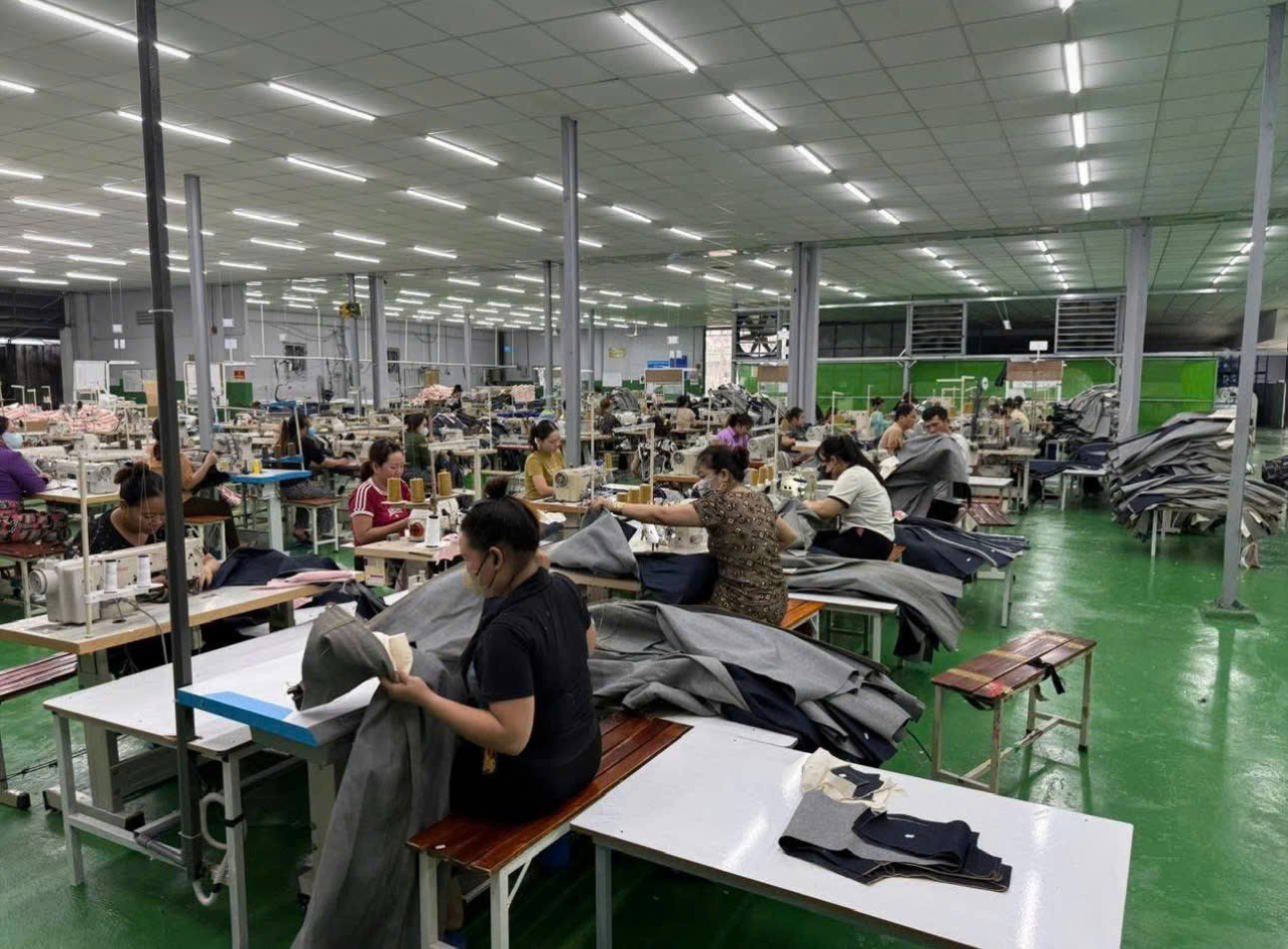
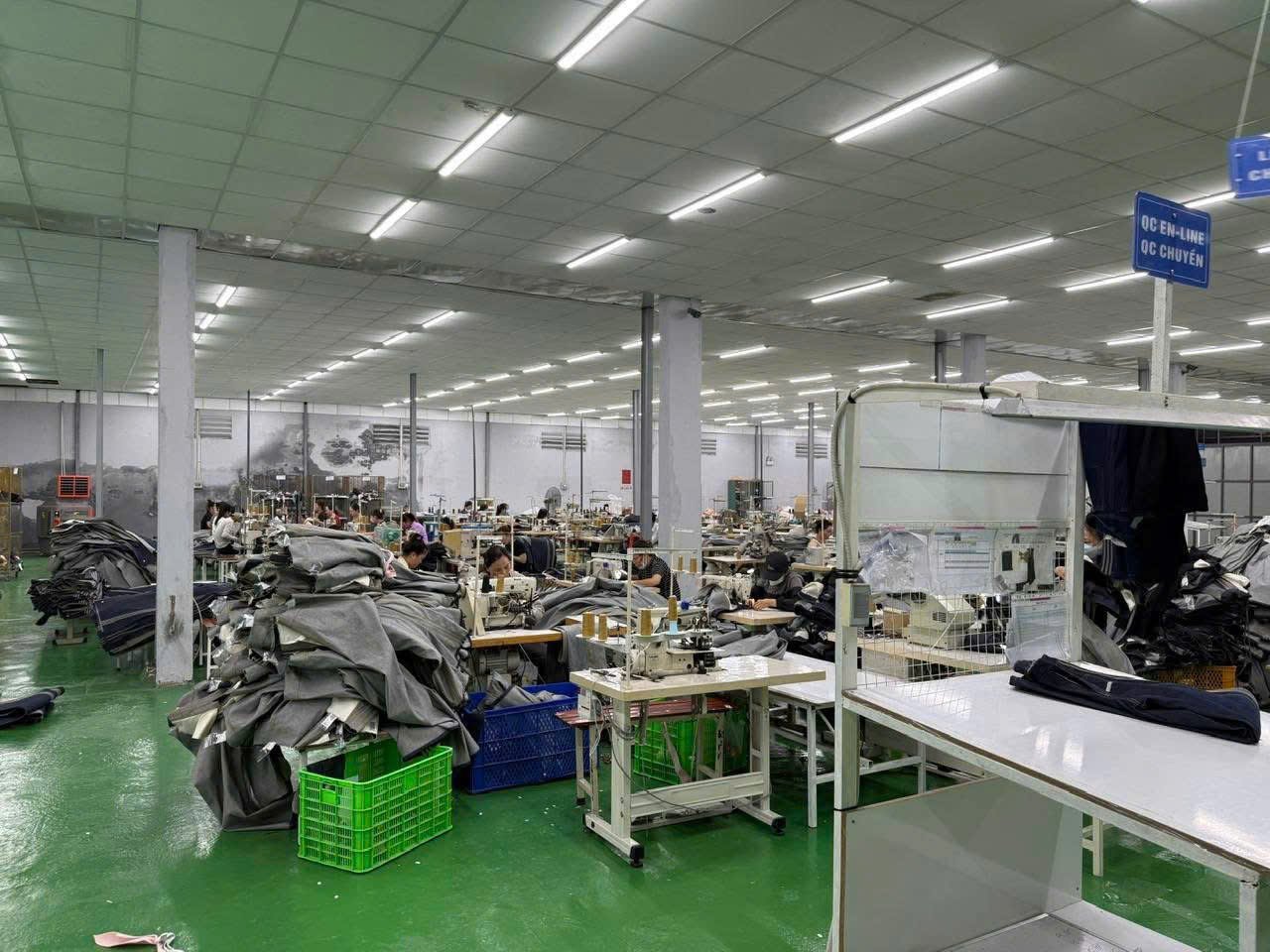
- Bulk production with in-line inspection: cutting, sewing, finishing and QC checks while the goods are being made.
- Final inspection and top-of-production (TOP) sample: random pieces from the finished order, checked against the approved PP sample before shipment.
Always approve in writing. A message such as “approved with comments” is ambiguous. Write exactly which comments are binding and which are for next season. This habit alone prevents many disputes.
Realistic timelines and what drives them
Timelines depend on style complexity, fabric availability and how quickly you respond. The ranges below are commonly reported in industry sources and match typical expectations for apparel development in Southeast Asia, but they are not guarantees. Confirm real dates with your factory for each style.
- Simple basics (T-shirt, polo): prototype or first sample commonly takes about 5 to 10 working days once fabric is available.
- Structured items (hoodies, jackets, denim): first samples commonly take about 7 to 14 working days, longer if washing or special finishing is needed.
- Each revision round: industry figures suggest roughly 3 to 7 working days for minor changes when the factory has the fabric in stock.
- Bulk fabric sourcing: stock fabric can be available within days, while custom-dyed or custom-knitted fabric commonly adds several weeks.
- Bulk production: typically planned in weeks rather than days and driven by quantity, number of colours and line capacity.
The practical lesson: the most reliable way to shorten the schedule is to make decisions quickly and bundle your comments into one complete message per round. Sending feedback in five separate messages over five days is a common hidden cause of delay. For a wider view of how Vietnam compares with other sourcing countries on lead time and flexibility, see our guides on Vietnam versus China and Vietnam versus India.
Tech pack mistakes that cost you a sample round
After years of receiving briefs from buyers in many markets, the same issues appear again and again.
Vague fabric descriptions
“Soft cotton” is not a specification. State composition, weight, construction (single jersey, pique, French terry, twill) and finish (combed, brushed, enzyme washed). If possible, send a physical swatch. A swatch removes more ambiguity than a paragraph of text.
Missing tolerances
A chest width of 54 cm means little without a tolerance such as plus or minus 1 cm. Tolerances tell QC when a piece passes and when it fails. Without them, an inspector and a buyer can look at the same garment and disagree.
Artwork that is not production ready
Low-resolution JPEG logos are a classic problem. Provide vector files (AI, EPS or PDF) with Pantone references. The printing method also changes the design: our guide to screen printing, embroidery, DTG and DTF explains how colour count, detail and quantity affect the choice.
Changing the design after the PP sample
Every change after PP approval risks a mismatch between the approved reference and bulk. If a change is unavoidable, request a new PP sample and agree the effect on price and delivery before cutting.
Ignoring the target market
A care label or fibre-content rule that is correct for one market may not satisfy another. Tell the factory where the goods will be sold so labels, packing and testing are prepared correctly from the start.
Writing a bill of materials that a factory can actually price
The bill of materials is where cost lives. A factory can only price what it can see. For each material, record the supplier or generic specification, quantity per garment, colour and placement. Examples of lines that buyers frequently forget include neck tape, interlining, care-label thread, size labels, hang-tag string, tissue paper, silica gel and carton dividers. These small items rarely change the price dramatically, but missing them leads to late quotation revisions.
When you cannot name a trim supplier, describe the performance you need: for instance, “YKK-equivalent coil zipper, size 5, colour matched to body”. Say whether equivalents are acceptable. Flexibility on brand names often lowers cost and shortens sourcing time. If your brand sells on Amazon or TikTok Shop, also include barcode and carton labelling instructions; our guides to TikTok Shop clothing manufacturing and Amazon FBA clothing suppliers list the requirements specific to those channels.
Measurements, tolerances and grading
The point-of-measure chart is the part of the tech pack that most directly determines fit. Define each measurement point clearly: chest is measured one inch below the armhole, body length from high point shoulder, sleeve length from shoulder seam or centre back, and so on. Different buyers use different conventions, so explain yours with a small diagram.
Grading is how the base size scales to others. A common mistake is to grade every point by the same amount. In reality, chest, length and sleeve often grow at different rates, and kids’ garments follow different proportions than adult ones. If you are developing children’s clothing, review our guide to kids clothing manufacturing in Vietnam for safety and sizing points that are specific to that category.
Finally, remember shrinkage. Knit fabrics such as cotton jersey commonly shrink in length and width after washing, and the percentage varies by fabric and finishing. State the maximum shrinkage you accept so the factory can build the allowance into the pattern.
Quality, testing and packing instructions
Include the AQL (Acceptable Quality Limit) level you expect. Many apparel buyers commonly reference AQL 2.5 for major defects and AQL 4.0 for minor defects at General Inspection Level II, but you should state your own standard rather than assume. Add test requirements as well: colour fastness, fibre content, and, for children’s products, the safety rules of the destination market. Our overview of how we manage quality control describes the checkpoints we use during bulk production.
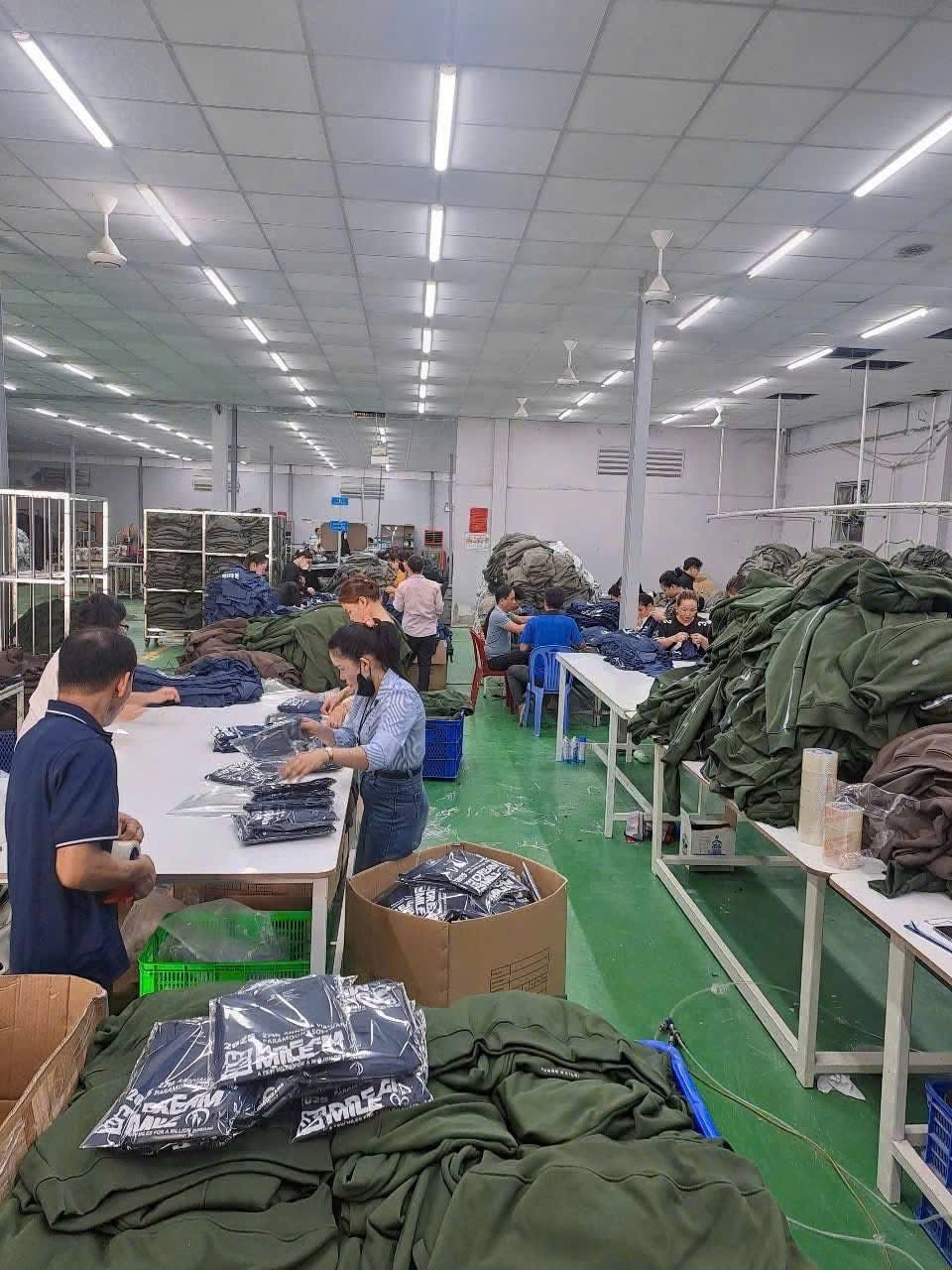
Packing instructions complete the picture: fold size, polybag type and wording, number of pieces per carton, carton dimensions and shipping marks. For retailers and fulfilment centres, wrong carton marks can cause receiving delays that cost far more than the garment itself.
MOQ, sampling cost and how AT Garment Factory works
Sampling cost is usually separate from production cost, and many factories credit or reduce the sample fee when a bulk order follows. Policies vary by style, so agree this in writing before you start.
At AT Garment Factory in Binh Tan District, Ho Chi Minh City, our minimum order quantities depend on the product: from 50 pieces for blank items, 100 pieces for printed items, and 200 pieces for OEM branded items, while hoodies, polos and uniforms are typically produced from 2,000 pieces. With more than 10 years of experience and capacity above 100,000 pieces per month, we work with both new brands testing a style and importers placing repeat bulk orders. For a detailed look at low quantities, read our guide to low MOQ clothing manufacturing.
If you are comparing categories before you commit, our pages on hoodie and polo manufacturing, T-shirt manufacturing and sportswear manufacturing show what each category requires. The full ordering process is covered in our complete buyer’s guide.
A pre-submission checklist
Before you press send, run through this short list. It takes ten minutes and can save a full sampling round.
- Is every colour defined by Pantone code or physical swatch?
- Does every fabric line state composition, weight and construction?
- Are all trims listed with placement and quantity?
- Does the measurement chart include tolerances and a clear measuring method?
- Are logo files vector, with print or embroidery method and placement dimensions?
- Are labels, care instructions and country-of-origin wording defined?
- Have you stated AQL level, test needs and destination market?
- Are folding, polybag and carton instructions included?
- Does the file carry a version number and date, so everyone works from the same revision?
If you can answer yes to most of these, you are ready to request quotations. If not, send what you have anyway and ask the factory to point out the gaps. A good partner will do that without charging you for it. You can start from our products page or review our services to see how we support development.
Frequently asked questions
Do I need a tech pack to get a quotation?
Not always. A reference sample or a clear sketch with measurements and fabric details can be enough for a preliminary quote. A full tech pack gives a more accurate price and fewer surprises later.
How many sample rounds should I expect?
Commonly two to three rounds for a new style: prototype, fit sample and PP sample. Simple basics may need fewer, while technical items such as jackets or denim may need more.
Who owns the tech pack and the pattern?
You normally own your design and artwork. Pattern ownership should be agreed in writing before development starts, particularly if you may move production to another supplier later.
Can the factory create the tech pack for me?
Many OEM and ODM factories can prepare or complete a tech pack from your sketch or reference sample. Ask whether this is free or charged, and confirm that you receive the final files.
What file formats should I send?
PDF for the tech pack, vector files (AI, EPS or PDF) for artwork, and physical swatches by courier for fabric and colour. Excel is common for the BOM and measurement chart.
What is the difference between a PP sample and a TOP sample?
The PP sample is made before bulk production and becomes the approved reference. The TOP sample is taken from finished production and is compared against the PP sample before shipment.
Conclusion
A good tech pack is the cheapest quality control tool you will ever buy. It shortens quotation, reduces sample rounds, makes factories comparable and gives your inspectors something objective to measure. You do not need perfection on the first attempt, but you do need clarity on fabric, measurements, trims and artwork, and a habit of approving each stage in writing.
If you are preparing a new style and want a factory to review your files, contact AT Garment Factory. Email thanhtung113123@gmail.com, message us on WhatsApp or Zalo, or use our contact page.