
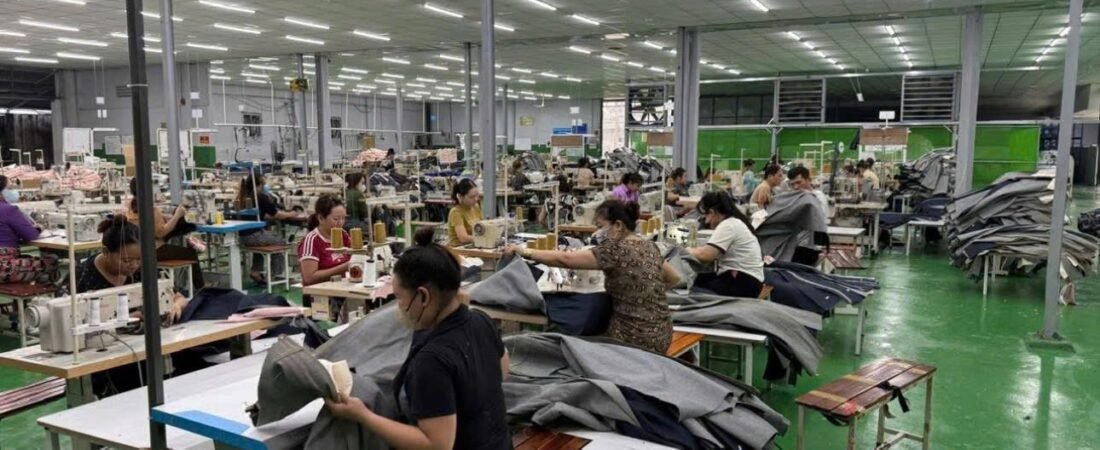
Every buyer who has sourced apparel overseas knows the moment: three factories receive the same tech pack, and three quotes come back that are dollars apart. One looks too good to be true, one looks expensive, and the third sits somewhere in the middle without any explanation. The temptation is to pick the lowest number and move on. That is usually where problems start.
A garment price is not a single number. It is the sum of fabric consumption, trims, labour minutes, washing, decoration, packing, overhead, margin and the terms of delivery. When you understand how those lines are built, you stop negotiating blindly and start asking the questions that actually move cost. This guide walks through a full garment cost breakdown the way a Vietnamese factory merchandiser builds it, shows what published industry figures say about the typical split, and explains which levers you control as a brand, importer or buying office.
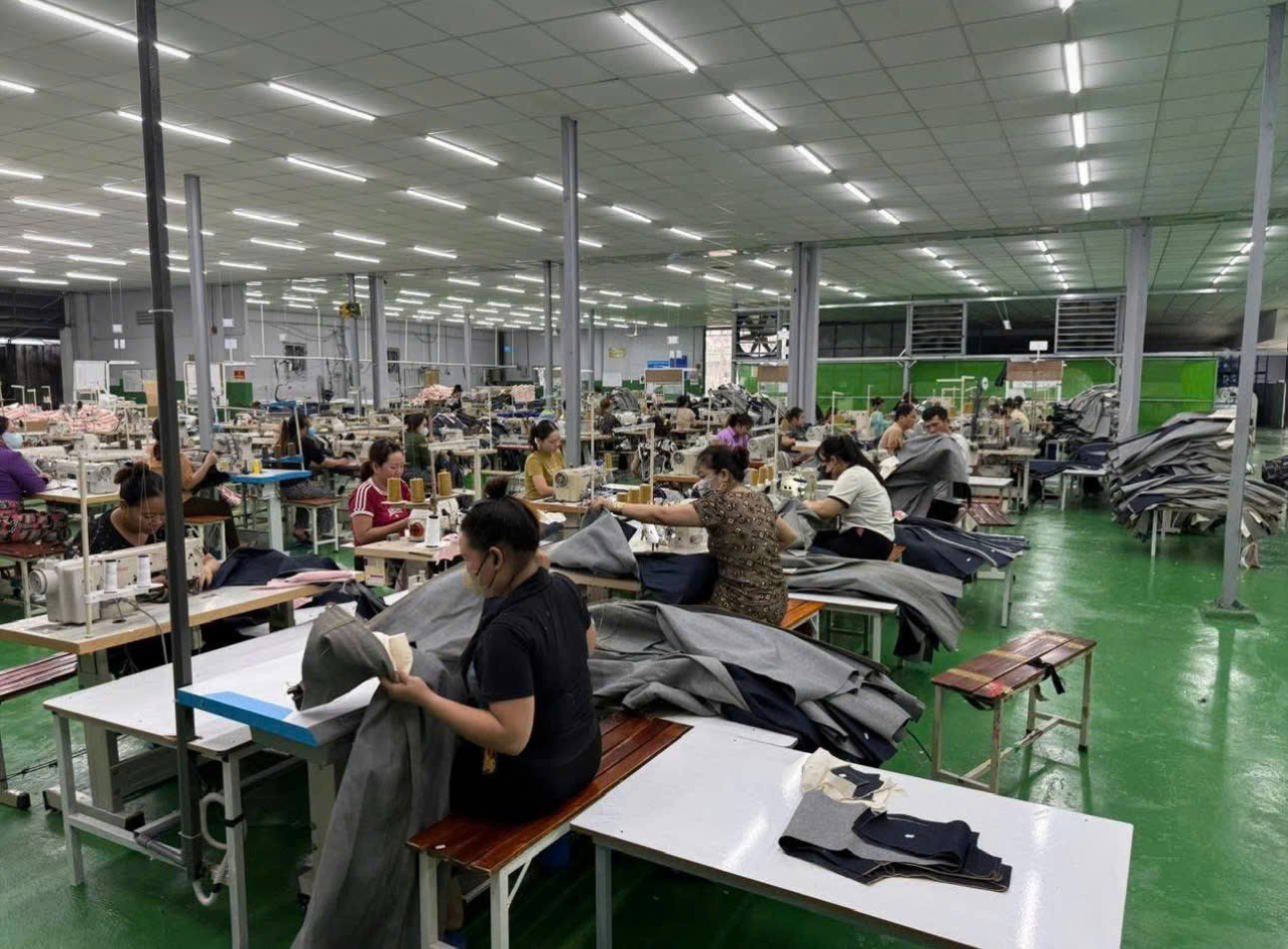
We write from the factory side. AT Garment Factory has been cutting and sewing in Bình Tân, Ho Chi Minh City for more than ten years, with capacity of over 100,000 pieces per month. The examples below are illustrative and built on public industry benchmarks, not our price list, but the logic is exactly what happens on our merchandising desk every time a new style arrives.
Table of Contents
- Why Two Factories Quote Different Prices for the Same Garment
- The Nine Lines of a Garment Cost Sheet
- What Industry Figures Say About the Cost Split
- A Worked Example: Reading a Polo Shirt Cost Sheet
- How Order Quantity Changes the Price per Piece
- From FOB Price to Landed Cost
- Ten Ways to Lower Your Cost per Piece Without Cutting Quality
- How to Request Quotes You Can Actually Compare
- Frequently Asked Questions
- Conclusion
- Get a Transparent Quote from AT Garment Factory
Why Two Factories Quote Different Prices for the Same Garment
Before getting into the cost sheet itself, it helps to understand why quotes diverge so widely. In most cases, the factories are not pricing the same garment, even when they have received the same file.
They read the specification differently
A tech pack that says “cotton jersey, 180 GSM” leaves room for interpretation. Is the yarn carded or combed? Ring-spun or open-end? Is the fabric reactive-dyed, enzyme-washed, pre-shrunk? Each of those choices changes the fabric price per kilo, and fabric is the biggest line on the sheet. If your spec is loose, every supplier fills the gaps with its own assumptions. Our tech pack and sampling guide covers how to close those gaps before you ask for prices.
They assume different quantities and colour splits
A quote for 1,000 pieces in one colour is not comparable with a quote for 1,000 pieces split across five colours and six sizes. Fabric mills dye by lot, and small colour quantities often carry surcharges or force the factory to buy more fabric than it needs. Some suppliers quote on the total; others quote per colour. Ask which one you are looking at.
They include or exclude different costs
One factory includes hang tags, polybags and export cartons; another adds them later. One includes the cost of a pre-production sample; another treats it as a separate invoice. One quotes FOB Ho Chi Minh City; another quotes EXW, leaving inland trucking and export clearance to you. A difference of a dollar per piece can disappear once you normalise what is actually included.
They have different cost structures
Finally, factories genuinely differ. A plant with good line balancing, experienced operators and stable fabric suppliers will produce the same polo shirt in fewer minutes and with less waste than a disorganised one. That is real efficiency, and it shows up as a lower price without any loss of quality. The job of a buyer is to tell real efficiency apart from cut corners.
The Nine Lines of a Garment Cost Sheet
Most professional cost sheets, whether in a Vietnamese, Bangladeshi or Turkish factory, follow the same structure. Templates published by organisations such as the CBI (the Dutch Centre for the Promotion of Imports) break the price into fabric, trims, packaging, labour and overheads, each with its own consumption and wastage allowance. Here is what sits on each line and what drives it.
1. Main fabric
Fabric cost equals consumption per garment multiplied by the price per kilo (for knits) or per metre or yard (for wovens), plus a wastage allowance. Consumption comes from the marker: the cutting layout that nests all pattern pieces for every size onto the fabric width. Fabric width, size ratio, pattern shape and whether the fabric has a directional print all affect how much is used. For knits, GSM matters directly, because a heavier fabric means more kilos per garment. If you are still deciding on weight, see our T-shirt GSM guide.
2. Secondary fabrics
Rib for collars and cuffs, contrast panels, pocket lining, interlining for plackets and collars, mesh for sportswear ventilation. These are small consumptions but often carry high minimums from suppliers, especially for custom-dyed rib in a matching colour.
3. Trims
Buttons, zippers, drawcords, eyelets, elastic, snaps, rivets, thread. Thread is easy to forget, but it is a real cost on every garment. Branded zippers or custom-moulded buttons can add noticeably compared with generic equivalents.
4. Labels and branding accessories
Main woven label, size label, care and content label, country-of-origin label, hang tag, string or barbed fastener, and any special stickers. For private label programmes, this line grows quickly because everything is custom. Remember that labels are not optional decoration: in the United States, for example, the FTC Textile Rules require fibre content, country of origin and the responsible company to be disclosed, and the Care Labeling Rule requires permanent care instructions.
5. Cut, make and trim (CMT)
This is the labour line: cutting, sewing, trimming loose threads, pressing, inspection and folding. Factories price it using the standard allowed minutes (SAM) of the style multiplied by their cost per minute. A basic crew-neck T-shirt has relatively few operations; a shirt with a collar stand, placket, cuffs and yoke has many more. Complexity, not fabric, is what drives this line.
6. Washing, dyeing and finishing
Garment dye, enzyme wash, silicone softener, acid wash, stone wash for denim, anti-pilling finish, moisture-wicking treatment. Any process applied after sewing goes here, and it can be significant for washed or vintage-look styles.
7. Decoration
Screen printing, embroidery, heat transfer, DTF, appliqué, patches. Pricing depends on the number of colours, stitch count, print size and placement count. Our decoration method guide explains how each technique scales with quantity.
8. Packing
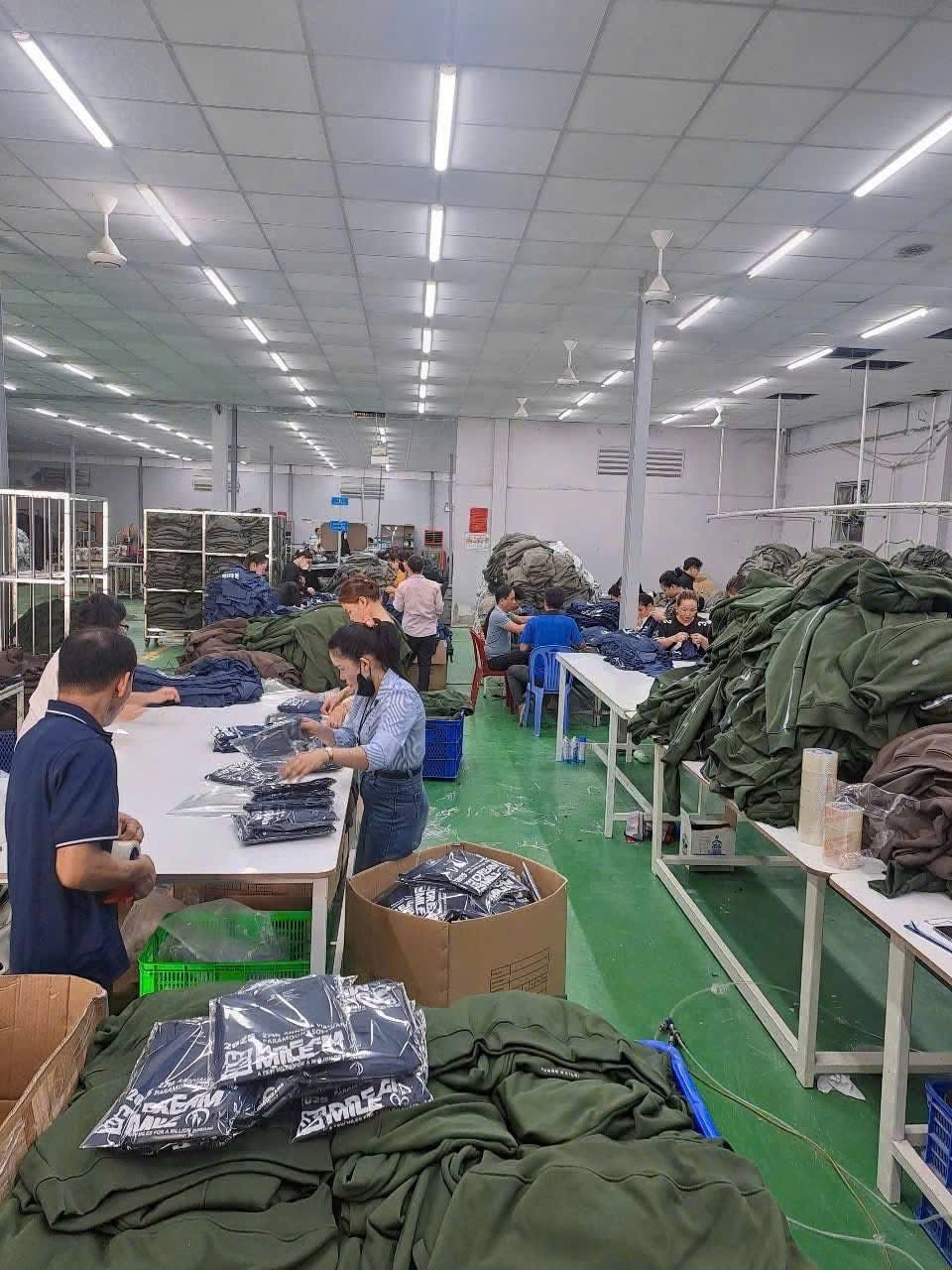
Individual polybag, tissue, folding board, size sticker, barcode label, inner box and export carton. Retail-ready packing with header cards or printed bags costs more than plain bulk packing. Marketplace sellers should note that platform-specific labels and bag warnings add both material and handling time.
9. Overhead, testing, margin and delivery terms
Factory overhead (rent, power, machine maintenance, administration), any third-party lab testing, the factory’s margin, and the cost of getting goods to the agreed delivery point. If the price is FOB, it includes inland transport to the port and export customs clearance in Vietnam. Our Incoterms comparison explains where each term shifts responsibility.
What Industry Figures Say About the Cost Split
Published cost studies and costing guides do not agree on exact percentages, which is expected: a basic T-shirt and a lined jacket have very different structures. Still, the broad pattern is consistent. The figures below are drawn from public sources and should be read as directional ranges, not as quotes from any factory, including ours.
- Fabric is almost always the largest single line. A peer-reviewed costing study in the Journal of Textile Science and Technology found fabric at roughly 38% to 52% of total cost across a woven shirt, woven trousers, a T-shirt and a polo shirt, with the polo shirt above half (SCIRP, 2023).
- In the same study, cost of manufacture (CM) was reported at about 15% for the T-shirt and 17% for the polo, versus about 23.5% for the woven shirt, which needs far more sewing operations. The authors note a T-shirt needs around 12 operations and a polo around 16.
- Trims in that study stayed in a narrow band of roughly 3% to 5% of cost, while accessories ranged from about 3% (polo) to 8.5% (T-shirt).
- An online FOB calculator published by a clothing manufacturer suggests fabric and trims commonly account for around 35% to 45% of FOB, CMT about 25% to 32%, decoration 0% to 12%, pattern, grading and sampling 3% to 7%, and factory margin plus overhead 12% to 18%, with logistics and duties adding roughly 6% to 11% on top of FOB for a landed figure (chinaclothingmanufacturer.com).
- Some factory-side costing guides put fabric even higher, at 60% to 70% of total cost for simple knit garments, with CMT as low as 10% to 15% (Scan ERP).
- On the labour side, Vietnam’s Region I statutory minimum wage rose to VND 5,310,000 per month from 1 January 2026 under Decree 293/2025/ND-CP, an increase of about 7.2% (Vietnam Government News; Baker McKenzie). Actual garment wages are commonly reported to sit above the statutory floor.
- Industry sourcing guides commonly report 2026 FOB benchmark ranges in Vietnam of roughly USD 1.80 to 3.50 for a basic knit T-shirt and USD 4 to 7 for a polo at volume runs of around 5,000 pieces, with much wider ranges for jeans and technical outerwear (Cosmo Sourcing).
Two conclusions matter for buyers. First, fabric decisions dominate. A small change in GSM, yarn quality or fabric width usually moves the price more than any argument about sewing labour. Second, CMT is where garment complexity shows up. If you add a hidden zip pocket, flatlock seams and bonded hems, expect the labour line to grow regardless of which country you produce in.
A Worked Example: Reading a Polo Shirt Cost Sheet
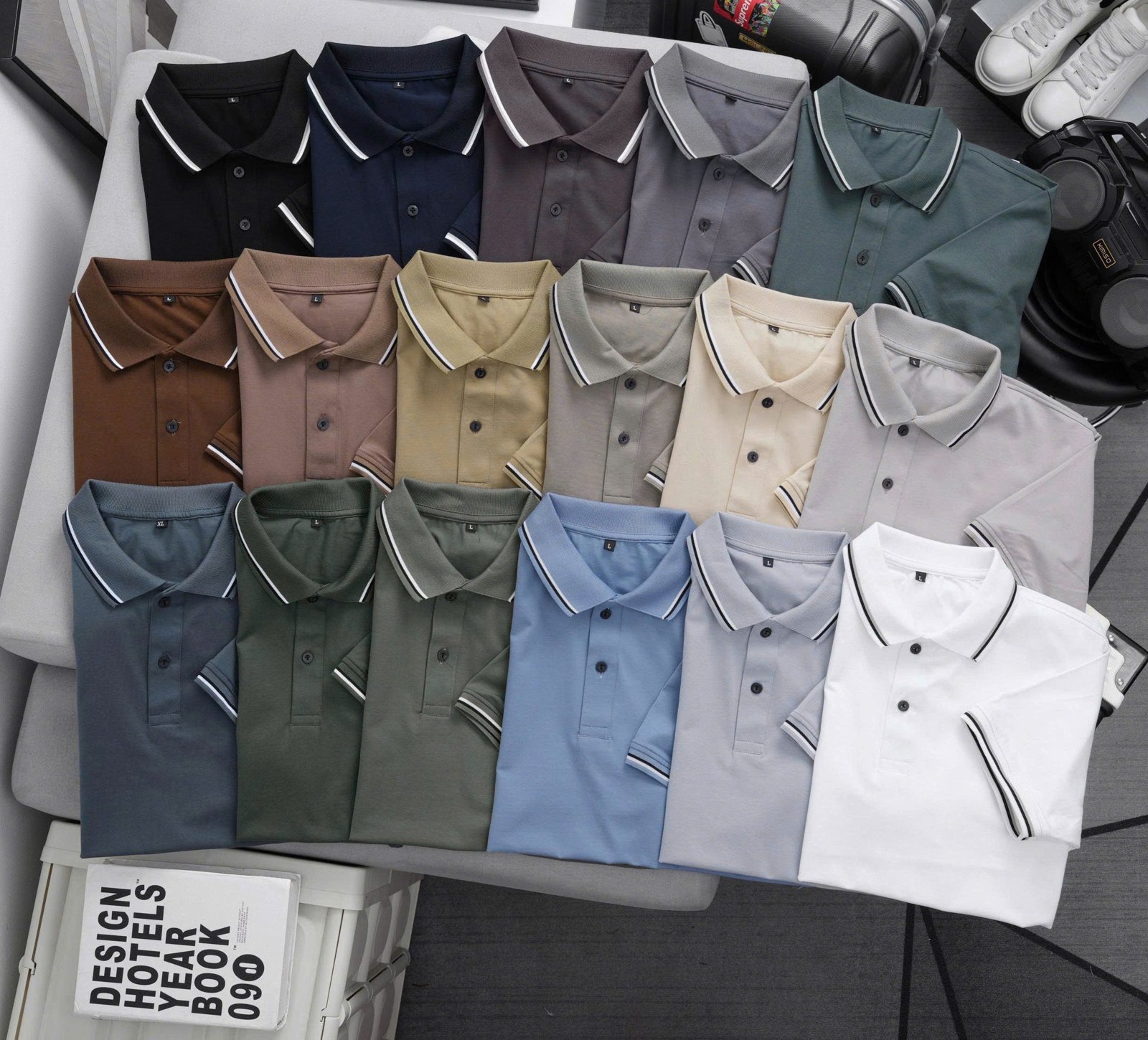
To make this concrete, here is how a merchandiser would structure the sheet for a men’s cotton piqué polo with a self-fabric collar, three-button placket, side vents, woven main label, printed care label, hang tag and individual polybag. The structure below is what you should expect to see; the actual figures depend entirely on your fabric choice, quantity and trims, so we have deliberately shown the logic rather than invented prices.
Fabric section
- Shell fabric: consumption in kilos per piece (from the marker) × price per kilo × (1 + wastage %). Piqué polos commonly need noticeably more fabric weight than a basic tee because of the heavier knit and longer body.
- Rib or flat-knit collar and cuffs: priced per piece if knitted to shape, or per kilo if cut from tubular rib.
- Interlining for the placket: small, but listed separately.
Trims and labels section
- Buttons (three to four, including a spare if requested).
- Main label, size label, care and content label.
- Hang tag, fastener, polybag with any required warning text, size sticker.
- Thread, often estimated in metres per garment.
Labour and processing section
- Sewing: SAM of the style × cost per minute of the line.
- Cutting, finishing, pressing and final inspection: often expressed as a share of sewing time or as their own minute values.
- Embroidery on the chest: priced by stitch count and number of positions.
Overhead, margin and terms
- Overhead and margin, either as a percentage on top of cost (cost-plus) or as a margin on the selling price. The two methods give different prices for the same percentage, so it is worth asking which one is being used.
- Export packing and FOB charges: carton, inland trucking, customs clearance in Vietnam.
When a factory sends you a single line that says “Polo, USD X.XX FOB,” ask for this structure. A good supplier will share it, at least in summary, because it lets both sides discuss trade-offs honestly. If you want to reduce price, you can then see whether to change the fabric, simplify the collar, drop a label or adjust the packing, instead of simply asking for a discount that someone will recover elsewhere.
How Order Quantity Changes the Price per Piece
Quantity affects price in ways that are not always linear. Understanding where the steps are helps you decide whether ordering a little more is worth it.
Fixed costs spread over more pieces
Pattern making, grading, marker preparation, line setup, screen or embroidery file preparation and sample rounds are largely fixed per style. On 100 pieces, they weigh heavily on each garment. On 2,000 pieces, they almost disappear. This is the main reason small runs cost more per piece.
Fabric minimums
Mills and fabric traders often have minimum dye-lot quantities per colour. If your order needs less, the factory either pays a small-lot surcharge, buys excess fabric, or uses stock fabric with limited colours. Industry sourcing guides commonly report fabric minimums, not sewing minimums, as the real constraint for custom colours.
Line efficiency
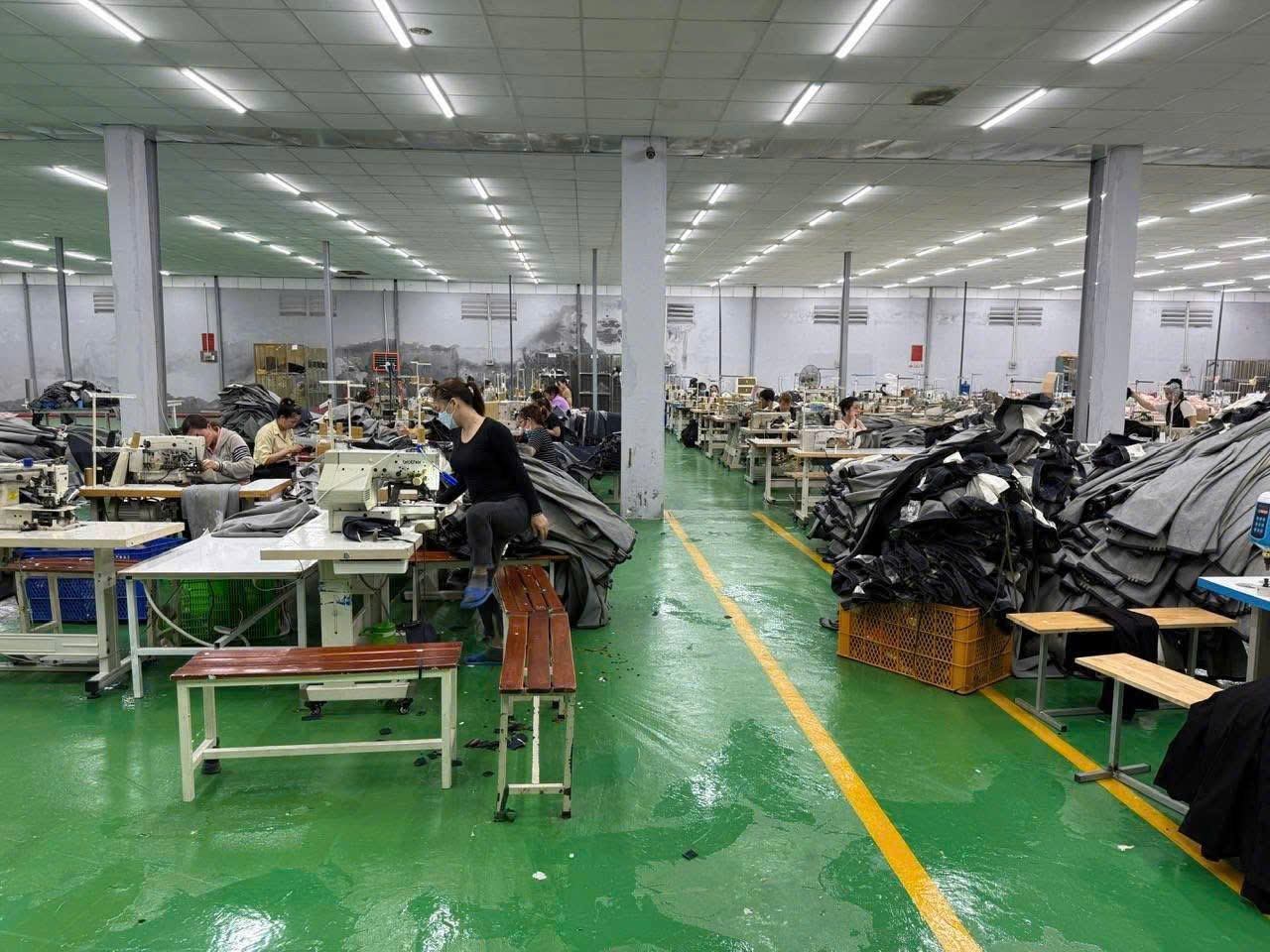
Operators get faster after the first few hundred pieces of a style. Long runs let a line reach its target efficiency; short runs end before it does. That learning curve shows up in the CMT line.
Where AT Garment’s minimums sit
Our own minimums reflect these steps: from 50 pieces for blank garments, 100 pieces for printed orders, 200 pieces for OEM branded production, and 2,000 pieces for hoodie, polo and uniform programmes. If you are testing a market, our article on low MOQ manufacturing in Vietnam explains the trade-offs of each tier, and our private label guide shows how brands typically move from test runs to repeat programmes.
From FOB Price to Landed Cost
The factory price is only part of what you pay. Many first-time importers compare FOB quotes from Vietnam with ex-warehouse prices from a domestic supplier and come to the wrong conclusion. To compare honestly, you need a landed cost per piece.
What sits between FOB and your warehouse
- International freight: sea freight by LCL or FCL, or air freight for urgent or small shipments. LCL spreads poorly over small quantities; full containers bring the per-piece freight down significantly.
- Insurance: usually a small percentage of cargo value.
- Import duty: set by the HS/HTS classification of each garment and its fibre content in your destination country. Rates vary widely between knit and woven, cotton and synthetic, and between countries.
- Customs brokerage, port fees and security filings in the destination country.
- Inland delivery from the port to your warehouse or fulfilment centre.
- Third-party inspection, if you use one. Our AQL inspection guide explains how sampling plans work.
Trade agreements can change the duty line
Vietnam’s free trade agreements can reduce or remove duties in some markets, but only if the goods meet the rules of origin. For the EU, the EU-Vietnam Free Trade Agreement generally requires apparel to be made from fabric that originates in Vietnam or the EU (with limited cumulation provisions, such as for Korean-origin fabric), not just cut and sewn in Vietnam. That fabric choice is therefore a cost decision as well as a quality decision. Check the rules for your specific product with a customs broker before you assume a preferential rate.
A simple landed cost formula
Landed cost per piece = FOB price + (freight + insurance + brokerage + port fees + inland delivery) ÷ number of pieces + duty on the customs value + inspection cost ÷ number of pieces. Build it once in a spreadsheet and update it for each shipment. You will quickly see when a cheaper FOB price is wiped out by worse logistics, or when shipping more pieces in one container lowers your total cost more than any negotiation with the factory.
Timing is part of cost too. Air freight to rescue a missed launch date can cost more than the garments themselves. Our production lead time guide shows how to plan so that sea freight remains an option.
Ten Ways to Lower Your Cost per Piece Without Cutting Quality
Discounts that are simply squeezed out of a factory tend to come back as weaker fabric, shorter stitches or rushed finishing. The more durable approach is to change the inputs that drive cost. These are the levers we see work most often.
- Fix the fabric spec first. Agree composition, GSM, yarn type and finish in writing. Most of the price lives here, and ambiguity is expensive.
- Use standard fabric widths and colours where possible. Stock or semi-stock fabric avoids dye-lot minimums and surcharges.
- Rationalise the colour and size matrix. Fewer colours with deeper quantities usually lower the price more than an extra few hundred pieces spread thinly.
- Simplify construction where the customer will not notice. An internal facing, a decorative topstitch or an extra panel can add minutes without adding perceived value.
- Keep the good trims, drop the invisible ones. Spend on what customers touch, such as zippers and buttons, and review extras like multiple stickers or redundant labels.
- Consolidate decoration. One embroidery position instead of three, or fewer print colours, can make a large difference on short runs.
- Plan packing to fit the channel. Retail packaging for a wholesale shipment, or bulk packing for a marketplace that requires individual bagging, both waste money.
- Order in fuller cartons and containers. Freight per piece drops quickly when cartons are full and shipments are consolidated.
- Approve samples quickly and completely. Each additional sample round adds cost and time. Clear comments on the first fit sample save money.
- Commit to repeat programmes. Factories can buy fabric better and keep trained operators on a style when they know it will repeat. That is where long-term savings come from.
If your products are basics such as T-shirts, hoodies and polos, our guide to hoodie and polo production go deeper into the fabric choices that most affect price.
How to Request Quotes You Can Actually Compare
The best way to get useful quotes is to remove the guesswork for every supplier. Send the same package to each factory, and ask them to respond in the same format.
What to send
- A tech pack with measurements, construction details and a bill of materials.
- Fabric specification: composition, GSM or weight, finish, and approved swatch if you have one.
- Quantity per style, per colour and per size ratio.
- Decoration artwork with sizes, placements and colour counts.
- Labelling and packing requirements, including any marketplace or retailer rules.
- Target delivery date and the Incoterm you want quoted (for example FOB Ho Chi Minh City).
What to ask for in return
- Price per piece at two or three quantity breaks.
- A summary cost breakdown: fabric, trims, CMT, decoration, packing, other.
- Sample cost and number of sample rounds included.
- Lead time for samples and for bulk after approval.
- Validity period of the quote and what would trigger a revision, such as fabric price changes.
With this in hand, you can compare factories line by line. You may find that one supplier has a better fabric source while another is more efficient on sewing, and that conversation is far more productive than simply asking everyone for their best price. For the full ordering process, see how to order custom clothing from a Vietnam factory.
Frequently Asked Questions
What is a garment cost breakdown?
A garment cost breakdown, or cost sheet, lists every element that makes up the price of one piece: main and secondary fabric, trims, labels, cut-make-trim labour, washing, decoration, packing, overhead, margin and the delivery term. Each material line includes consumption per garment, unit price and a wastage allowance.
What percentage of garment cost is fabric?
It depends on the product, but fabric is usually the largest single line. Published studies and costing guides commonly report fabric at somewhere between roughly 35% and 70% of factory cost, with simple knit basics at the higher end and complex tailored garments, where labour weighs more, at the lower end.
How is CMT calculated?
Most factories multiply the standard allowed minutes (SAM) of the style by their cost per minute, then add cutting, finishing and pressing time. The more operations a garment requires, the higher the CMT. A plain T-shirt has far fewer operations than a shirt with a collar stand, placket and cuffs.
Why is my price per piece higher on small orders?
Fixed costs such as pattern making, grading, line setup, artwork preparation and sampling are spread over fewer pieces, fabric may carry small-lot surcharges, and production lines do not reach full efficiency on short runs. Prices typically fall as you move to larger quantity breaks.
Is the FOB price the final cost of my garments?
No. FOB covers the goods delivered on board at the Vietnamese port. You still need to add international freight, insurance, import duty, customs brokerage, port fees, inland delivery and any inspection to arrive at your landed cost per piece.
Can I ask a factory to share its cost sheet?
Yes. Many reputable factories will share at least a summary breakdown by major line. It helps both sides discuss trade-offs, such as changing fabric weight or simplifying packing, rather than negotiating only on the final number.
Conclusion
A garment price is the result of dozens of small decisions, and most of them are made before the factory ever cuts fabric. Fabric specification drives the largest share of cost, construction drives labour, and quantity, packing and delivery terms decide how fixed costs and logistics spread over each piece. When you read a quote as a cost sheet rather than a single number, you can see which levers to pull, compare suppliers fairly, and protect quality while still controlling cost.
If you are planning a new style or reviewing an existing programme, the most useful next step is a properly specified request for quotation. Browse our product range to see what we make, then send us your tech pack or reference sample.
Get a Transparent Quote from AT Garment Factory
AT Garment Factory in Bình Tân, Ho Chi Minh City has more than ten years of experience in OEM, ODM and private label production, with capacity of over 100,000 pieces per month and minimums from 50 pieces (blank), 100 (printed), 200 (OEM branded) and 2,000 for hoodie, polo and uniform programmes. Send us your specification and we will walk you through how the price is built.
- Email: thanhtung113123@gmail.com
- WhatsApp: Chat with us on WhatsApp
- Zalo: Message us on Zalo
- Contact form: atgarmentfactory.com/contact