A buyer usually finalizes fabric, sizing, and quantity weeks before anyone asks the one question that quietly changes the entire quote: how should the logo or design actually get onto the garment? Screen printing, embroidery, DTG, and DTF are not interchangeable line items. Each one shifts unit cost, minimum order quantity, lead time, and — most importantly for a brand shipping to retail or Amazon — how the decoration survives the first 20 washes.
This guide is written from the floor of a Vietnam OEM garment factory that runs screen printing, embroidery, and DTF lines every day for international importers, buying offices, and Amazon/TikTok Shop brands — not from a print shop trying to sell you on one method. Below is a practical comparison of cost, durability, MOQ, and best-fit product categories, so the decoration line on your next quote sheet stops being a guessing game.
Table of Contents
- Why the Decoration Method You Choose Changes Your Whole Order
- Screen Printing: Still the Default for Bulk Orders
- Embroidery: The Premium, Long-Lasting Choice
- DTG (Direct-to-Garment): Best for Small Runs and Full-Color Art
- DTF (Direct-to-Film): The Rising Middle Ground
- Cost Comparison at a Glance
- Durability and Wash-Test Expectations
- Which Method Fits Which Product Category
- Minimum Order Quantity by Decoration Method
- Combining Methods on One Order
- What to Send Your Factory Before Costing
- Common Mistakes Buyers Make
- Frequently Asked Questions
- Conclusion
Why the Decoration Method You Choose Changes Your Whole Order
Buyers new to overseas sourcing often treat “printing” as a checkbox on the tech pack rather than a decision with real cost consequences. In practice, the decoration method interacts with four variables at once: unit price, minimum order quantity per design and per color, production lead time, and fabric compatibility. A 100% polyester performance tee that would crack under standard plastisol screen printing needs a different approach than a heavyweight cotton hoodie, and a 5,000-unit retail program has completely different economics than a 50-piece Amazon FBA test batch.
Getting this decision wrong shows up later as returned goods, cracked prints after a handful of washes, or a quote that came in far higher than expected because the factory had to switch methods mid-costing. The sections below walk through each method the way a Vietnam OEM factory’s merchandising team actually evaluates an incoming order.
Screen Printing: Still the Default for Bulk Orders
Screen printing pushes ink through a mesh screen — one screen per color — directly onto the fabric, then cures it under heat. It remains the workhorse of bulk apparel decoration because, once the screens are burned and the press is set up, the marginal cost per additional piece is very low.
Strengths: Screen printing is the cheapest option at volume for designs with one to four solid colors, and it produces some of the most wash-durable prints available, especially with plastisol ink. It works across a wide range of fabrics, including cotton, cotton-poly blends, and — with the right ink chemistry — polyester.
Trade-offs: Every additional color means an additional screen, additional setup time, and additional cost, so gradients, photographic images, and designs with more than four or five colors quickly become impractical. Small orders also carry the full weight of the screen-burning and setup cost, which is why screen printing rarely makes economic sense under roughly 100 pieces per design.
Best fit: Event t-shirts, streetwear drops, and repeat programs for TikTok Shop and Amazon apparel brands ordering 300+ units per design with one to three colors.
- Industry pricing guides commonly report screen printing at roughly $2–$5 per piece at 100+ units for a simple one to two-color design, dropping further as quantity scales into the thousands.
- Setup/screen charges are typically quoted per color, per design — commonly in the $25–$75 range per screen in Western markets, with OEM factories in Vietnam usually building this into the first-order tooling cost rather than charging it separately on repeat runs.
- Plastisol ink is the most durable and most common; water-based and discharge inks give a softer hand-feel but are less forgiving on dark polyester fabrics.
Embroidery: The Premium, Long-Lasting Choice
Embroidery stitches a design directly into the fabric using a digitized file that tells the machine exactly where to place each stitch. Because the design becomes part of the fabric’s structure rather than sitting on top of it, embroidery is widely regarded as the most durable and highest-perceived-value decoration method available.
Strengths: Embroidery gives a polished, professional finish that buyers strongly associate with quality — think polo shirts, corporate wear, and outerwear. It resists fading and cracking far better than any printed method and holds up extremely well to industrial laundering, which matters for hospitality and healthcare uniform programs.
Trade-offs: Cost is driven by stitch count and design size rather than the number of colors, so large or highly detailed designs — especially anything approaching photographic detail — get expensive fast and are simply not a good fit for embroidery. Thin, stretchy, or very lightweight fabrics need a backing/stabilizer to prevent puckering, and every new design requires a one-time digitizing fee before production can start.
Best fit: Polos, caps, jackets, and corporate, school, or hospitality uniform programs where a small, clean logo needs to survive years of repeated washing.
- Digitizing (a one-time fee per design) commonly runs $10–$85 depending on complexity, with most simple logo designs falling in the $10–$20 range.
- Per-unit embroidery cost is generally quoted by stitch count, with industry references citing roughly $0.50–$4.00 per 1,000 stitches; a simple left-chest logo (5,000–8,000 stitches) typically lands toward the lower end of a factory’s embroidery price list, while a large back-piece design (50,000+ stitches) sits at the top.
- Total embroidery decoration cost is commonly reported in the $3–$10+ per unit range once digitizing is amortized across the order quantity.
DTG (Direct-to-Garment): Best for Small Runs and Full-Color Art
DTG works like an inkjet printer for fabric: specialized ink is sprayed directly onto the garment through a printhead, absorbing into the fibers rather than sitting on the surface. It performs best on 100% cotton or high-cotton-content blends.
Strengths: There is no setup cost and no per-color penalty, which makes DTG the natural choice for photorealistic artwork, gradients, and complex multi-color designs. It is also the only method on this list that makes real economic sense at very low quantities — even single pieces.
Trade-offs: Per-unit cost stays roughly flat regardless of quantity, so DTG never gets meaningfully cheaper at volume the way screen printing does. It also performs poorly on polyester and performance fabrics, and the print can fade or soften with repeated washing faster than a comparable screen print. Because of this, most Vietnam OEM factories position DTG as a sampling or small-batch tool rather than a bulk production method.
Best fit: Sample runs, one-off gifting, and early-stage Amazon FBA private-label testing where a brand wants to validate a design across a handful of SKUs before committing to a bulk screen-print or DTF order.
- Industry pricing guides commonly report DTG in the $15–$22 per piece range, largely flat whether the order is 5 pieces or 500.
- No meaningful setup fee, which is the main reason it works for one-off and sample orders that screen printing and embroidery cannot touch economically.
- Best results are on fabrics with at least 80% cotton content; performance polyester blends are generally not recommended for DTG.
DTF (Direct-to-Film): The Rising Middle Ground
DTF prints a design onto a special film using pigment ink, applies an adhesive powder, then heat-presses the transfer onto the garment. It is the newest of the four methods to reach real production scale in Vietnam factories, and it has quickly become popular precisely because it does not force buyers to choose between fabric type and design complexity.
Strengths: DTF works on almost any fabric — cotton, polyester, blends, nylon, even dark or textured materials — and on any color garment, without the color-count penalty of screen printing. Cost stays fairly consistent whether the order is 20 pieces or 500, which makes it a strong middle ground between DTG’s small-batch flexibility and screen printing’s bulk economics.
Trade-offs: Because DTF is newer, print quality varies meaningfully from one factory’s equipment and film supplier to another, so it is worth asking for a physical wash-test sample before committing to a large order. The adhesive layer can also feel slightly heavier on very lightweight fabrics compared to a well-executed screen print, and it does not carry the same premium perception as embroidery for logo-forward products like polos.
Best fit: Mixed-SKU orders with small quantities per size and color, and stretch sportswear or performance fabrics where standard plastisol screen printing tends to crack under repeated stretching.
- Published pricing estimates put DTF in roughly the $10–$16 per piece range for small-to-mid runs, or as low as $1.05–$1.95 per print when quoted on a per-transfer basis independent of garment cost.
- Cost per unit stays relatively constant regardless of order size — a meaningful difference from both screen printing (which rewards volume) and embroidery (which is driven by stitch count).
- The break-even point between DTF and screen printing commonly falls between roughly 24 and 48 pieces per design; below that, DTF usually wins on price, and above it, screen printing typically takes over for simple 1–2 color designs.
Cost Comparison at a Glance
None of these figures should be read as an AT Garment Factory quote — actual pricing always depends on garment, quantity, design size, and placement — but they reflect the general cost pattern reported across the industry and are a useful starting point when budgeting a program before a formal quote comes back.
- Screen printing: Lowest cost per piece at high volume (100+ units), best for 1–4 solid colors, moderate setup cost per color.
- Embroidery: Mid-to-high cost driven by stitch count, no color-count penalty, highest durability and perceived value, one-time digitizing fee.
- DTG: Highest per-unit cost, zero setup cost, unlimited colors, best for quantities under roughly 50 pieces or full-color photographic art.
- DTF: Mid-range and fairly flat per-unit cost regardless of quantity, works on any fabric or color, strongest option for small-batch multi-SKU orders.
Durability and Wash-Test Expectations
For a program that will sit on retail shelves or ship through Amazon FBA, wash durability is arguably more important than the initial look of the sample. As a general rule of thumb reported across the decoration industry: well-executed screen printing and embroidery both commonly survive 50 or more home washes without significant fading or cracking, DTF sits in a similar range when properly cured, and DTG — particularly on blended or synthetic fabrics — tends to show fading or surface wear noticeably sooner.
Before greenlighting bulk production, it is worth requesting a washed sample, not just an unwashed pre-production sample. A responsible quality control process should include a wash test as a standard checkpoint, not an optional add-on, precisely because decoration failure after a handful of washes is one of the most common — and most avoidable — causes of chargebacks and returned goods.
Which Method Fits Which Product Category
In practice, most experienced buyers do not pick a decoration method in isolation — they pick it based on the product category, because certain combinations have simply proven out over years of production:
- T-shirts: Screen printing for bulk 1–3 color logos, DTG or DTF for small-batch full-color art or mixed-SKU drops.
- Polos and hoodies: Embroidery for a premium chest logo on polos; screen printing or puff-print for bold graphic hoodie fronts and backs.
- Corporate, school, and hospitality uniforms: Embroidery is the standard for logos that must survive years of industrial laundering.
- Kids’ apparel: Screen printing is generally preferred over embroidery for younger sizes, since raised stitching and loose threads can be a comfort and safety concern on small children’s garments.
- Denim and jean jackets: Embroidery and woven or leather patches hold up well against denim’s heavier weight and rougher washing.
- Sportswear and performance wear: DTF or sublimation generally outperform standard screen printing, which can crack under the repeated stretching that stretch-knit performance fabric goes through.
Minimum Order Quantity by Decoration Method
MOQ at a Vietnam OEM factory is not a single number — it depends on whether you are ordering blank garments, garments with a simple in-house print, or a fully branded OEM program. At AT Garment Factory, the general tiers are:
- 50 pieces for blank, undecorated garments.
- 100 pieces for garments with a straightforward in-house print (typically screen printing or DTF on a single design/placement).
- 200 pieces for fully branded OEM programs involving custom labels, hangtags, and packaging alongside the decoration.
- 2,000 pieces for large-scale hoodie, polo, and uniform programs that combine embroidery, private labeling, and custom packaging into one production run.
Embroidery generally sits toward the higher end of these tiers in practice, since the one-time digitizing fee needs enough units to amortize sensibly, while DTG and DTF are the most forgiving methods for testing a design at the lower end of the range.
Combining Methods on One Order
These methods are not mutually exclusive within a single garment or a single purchase order. It is common — especially in streetwear and collaboration drops — to combine an embroidered chest logo with a large screen-printed or DTF graphic on the back, or to run embroidery on a polo collar while the main body design is screen printed. The key is flagging this combination during the initial costing stage, since it affects both the unit price and the production timeline; asking a factory to add a second decoration method after tooling and screens are already set up almost always costs more and takes longer than planning for it upfront.
What to Send Your Factory Before Costing
The single biggest source of quoting delay and mid-production surprises is incomplete artwork. Before requesting a costing sheet, send:
- A vector file (AI, EPS, or high-resolution PDF) for screen printing and embroidery — not a JPEG or PNG, which cannot be separated into color plates or converted cleanly into a stitch file.
- Exact Pantone (PMS) color codes for each element of the design, so the factory can color-match ink or thread rather than guessing from a screen.
- Placement and size measurements (e.g., “left chest, 8cm wide” or “full back, 28cm wide”), ideally marked on a flat sketch of the garment.
- Fabric composition, since this determines which methods are even viable before cost is discussed.
- Target unit price range and total quantity broken down by size and color, so the factory can recommend the most cost-efficient method rather than defaulting to whatever they assume you want.
Common Mistakes Buyers Make When Choosing a Decoration Method
- Choosing DTG for a large poly-blend order. DTG’s per-unit cost does not drop with volume, and it performs poorly on synthetic fabric — a 5,000-unit polyester hoodie order priced on DTG will usually be both more expensive and less durable than screen printing or DTF.
- Sending a JPEG instead of a vector file. This forces the factory to manually trace or re-digitize the artwork, adding delay and often a redraw fee before costing can even begin.
- Ignoring the end retail channel’s durability expectations. A big-box retailer or a demanding Amazon customer base will generate returns and negative reviews quickly if a print cracks after two or three washes — this should be discussed with the factory before, not after, bulk production.
- Assuming embroidery is always “better.” Embroidery is premium, but it is the wrong choice for large, detailed, or full-color designs, and it can pucker on thin or stretchy fabric without proper backing.
- Adding a second decoration method after screens or digitizing files are already finalized. Planning combined methods (see above) from the start avoids rework and re-quoting.
Frequently Asked Questions
Which decoration method is cheapest for a 500-piece t-shirt order?
For a simple 1–2 color logo, screen printing is typically the cheapest option at 500 pieces, since the setup cost is spread across a large enough run to bring the per-unit price down. If the design has more than four or five colors or photographic detail, DTF is usually the more cost-effective route at this quantity.
Can embroidery be done on polyester activewear?
Yes, but it requires the correct backing/stabilizer to prevent puckering on stretch fabric, and embroidery is generally limited to smaller, non-stretch panels of a performance garment (such as a chest logo) rather than large design areas, since heavy stitching can restrict stretch and comfort.
What file format does a Vietnam garment factory need for screen printing artwork?
A vector file — AI, EPS, or a high-resolution layered PDF — along with exact Pantone color codes. A JPEG or PNG can be used for reference but should not be the only file supplied, since it cannot be cleanly separated into individual color plates for screen burning.
How many wash cycles should custom apparel decoration survive?
As a general industry benchmark, well-executed screen printing and embroidery are commonly expected to survive 50 or more home washes without significant fading or cracking. Buyers supplying to retail or Amazon should request a washed sample, not just an unwashed pre-production sample, before approving bulk production.
Can I combine screen printing and embroidery on the same garment?
Yes — for example, an embroidered chest logo paired with a screen-printed back graphic is a common combination in streetwear and uniform programs. This should be flagged during initial costing so the factory can plan tooling and sequencing for both methods on the same production line.
What is the minimum order quantity for custom embroidery at AT Garment Factory?
MOQ depends on the overall program: 50 pieces for blank garments, 100 pieces for a simple in-house decoration, 200 pieces for a fully branded OEM program with labels and packaging, and 2,000 pieces for large-scale hoodie, polo, and uniform programs. Embroidery specifically tends to make the most economic sense toward the higher end of these tiers, since the one-time digitizing fee needs enough units to amortize efficiently.
Conclusion
There is no single “best” decoration method — only the method that fits your product category, fabric, order quantity, and durability requirement. Screen printing wins on cost at volume for simple designs, embroidery wins on durability and perceived premium quality, DTG wins on flexibility for small or full-color runs, and DTF has emerged as the most fabric-agnostic middle ground for mixed-SKU orders. The most reliable way to avoid a costly mismatch is to share your design, fabric, and target quantity with your factory’s merchandising team before the artwork is finalized, so the recommendation comes from production reality rather than a generic price list.
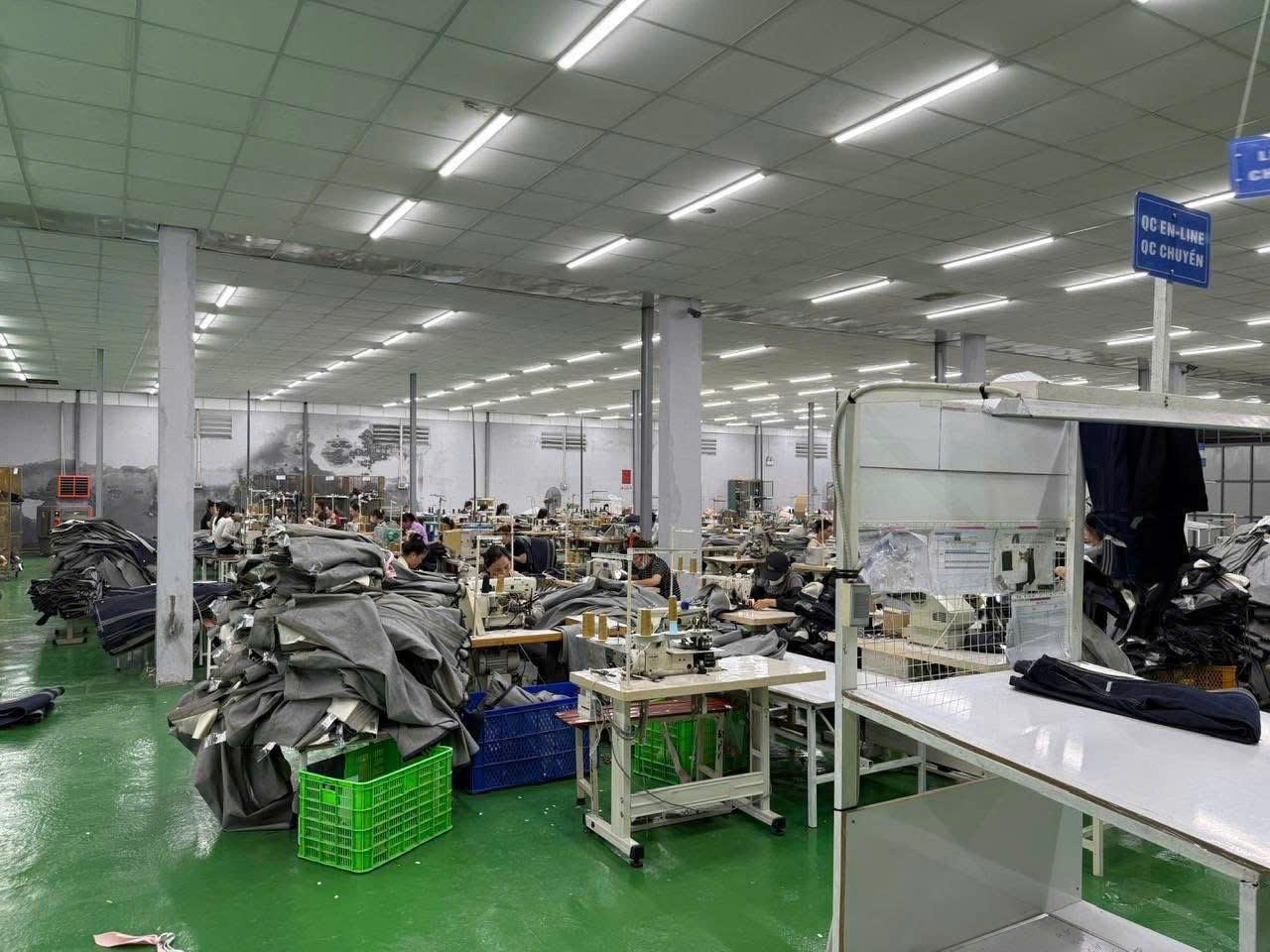
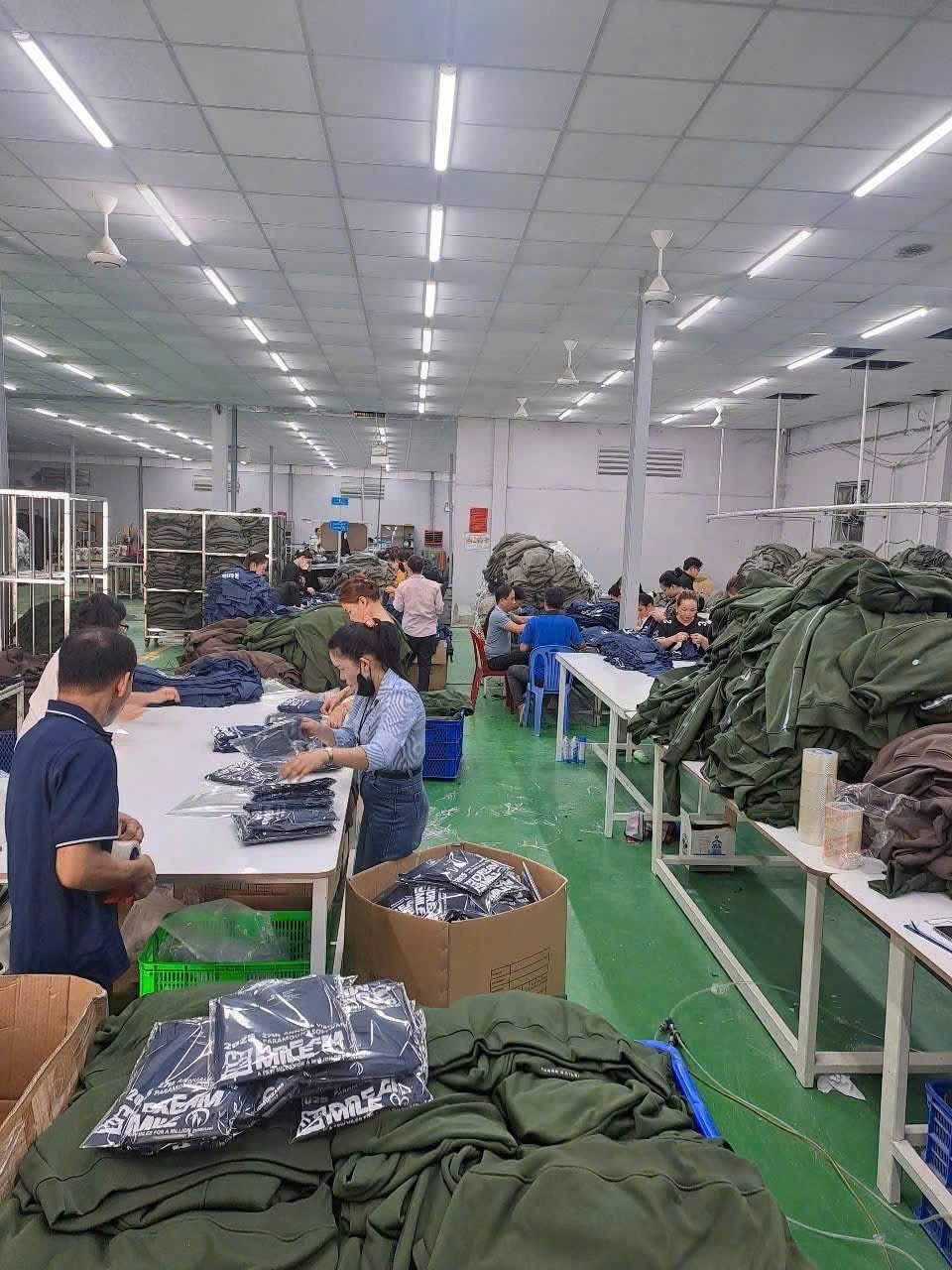
AT Garment Factory runs screen printing, embroidery, and DTF production lines in-house at our Binh Tan, Ho Chi Minh City facility, alongside 100,000+ pieces/month of manufacturing capacity across OEM, ODM, and private label programs. If you have a design and a target quantity, our team can recommend the right decoration method and provide a costed quote. Reach us at thanhtung113123@gmail.com, on WhatsApp at this link, or on Zalo at zalo.me/84334061502. You can also browse our product range or full OEM/ODM services, or go straight to our contact page to start a quote.